This site has been created for institutional investors and RIAs. An institutional investor is an entity that invests capital on behalf of others such as pension funds, banks, insurance companies, mutual funds, foundations/endowments, trust companies or other large investors and their investment consultants. RIA is a registered investment advisor who is responsible for allocating their client funds. This site is not intended for individual investor access, as it does not consider individual risk tolerances or investment objectives of an individual investor. Click “Accept and Continue” to affirm you meet the description of an Institutional Investor.
This site has been designed for financial intermediaries such as financial advisors, wealth managers, broker/dealers and home office research teams. This site is not intended for individual investor access, as it does not consider individual risk tolerances or investment objectives of an individual investor. Click “Accept and Continue” to affirm you meet the description of a Financial Advisor.
This area of the website contains information that is general and/or educational in nature. Individual investors should consider their own investment objectives and risk tolerances or consult with a financial advisor before making any investment decision. Click “Accept and Continue” to continue.
Perhaps it was because the penning of this edition of The Essence began on “The Most Dreaded Day” of crafting its subject (refer to our January 2013 edition); perhaps it was because we just came through a U.S. election season whereby nary a positive word was spoken; perhaps because most financial journalists always see the “glass as half empty” (shouldn’t pay attention to them anyway!); perhaps because there’s extensive focus on the U.S. Federal Reserve’s (Fed’s) actions on short-term interest rates; or, just because many of the very best holiday movies start out with a depressing tale:
> “It’s a Wonderful Life” – George Bailey (played by actor Jimmy Stewart) runs a Savings & Loan. Then there was a run on the bank caused by a misunderstanding of George’s uncle. “I wish I’d never been born!” exclaims George. Poof!, an angel (Henry Travers) is sent to earth to make George’s wish come true. One sad tale after another is told about how the world (or at least Bedford Falls) would have evolved for the worse without George Bailey. It was heartbreaking.
> “The Wizard of Oz” – “Somewhere Over the Rainbow” is sung by Dorothy (played by Judy Garland – the mother of Liza Minnelli, in case you didn’t know) about a place much better than her home in Kansas. Poof! and Dorothy gets transported (via her flying house) to the land of Oz. “Now I know we’re not in Kansas anymore, Toto,” she exclaimed as one bad adventure follows another. Some scarier than others, “oh, my!”
> As defined by the Cambridge Dictionary, “Bah Humbug” is “…an expression used when someone does not approve of or enjoy something that other people enjoy …The expression was used [extensively] by the character Ebenezer Scrooge in the story ‘A Christmas Carol’ by Charles Dickens.”
Mr. Scrooge epitomizes how we felt. Even with the joy-filled holiday season upon us, with all the above, it was hard not to be in a Bah Humbug mood at the time of this writing.
To read the full article, please use the link below.
Ivor Schucking Managing Director, Head of Credit Research
Jeff Klingelhofer Managing Director, Portfolio Manager
NEWPORT BEACH, CALIF., December 19, 2024 — Aristotle Pacific Capital, a registered investment adviser specializing in credit, has strengthened its deep investment team with the recent additions of Ivor Schucking and Jeff Klingelhofer.
Ivor Schucking, a 32-year veteran in the asset-management industry, has been brought on as managing director and head of credit research. Schucking most recently spent 14 years as a senior research analyst and global head of financials credit research at Western Asset Management. Prior to Western Asset, Schucking spent over 12 years at PIMCO as a credit analyst and head of Global Credit Research and four years at Strong Capital Management as director of Credit Research. He holds a bachelor’s degree from New York University and an MBA from New York University Stern School of Business.
“It is exciting to join a highly respected credit manager with a pristine track record, great people and a bright future,” Schucking said.
Jeff Klingelhofer has also joined Aristotle Pacific as a managing director and portfolio manager. Prior to joining Aristotle Pacific, he was co-head of Investments and a portfolio manager at Thornburg Investment Management, where he oversaw all fixed-income strategies and led the firm’s securitized investment initiatives. He played a key role in shaping the firm’s investment processes and represented the team in various external business channels. Prior to Thornburg, Klingelhofer was with PIMCO in its Newport Beach, Tokyo, and London offices. With over 20 years of experience in the investment industry, he holds a bachelor’s degree from UC Irvine and an MBA from the University of Chicago Booth School of Business.
“I am excited to join the team at Aristotle Pacific and contribute to the firm’s continued excellence in fixed income,” Klingelhofer said.
As part of his role, Klingelhofer has been named a portfolio manager on Aristotle Pacific’s newly launched Credit Opportunities strategy alongside three firm veteran portfolio managers. The Credit Opportunities strategy is a multi-sector strategy focused on higher-spread credit and securitized investments, including bank loans, high-yield bonds, CLO tranches, and securitized assets.
“We feel very fortunate to add these talented, experienced and respected financial professionals to our team,” said Aristotle Pacific CEO Dominic Nolan. “These additions provide increased depth, leadership, and enhance our potential investment alpha while adding broader familiarity to the organization.”
Since the start of 2024, Aristotle Pacific’s assets under management have increased over 21% and stand at a company-record $29.86 billion (as of Nov. 30, 2024). Founded in 2010, Aristotle, with equity and fixed income capabilities, currently manages approximately $104 billion firmwide.
About Aristotle Pacific Aristotle Pacific Capital is a Newport Beach, Calif.-based registered investment adviser that actively invests in credit securities on the basis of fundamental credit analysis with the objective of identifying and realizing relative value. The firm manages credit strategies across floating-rate loans, CLOs, multi-sector, high-yield, investment-grade, and short-duration bonds.
About Aristotle Aristotle Capital Management, LLC and its affiliates, collectively known as “Aristotle,” represent a group of independent investment advisers that provide equity and fixed-income management solutions across a unified platform. Aristotle’s clients include corporate and public pension plans, supranational organizations, financial institutions, insurance companies, endowments and foundations, as well as financial advisors and high-net-worth individuals. Aristotle has a global client base spanning North America, EMEA, and APAC. Each Aristotle affiliate is an independent investment adviser registered under the Investment Advisers Act of 1940, as amended. For market commentary, news and insights from all Aristotle affiliates, please visit www.aristotlecap.com.
Contacts Tricia Ross c/o Aristotle Phone: 310.622.8226 [email protected]
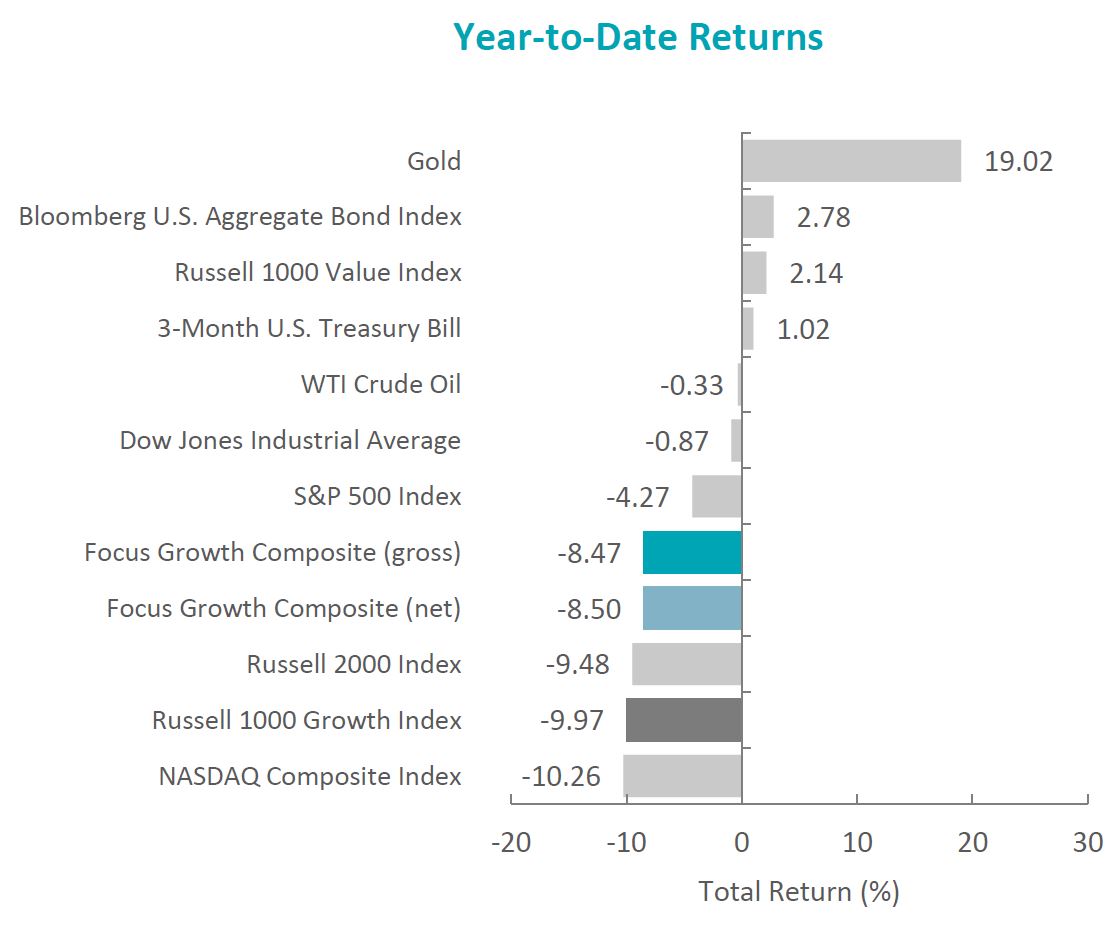
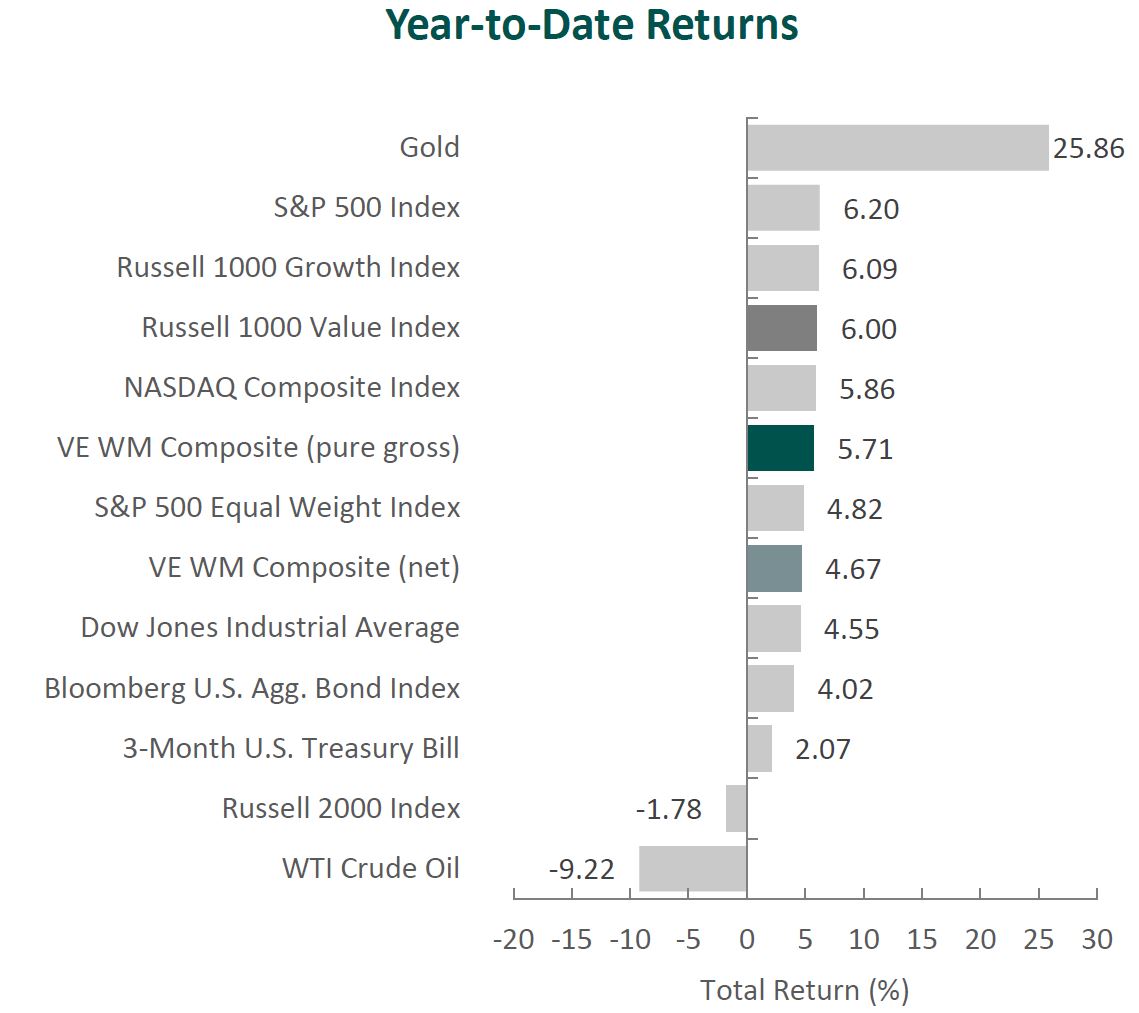
The U.S. equity market continued its ascent to new record highs, with the S&P 500 Index increasing 5.89% during the period. However, unlike last quarter, the market showed broader gains, with the S&P 500 Equal Weight Index outperforming the cap-weighted S&P 500 Index by 3.71%. Concurrently, the Bloomberg U.S. Aggregate Bond Index rose 5.20% for the quarter as interest rates declined. In terms of style, the Russell 1000 Value Index outperformed its growth counterpart by 6.24%.
On a sector basis, gains were made from ten of the eleven sectors within the S&P 500 Index, led by Utilities and Real Estate. The worst-performing sectors were Energy and Information Technology.
Sources: CAPS CompositeHubTM, Bloomberg Past performance is not indicative of future results. Aristotle Atlantic Core Equity Composite returns are presented gross and net of investment advisory fees and include the reinvestment of all income. Gross returns will be reduced by fees and other expenses that may be incurred in the management of the account. Net returns are presented net of actual investment advisory fees and after the deduction of all trading expenses. Aristotle Atlantic Composite returns are preliminary pending final account reconciliation. Please see important disclosures at the end of this document.
After slowing down for two consecutive quarters, U.S. economic growth accelerated to an annualized rate of 3.0%, as consumer spending and private inventory investments increased. Additionally, inflation inched closer to the Federal Reserve’s 2.0% target, with the CPI increasing at an annualized rate of 2.5% in August and 2.9% in July. Meanwhile, the U.S. labor market cooled slightly, with unemployment at 4.2% and nominal wage growth moderating during the period.
Given the ongoing progress toward target inflation and a softening labor market, the Federal Reserve lowered the target range of the federal funds rate by 50 basis points to 4.75% to 5.00%. Fed Chair Powell acknowledged that loosening policy restraint too quickly could undo progress on inflation, whereas moving too slowly could undermine economic activity and weaken employment. Therefore, Powell stressed the importance of monitoring economic data before making further adjustments to monetary policy.
Corporate earnings remained strong, with S&P 500 companies reporting earnings growth of 11.3%, the highest year-over-year improvement since 2021. Furthermore, only 67 S&P 500 companies issued negative EPS guidance, and about 80% exceeded estimates. Reflecting the general trend of disinflation and a resilient domestic economy, fewer companies mentioned topics like “inflation” and “recession” during earnings calls.
In political news, President Biden announced he would not seek re-election. Vice President Kamala Harris was subsequently named the official Democratic presidential nominee for the 2024 election. In geopolitics, tensions in the Middle East escalated as clashes between Israeli forces and Hezbollah fighters intensified. In response, the U.S. announced the urgent deployment of additional troops to the region in case of a wider regional conflict, while simultaneously mediating a potential ceasefire between the groups.
Performance and Attribution Summary
For the third quarter of 2024, Aristotle Atlantic’s Core Equity Composite posted a total return of 3.19% gross of fees (3.09% net of fees), underperforming the S&P 500 Index, which recorded a total return of 5.89%.
Performance (%)
3Q24
1 Year
3 Years
5 Years
10 Years
Since Inception*
Core Equity Composite (gross)
3.19
37.86
9.30
15.37
13.71
14.26
Core Equity Composite (net)
3.09
37.37
8.86
14.90
13.22
13.75
S&P 500 Index
5.89
36.35
11.91
15.98
13.38
13.73
*The Core Equity Composite has an inception date of August 1, 2013. Past performance is not indicative of future results. Aristotle Atlantic Core Equity Composite returns are presented gross and net of investment advisory fees and include the reinvestment of all income. Gross returns will be reduced by fees and other expenses that may be incurred in the management of the account. Net returns are presented net of actual investment advisory fees and after the deduction of all trading expenses. Aristotle Atlantic Composite returns are preliminary pending final account reconciliation. Please see important disclosures at the end of this document.
Source: FactSet Past performance is not indicative of future results. Attribution results are based on sector returns which are gross of investment advisory fees. Attribution is based on performance that is gross of investment advisory fees and includes the reinvestment of income. Please see important disclosures at the end of this document.
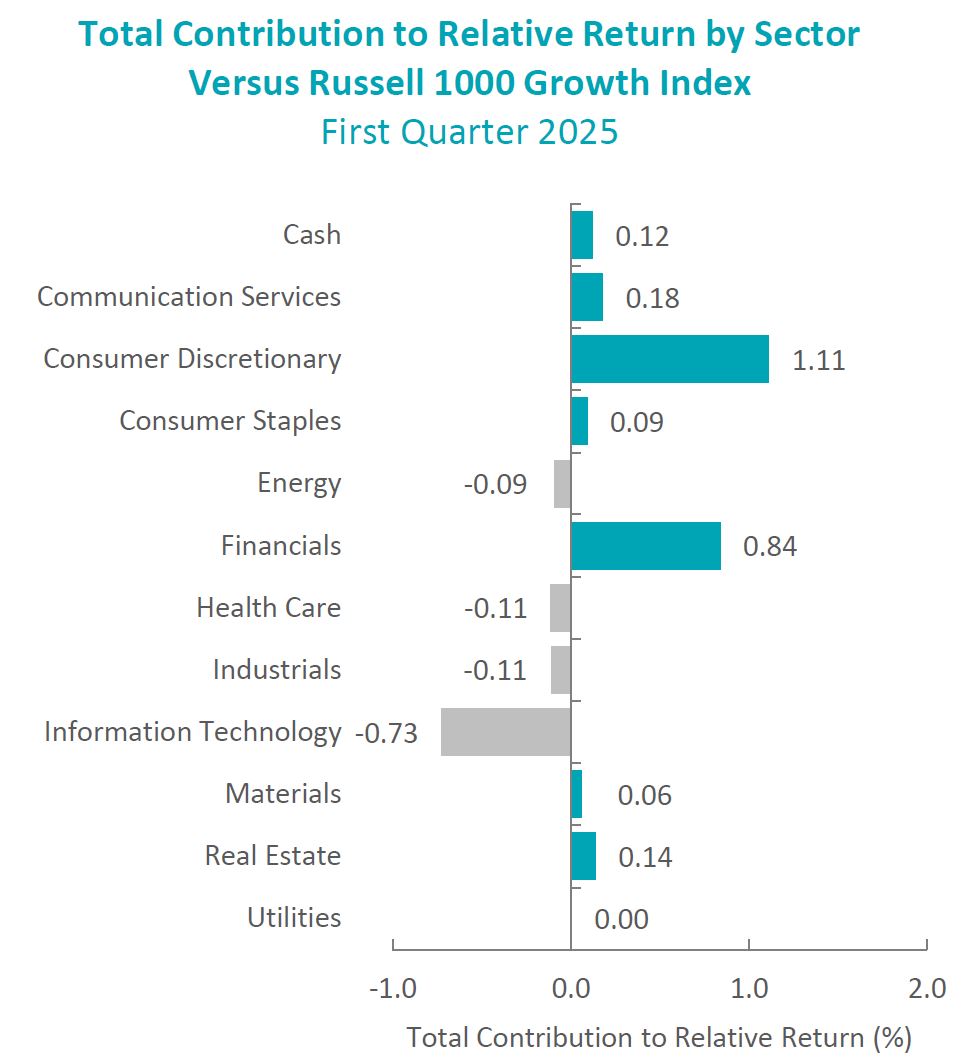
During the third quarter, the portfolio’s underperformance relative to the S&P 500 Index was due to security selection. Security selection in Industrials and Consumer Discretionary detracted the most from relative performance. Conversely, security selection in Utilities and Health Care detracted the least from relative performance.
Contributors and Detractors for 3Q 2024
Relative Contributors
Relative Detractors
Trane Technologies
Applied Materials
Intercontinental Exchange
Halliburton
Norfolk Southern
Alphabet
NextEra Energy
Antero Resources
Home Depot
Guardant Health
Contributors
Trane Technologies
Trane Technologies contributed to performance in the third quarter. After reporting second quarter earnings and revenue that exceeded consensus estimates in early August, the company’s management appeared at multiple investor events in September where they spoke about opportunities for the HVAC market. There is strength in the commercial business related to improving energy efficiency demand broadly and additional cooling opportunities in data centers. The residential business is beginning to recover after a period of weakness.
Intercontinental Exchange
Intercontinental Exchange contributed to portfolio performance in the third quarter, driven by continued strength in the company’s Exchanges segment and expectations that the Mortgage Technology segment’s revenues have troughed ahead of an eventual recovery in U.S. housing market activity. Exchanges’ revenues continue to be driven by growth in energy and interest rate futures trading volumes, with energy trading activity expected to remain elevated, primarily bolstered by increasing data center-driven electricity demand.
Detractors
Applied Materials
Applied Materials detracted from performance in the third quarter as the stock was part of the general investor pullback in AI-related semiconductor names due to concerns about overall AI market growth in the near-term and profitability of the massive capex investments being made in AI infrastructure. The company delivered an inline quarter with solid execution and it continues to benefit from a secular shift to highly complex semiconductors design and manufacturing, but there continue to be pockets of weakness and concerns that include weaker NAND manufacturing and potential for further trade restrictions on Chinese equipment purchases.
Halliburton
Halliburton detracted from performance in the third quarter, as oil prices pulled back on increasing concerns about a slowdown in the U.S. and the global economy and continued headwinds from lower-than-expected growth in the Chinese economy. Halliburton reported second quarter earnings that indicated a weakening North American market for its services, and this was reflected in the company’s guide for the second half of the year, which showed the slower North American market continuing through the end of the year. We believe that 2024 will mark the trough for Halliburton’s North American market and that it should benefit from improving demand from a strengthening natural gas price and newly consolidated customers seeking to use the company’s high-quality product offerings. We are also anticipating better-than-expected growth from its international markets, including offshore. We believe that the current valuation continues to reflect a significantly more negative outlook for the North American market than we view for 2025.
Recent Portfolio Activity
The table below shows all buys and sells completed during the quarter, followed by a brief rationale.
Buys
Sells
None
Estée Lauder
Buys
None
Sells
Estée Lauder Inc.
We sold Estée Lauder, as Chinese consumer headwinds continue to present an unpredictable pace of recovery. And while Estée has taken action to reduce costs and drive a profit recovery plan, it is apparent that a certain level of volume will be necessary to make that plan successful, and that is difficult to predict with a high degree of certainty. China-driven travel retail business continues to be slower than anticipated, pushing out the expected timing of a recovery. Despite the weakness in share price, Estée continues to trade at a premium multiple, and consensus estimates may prove aggressive should Chinese consumer weakness linger. Lastly, with a pending transition in both the CFO and CEO roles, we see the potential for another reset as the new management team takes over.
Outlook
The equity markets in the third quarter posted positive returns, led by the interest rate sensitive sectors of Utilities and Real Estate. The sector performance reflected a sizable decline in interest rates with the 10-year U.S. Treasury yield down by about 70 basis points for the quarter. Economic activity continued to show signs of moderating with the ISM Manufacturing Index remaining in contraction territory and employment statistics slowing. Equity valuation levels remain elevated compared to historical levels, leaving little room for a sizable multiple expansion. There has been no improvement in the geopolitical situation and the US Presidential election remains a toss-up. The market has become more sensitive to a potential recession and declining earnings and less focused on inflation. Although the upside is more muted given the elevated valuation levels, the backdrop of lower interest rates and moderate earnings growth should support equity markets. Our focus will continue to be at the company level, with an emphasis on seeking to invest in companies with secular tailwinds or strong product-driven cycles.
Disclosures
The opinions expressed herein are those of Aristotle Atlantic Partners, LLC (Aristotle Atlantic) and are subject to change without notice. Past performance is not a guarantee or indicator of future results. This material is not financial advice or an offer to purchase or sell any product. You should not assume that any of the securities transactions, sectors or holdings discussed in this report were or will be profitable, or that recommendations Aristotle Atlantic makes in the future will be profitable or equal the performance of the securities listed in this report. The portfolio characteristics shown relate to the Aristotle Atlantic Core Equity strategy. Not every client’s account will have these characteristics. Aristotle Atlantic reserves the right to modify its current investment strategies and techniques based on changing market dynamics or client needs. There is no assurance that any securities discussed herein will remain in an account’s portfolio at the time you receive this report or that securities sold have not been repurchased. The securities discussed may not represent an account’s entire portfolio and, in the aggregate, may represent only a small percentage of an account’s portfolio holdings. The performance attribution presented is of a representative account from Aristotle Atlantic’s Core Equity Composite. The representative account is a discretionary client account which was chosen to most closely reflect the investment style of the strategy. The criteria used for representative account selection is based on the account’s period of time under management and its similarity of holdings in relation to the strategy. Recommendations made in the last 12 months are available upon request.
Returns are presented gross and net of investment advisory fees and include the reinvestment of all income. Gross returns will be reduced by fees and other expenses that may be incurred in the management of the account. Net returns are presented net of actual investment advisory fees and after the deduction of all trading expenses.
All investments carry a certain degree of risk, including the possible loss of principal. Investments are also subject to political, market, currency and regulatory risks or economic developments. International investments involve special risks that may in particular cause a loss in principal, including currency fluctuation, lower liquidity, different accounting methods and economic and political systems, and higher transaction costs. These risks typically are greater in emerging markets. Securities of small‐ and medium‐sized companies tend to have a shorter history of operations, be more volatile and less liquid. Value stocks can perform differently from the market as a whole and other types of stocks.
The material is provided for informational and/or educational purposes only and is not intended to be and should not be construed as investment, legal or tax advice and/or a legal opinion. Investors should consult their financial and tax adviser before making investments. The opinions referenced are as of the date of publication, may be modified due to changes in the market or economic conditions, and may not necessarily come to pass. Information and data presented has been developed internally and/or obtained from sources believed to be reliable. Aristotle Atlantic does not guarantee the accuracy, adequacy or completeness of such information.
Aristotle Atlantic Partners, LLC is an independent registered investment adviser under the Advisers Act of 1940, as amended. Registration does not imply a certain level of skill or training. More information about Aristotle Atlantic, including our investment strategies, fees and objectives, can be found in our Form ADV Part 2, which is available upon request. AAP-2410-21.
Performance Disclosures
Sources: CAPS Composite Hub, Russell Investments
Composite returns for all periods ended September 30, 2024 are preliminary pending final account reconciliation.
The Aristotle Core Equity Composite has an inception date of August 1, 2013 at a predecessor firm. During this time, Mr. Fitzpatrick had primary responsibility for managing the strategy. Performance starting November 1, 2016 was achieved at Aristotle Atlantic.
Past performance is not indicative of future results. Performance results for periods greater than one year have been annualized. Returns are presented gross and net of investment advisory fees and include the reinvestment of all income. Gross returns will be reduced by fees and other expenses that may be incurred in the management of the account. Net returns are presented net of actual investment advisory fees and after the deduction of all trading expenses.
Index Disclosures
The Russell 1000® Growth Index measures the performance of the large cap growth segment of the U.S. equity universe. It includes those Russell 1000 companies with higher price-to-book ratios and higher forecasted growth values. This index has been selected as the benchmark and is used for comparison purposes only. The Russell 1000® Value Index measures the performance of the large cap value segment of the U.S. equity universe. It includes those Russell 1000 companies with lower price-to-book ratios and lower expected growth values. The S&P 500® Index is the Standard & Poor’s Composite Index of 500 stocks and is a widely recognized, unmanaged index of common stock prices. The S&P 500® Equal Weight Index (EWI) is the equal-weight version of the widely-used S&P 500. The index includes the same constituents as the capitalization weighted S&P 500, but each company in the S&P 500 EWI is allocated a fixed weight – or 0.2% of the index total at each quarterly rebalance. The Dow Jones Industrial Average® is a price-weighted measure of 30 U.S. blue-chip companies. The Index covers all industries except transportation and utilities. The NASDAQ Composite Index measures all NASDAQ domestic and international based common type stocks listed on The NASDAQ Stock Market. The NASDAQ Composite includes over 3,000 companies, more than most other stock market indices. The Bloomberg U.S. Aggregate Bond Index is an unmanaged index of domestic investment grade bonds, including corporate, government and mortgage-backed securities. The WTI Crude Oil Index is a major trading classification of sweet light crude oil that serves as a major benchmark price for oil consumed in the United States. The Russell 2000® Index measures the performance of the small cap segment of the U.S. equity universe. The Russell 2000 Index is a subset of the Russell 3000® Index representing approximately 10% of the total market capitalization of that index. It includes approximately 2000 of the smallest securities based on a combination of their market cap and current index membership. The 3-Month U.S. Treasury Bill is a short-term debt obligation backed by the U.S. Treasury Department with a maturity of three months. The Consumer Price Index (CPI) is a measure of the average change over time in the prices paid by urban consumers for a market basket of consumer goods and services. While stock selection is not governed by quantitative rules, a stock typically is added only if the company has an excellent reputation, demonstrates sustained growth and is of interest to a large number of investors. The volatility (beta) of the Composite may be greater or less than its respective benchmarks. It is not possible to invest directly in these indices.
The U.S. equity market continued its ascent to new record highs, with the S&P 500 Index increasing 5.89% during the period. However, unlike last quarter, the market showed broader gains, with the S&P 500 Equal Weight Index outperforming the cap-weighted S&P 500 Index by 3.71%. Concurrently, the Bloomberg U.S. Aggregate Bond Index rose 5.20% for the quarter as interest rates declined. In terms of style, the Russell 1000 Value Index outperformed its growth counterpart by 6.24%.
Sources: CAPS CompositeHubTM, Bloomberg Past performance is not indicative of future results. Aristotle Atlantic Focus Growth Composite returns are presented gross and net of investment advisory fees and include the reinvestment of all income. Gross returns will be reduced by fees and other expenses that may be incurred in the management of the account. Net returns are presented net of actual investment advisory fees and after the deduction of all trading expenses. Aristotle Atlantic Composite returns are preliminary pending final account reconciliation. Please see important disclosures at the end of this document.
On a sector basis, gains were made from all eleven sectors within the Russell 1000 Growth Index, led by Utilities and Real Estate. The worst-performing sectors were Communication Services and Health Care.
After slowing down for two consecutive quarters, U.S. economic growth accelerated to an annualized rate of 3.0%, as consumer spending and private inventory investments increased. Additionally, inflation inched closer to the Federal Reserve’s 2.0% target, with the CPI increasing at an annualized rate of 2.5% in August and 2.9% in July. Meanwhile, the U.S. labor market cooled slightly, with unemployment at 4.2% and nominal wage growth moderating during the period.
Given the ongoing progress toward target inflation and a softening labor market, the Federal Reserve lowered the target range of the federal funds rate by 50 basis points to 4.75% to 5.00%. Fed Chair Powell acknowledged that loosening policy restraint too quickly could undo progress on inflation, whereas moving too slowly could undermine economic activity and weaken employment. Therefore, Powell stressed the importance of monitoring economic data before making further adjustments to monetary policy.
Corporate earnings remained strong, with S&P 500 companies reporting earnings growth of 11.3%, the highest year-over-year improvement since 2021. Furthermore, only 67 S&P 500 companies issued negative EPS guidance, and about 80% exceeded estimates. Reflecting the general trend of disinflation and a resilient domestic economy, fewer companies mentioned topics like “inflation” and “recession” during earnings calls.
In political news, President Biden announced he would not seek re-election. Vice President Kamala Harris was subsequently named the official Democratic presidential nominee for the 2024 election. In geopolitics, tensions in the Middle East escalated as clashes between Israeli forces and Hezbollah fighters intensified. In response, the U.S. announced the urgent deployment of additional troops to the region in case of a wider regional conflict, while simultaneously mediating a potential ceasefire between the groups.
Performance and Attribution Summary
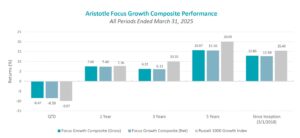
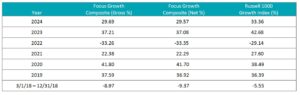
For the third quarter of 2024, Aristotle Atlantic’s Focus Growth Composite posted a total return of 2.84% gross of fees (2.82% net of fees), underperforming the 3.19% total return of the Russell 1000 Growth Index.
Performance (%)
3Q24
1 Year
3 Years
5 Years
Since Inception*
Focus Growth Composite (gross)
2.84
42.00
6.78
16.04
14.63
Focus Growth Composite (net)
2.82
41.86
6.67
15.91
14.39
Russell 1000 Growth Index
3.19
42.19
12.02
19.74
17.35
*The Focus Growth Composite has an inception date of March 1, 2018. Past performance is not indicative of future results. Aristotle Atlantic Focus Growth Composite returns are presented gross and net of investment advisory fees and include the reinvestment of all income. Gross returns will be reduced by fees and other expenses that may be incurred in the management of the account. Net returns are presented net of actual investment advisory fees and after the deduction of all trading expenses. Aristotle Atlantic Composite returns are preliminary pending final account reconciliation. Please see important disclosures at the end of this document.
Sources: FactSet Past performance is not indicative of future results. Attribution results are based on sector returns which are gross of investment advisory fees. Attribution is based on performance that is gross of investment advisory fees and includes the reinvestment of income. Please see important disclosures at the end of this document.
During the third quarter, the portfolio’s underperformance relative to the Russell 1000 Growth Index was primarily due to security selection. Security selection in Information Technology and Health Care detracted the most from relative performance. Conversely, security selection in Industrials and Consumer Discretionary contributed to relative performance.
Contributors and Detractors for 3Q 2024
Relative Contributors
Relative Detractors
Trane Technologies
Dexcom
S&P Global
Synopsys
Expedia Group
Guardant Health
Home Depot
KLA Corporation
ServiceNow
Datadog
Contributors
Trane Technologies
Trane Technologies contributed to performance in the third quarter. After reporting second quarter earnings and revenue that exceeded consensus estimates in early August, the company’s management appeared at multiple investor events in September where they spoke about opportunities for the HVAC market. There is strength in the commercial business related to improving energy efficiency demand broadly and additional cooling opportunities in data centers. The residential business is beginning to recover after a period of weakness.
S&P Global
S&P Global contributed to portfolio performance in the third quarter, driven by growth in corporate bond issuance and refinancing activity, with expectations for further acceleration if interest rates decline. The company has also achieved better-than-expected expense and revenue synergies from its acquisition of IHS Markit.
Detractors
Dexcom
Dexcom detracted from performance in the third quarter following an uncharacteristic earnings miss, which manifested late in the quarter. The miss was attributed to share loss in the durable medical equipment (DME) channel, reaching a full rebate threshold with insurance companies sooner than expected and a recent salesforce realignment that resulted in slower new patient starts. Management was clear that these are Dexcom specific issues around execution and that they were taking action to remediate those effects. The company stood by their long-range plan which calls for 15%-plus topline growth. We believe Dexcom now trades at a relatively attractive valuation given the strong long-term growth profile.
Synopsys
Synopsys detracted from performance in the third quarter as the stock was part of the general investor pullback in AI-related semiconductor names due to concerns about overall AI market growth in the near-term and profitability of the massive capex investments being made in AI infrastructure. The company continues to execute well on its AI-enhanced product suite and Synopsys IP and Tools continue to be an integral part of the semiconductor design and manufacturing supply chain. As semiconductor companies and enterprises continue to rely on increasingly complex semiconductors in their technology stack, we see Synopsys as a key beneficiary of the increased design and manufacturing spend.
Recent Portfolio Activity
The table below shows all buys and sells completed during the quarter, followed by a brief rationale.
Buys
Sells
Linde
IDEXX Laboratories
Thermo Fisher Scientific
Buys
Linde
Linde is the largest industrial gas company worldwide and a major technological innovator in the industry. The company produces atmospheric gases like oxygen, nitrogen, argon, and rare gases through air separation processes, with cryogenic air separation being the most prevalent. They also have technologies to produce blue and green hydrogen, which are considered clean energy. Linde uses three basic distribution methods for industrial gases: on-site or tonnage, merchant or bulk liquid, and packaged or cylinder gases. These methods are often integrated, with products from all three supply modes coming from the same plant. The method of supply is determined by the lowest cost means of meeting the customer’s needs.
Linde holds a leading market share in a consolidated industry, with expected revenues of approximately $34 billion in 2024. The company has consistently grown its earnings throughout economic cycles due to its exposure to both cyclical end markets and is secured by long-term supply agreements of at least three years, providing defensive characteristics to its operating model. We see a robust backlog and pipeline driven by attractive growth end markets and significant decarbonization opportunities with operational discipline from management.
Sells
IDEXX Laboratories, Inc.
We sold IDEXX Laboratories on concerns that the cumulative effects of past pricing power and subdued volume growth will begin to impact sales growth as pricing power subsides. Furthermore, signs point to a slowing consumer, which could soften demand for vet services and thus adversely affect testing volumes. IDEXX trades at a premium multiple, and we have seen signs of slowing growth having outsized impacts on stock prices in the most recent earnings period.
Thermo Fisher Scientific Inc.
We sold Thermo Fisher Scientific due to the reduction in the Health Care weighting in the Russell 1000 Growth benchmark as a result of the annual rebalance. Furthermore, we believe that Thermo is trading at a full valuation based on its expected earnings growth and the softness in some life science-related end markets.
Outlook
The equity markets in the third quarter posted positive returns, led by the interest rate sensitive sectors of Utilities and Real Estate. The sector performance reflected a sizable decline in interest rates with the 10-year U.S. Treasury yield down by about 70 basis points for the quarter. Economic activity continued to show signs of moderating with the ISM Manufacturing Index remaining in contraction territory and employment statistics slowing. Equity valuation levels remain elevated compared to historical levels, leaving little room for a sizable multiple expansion. There has been no improvement in the geopolitical situation and the US Presidential election remains a toss-up. The market has become more sensitive to a potential recession and declining earnings and less focused on inflation. Although the upside is more muted given the elevated valuation levels, the backdrop of lower interest rates and moderate earnings growth should support equity markets. Our focus will continue to be at the company level, with an emphasis on seeking to invest in companies with secular tailwinds or strong product-driven cycles.
Disclosures
The opinions expressed herein are those of Aristotle Atlantic Partners, LLC (Aristotle Atlantic) and are subject to change without notice. Past performance is not a guarantee or indicator of future results. This material is not financial advice or an offer to purchase or sell any product. You should not assume that any of the securities transactions, sectors or holdings discussed in this report were or will be profitable, or that recommendations Aristotle Atlantic makes in the future will be profitable or equal the performance of the listed in this report. The portfolio characteristics shown relate to the Aristotle Atlantic Focus Growth strategy. Not every client’s account will have these characteristics. Aristotle Atlantic reserves the right to modify its current investment strategies and techniques based on changing market dynamics or client needs. There is no assurance that any securities discussed herein will remain in an account’s portfolio at the time you receive this report or that securities sold have not been repurchased. The securities discussed may not represent an account’s entire portfolio and, in the aggregate, may represent only a small percentage of an account’s portfolio holdings. The performance attribution presented is of a representative account from Aristotle Atlantic’s Focus Growth Composite. The representative account is a discretionary client account which was chosen to most closely reflect the investment style of the strategy. The criteria used for representative account selection is based on the account’s period of time under management and its similarity of holdings in relation to the strategy. Recommendations made in the last 12 months are available upon request. Returns are presented gross and net of investment advisory fees and include the reinvestment of all income. Gross returns will be reduced by fees and other expenses that may be incurred in the management of the account. Net returns are presented net of actual investment advisory fees and after the deduction of all trading expenses.
All investments carry a certain degree of risk, including the possible loss of principal. Investments are also subject to political, market, currency and regulatory risks or economic developments. International investments involve special risks that may in particular cause a loss in principal, including currency fluctuation, lower liquidity, different accounting methods and economic and political systems, and higher transaction costs. These risks typically are greater in emerging markets. Securities of small‐ and medium‐sized companies tend to have a shorter history of operations, be more volatile and less liquid. Value stocks can perform differently from the market as a whole and other types of stocks.
The material is provided for informational and/or educational purposes only and is not intended to be and should not be construed as investment, legal or tax advice and/or a legal opinion. Investors should consult their financial and tax adviser before making investments. The opinions referenced are as of the date of publication, may be modified due to changes in the market or economic conditions, and may not necessarily come to pass. Information and data presented has been developed internally and/or obtained from sources believed to be reliable. Aristotle Atlantic does not guarantee the accuracy, adequacy or completeness of such information.
Aristotle Atlantic Partners, LLC is an independent registered investment adviser under the Advisers Act of 1940, as amended. Registration does not imply a certain level of skill or training. More information about Aristotle Atlantic, including our investment strategies, fees and objectives, can be found in our Form ADV Part 2, which is available upon request. AAP-2410-22.
Performance Disclosures
Sources: CAPS CompositeHubTM, Russell Investments
Composite returns for all periods ended September 30, 2024 are preliminary pending final account reconciliation.
Past performance is not indicative of future results. Performance results for periods greater than one year have been annualized. Returns are presented gross and net of investment advisory fees and include the reinvestment of all income. Gross returns will be reduced by fees and other expenses that may be incurred in the management of the account. Net returns are presented net of actual investment advisory fees and after the deduction of all trading expenses.
Index Disclosures
The Russell 1000® Growth Index measures the performance of the large cap growth segment of the U.S. equity universe. It includes those Russell 1000 companies with higher price-to-book ratios and higher forecasted growth values. This index has been selected as the benchmark and is used for comparison purposes only. The Russell 1000® Value Index measures the performance of the large cap value segment of the U.S. equity universe. It includes those Russell 1000 companies with lower price-to-book ratios and lower expected growth values. The S&P 500® Index is the Standard & Poor’s Composite Index of 500 stocks and is a widely recognized, unmanaged index of common stock prices. The S&P 500® Equal Weight Index (EWI) is the equal-weight version of the widely-used S&P 500. The index includes the same constituents as the capitalization weighted S&P 500, but each company in the S&P 500 EWI is allocated a fixed weight – or 0.2% of the index total at each quarterly rebalance. The Russell 2000® Index measures the performance of the small cap segment of the U.S. equity universe. The Russell 2000 Index is a subset of the Russell 3000® Index representing approximately 10% of the total market capitalization of that index. It includes approximately 2,000 of the smallest securities based on a combination of their market cap and current index membership. The Dow Jones Industrial Average® is a price-weighted measure of 30 U.S. blue-chip companies. The Index covers all industries except transportation and utilities. The NASDAQ Composite Index measures all NASDAQ domestic and international based common type stocks listed on The NASDAQ Stock Market. The NASDAQ Composite includes over 3,000 companies, more than most other stock market indices. The Bloomberg U.S. Aggregate Bond Index is an unmanaged index of domestic investment grade bonds, including corporate, government and mortgage-backed securities. The WTI Crude Oil Index is a major trading classification of sweet light crude oil that serves as a major benchmark price for oil consumed in the United States. The 3-Month U.S. Treasury Bill is a short-term debt obligation backed by the U.S. Treasury Department with a maturity of three months. The Consumer Price Index (CPI) is a measure of the average change over time in the prices paid by urban consumers for a market basket of consumer goods and services. While stock selection is not governed by quantitative rules, a stock typically is added only if the company has an excellent reputation, demonstrates sustained growth and is of interest to a large number of investors. The volatility (beta) of the Composite may be greater or less than its respective benchmarks. It is not possible to invest directly in these indices.
The U.S. equity market continued its ascent to new record highs, with the S&P 500 Index increasing 5.89% during the period. However, unlike last quarter, the market showed broader gains, with the S&P 500 Equal Weight Index outperforming the cap-weighted S&P 500 Index by 3.71%. Concurrently, the Bloomberg U.S. Aggregate Bond Index rose 5.20% for the quarter as interest rates declined. In terms of style, the Russell 1000 Value Index outperformed its growth counterpart by 6.24%.
On a sector basis, gains were made from all eleven sectors within the Russell 1000 Growth Index, led by Utilities and Real Estate. The worst-performing sectors were Communication Services and Health Care.
Sources: CAPS CompositeHubTM, Bloomberg Past performance is not indicative of future results. Aristotle Atlantic Large Cap Growth Composite returns are presented gross and net of investment advisory fees and include the reinvestment of all income. Gross returns will be reduced by fees and other expenses that may be incurred in the management of the account. Net returns are presented net of actual investment advisory fees and after the deduction of all trading expenses. Aristotle Atlantic Composite returns are preliminary pending final account reconciliation. Please see important disclosures at the end of this document.
After slowing down for two consecutive quarters, U.S. economic growth accelerated to an annualized rate of 3.0%, as consumer spending and private inventory investments increased. Additionally, inflation inched closer to the Federal Reserve’s 2.0% target, with the CPI increasing at an annualized rate of 2.5% in August and 2.9% in July. Meanwhile, the U.S. labor market cooled slightly, with unemployment at 4.2% and nominal wage growth moderating during the period.
Given the ongoing progress toward target inflation and a softening labor market, the Federal Reserve lowered the target range of the federal funds rate by 50 basis points to 4.75% to 5.00%. Fed Chair Powell acknowledged that loosening policy restraint too quickly could undo progress on inflation, whereas moving too slowly could undermine economic activity and weaken employment. Therefore, Powell stressed the importance of monitoring economic data before making further adjustments to monetary policy.
Corporate earnings remained strong, with S&P 500 companies reporting earnings growth of 11.3%, the highest year-over-year improvement since 2021. Furthermore, only 67 S&P 500 companies issued negative EPS guidance, and about 80% exceeded estimates. Reflecting the general trend of disinflation and a resilient domestic economy, fewer companies mentioned topics like “inflation” and “recession” during earnings calls.
In political news, President Biden announced he would not seek re-election. Vice President Kamala Harris was subsequently named the official Democratic presidential nominee for the 2024 election. In geopolitics, tensions in the Middle East escalated as clashes between Israeli forces and Hezbollah fighters intensified. In response, the U.S. announced the urgent deployment of additional troops to the region in case of a wider regional conflict, while simultaneously mediating a potential ceasefire between the groups.
Performance and Attribution Summary
For the third quarter of 2024, Aristotle Atlantic’s Large Cap Growth Composite posted a total return of 1.26% gross of fees (1.11% net of fees), underperforming the 3.19% return of the Russell 1000 Growth Index.
Performance (%)
3Q24
1 Year
3 Years
5 Years
Since Inception*
Large Cap Growth Composite (gross)
1.26
37.33
7.13
16.40
17.62
Large Cap Growth Composite (net)
1.11
36.65
6.67
15.92
17.14
Russell 1000 Growth Index
3.19
42.19
12.02
19.74
19.24
*The Large Cap Growth Composite has an inception date of November 1, 2016. Past performance is not indicative of future results. Aristotle Atlantic Large Cap Growth Equity Composite returns are presented gross and net of investment advisory fees and include the reinvestment of all income. Gross returns will be reduced by fees and other expenses that may be incurred in the management of the account. Net returns are presented net of actual investment advisory fees and after the deduction of all trading expenses. Aristotle Atlantic Composite returns are preliminary pending final account reconciliation. Please see important disclosures at the end of this document.
Sources: FactSet Past performance is not indicative of future results. Attribution results are based on sector returns which are gross of investment advisory fees. Attribution is based on performance that is gross of investment advisory fees and includes the reinvestment of income. Please see important disclosures at the end of this document.
During the third quarter, the portfolio’s underperformance relative to the Russell 1000 Growth Index was primarily due to security selection. Security selection in Information Technology and Health Care detracted the most from relative performance. Conversely, security selection in Consumer Discretionary and Real Estate detracted the least.
Contributors and Detractors for 3Q 2024
Relative Contributors
Relative Detractors
Expedia Group
Dexcom
ServiceNow
Synopsys
Home Depot
Tesla
Adaptive Biotechnologies
Guardant Health
UnitedHealth Group
KLA Corporation
Detractors
Dexcom
Dexcom detracted from performance in the third quarter following an uncharacteristic earnings miss, which manifested late in the quarter. The miss was attributed to share loss in the durable medical equipment (DME) channel, reaching a full rebate threshold with insurance companies sooner than expected, and a recent salesforce realignment that resulted in slower new patient starts. Management was clear that these are Dexcom-specific issues around execution and that they were taking action to remediate those effects. The company stood by its long-range plan, which calls for 15%-plus top-line growth. We believe Dexcom now trades at a relatively attractive valuation given the strong long-term growth profile.
Synopsys
Synopsys detracted from performance in the third quarter. The stock was part of the general investor pullback in AI-related semiconductor names due to concerns about overall AI market growth in the near term and profitability of the massive capex investments being made in AI infrastructure. The company continues to execute well on its AI-enhanced product suite, and Synopsys IP and tools continue to be an integral part of the semiconductor design and manufacturing supply chain. As semiconductor companies and enterprises continue to rely on increasingly complex semiconductors in their technology stack, we see Synopsys as a key beneficiary of the increased design and manufacturing spend.
Contributors
Expedia Group
Expedia contributed to performance in the third quarter. The company reported better-than-expected second quarter earnings in August. The outlook for the year was reduced; however, the stock was trading at under 10x earnings at the time of the outlook reduction. The vacation home rental business Vrbo returned to growth. The significant return of capital continues with the share count having been reduced over the past year.
ServiceNow
ServiceNow contributed to performance in the third quarter, as the company reported what we consider to be solid second quarter earnings results that continue to highlight ongoing traction of its company’s product platform and improving momentum for the GenAI product lines. The company’s guidance for third quarter current remaining performance obligations (cRPO) was also ahead of consensus, which supports the strength of the company’s product platform in a software spending environment that continues to see headwinds from macroeconomic factors and budgets shifting to GenAI products.
Recent Portfolio Activity
The table below shows all buys and sells completed during the quarter, followed by a brief rationale.
Buys
Sells
Eli Lilly
BioMarin Pharmaceutical
Linde
Estée Lauder
IDEXX Laboratories
Thermo Fisher Scientific
Buys
Eli Lilly and Company
Eli Lilly is a leading pharmaceutical company that develops diabetes, oncology, immunology and neuroscience medicines. The company generates over half of its revenue in the U.S. from its leading drugs Trulicity, Verzenio and Taltz. The company operates in a single business segment: human pharmaceutical products.
Eli Lilly has a deep pipeline in treatment areas focused on metabolic disorders, oncology, immunology and central nervous system disorders. Currently, there are two phase-three assets: orforglipron, an oral GLP-1, and retatrutide, a triple incretin agonist, which could possibly expand upon the potential success of Mounjaro. We believe that Mounjaro has the potential to commercialize beyond Type 2 diabetes and obesity, potentially in the areas mentioned above of heart disease, sleep apnea, fatty liver disease and chronic kidney disease. We believe the premium valuation is supported by this outsized growth profile.
Linde
Linde is the largest industrial gas company worldwide and a major technological innovator in the industry. The company produces atmospheric gases like oxygen, nitrogen, argon and rare gases through air separation processes, with cryogenic air separation being the most prevalent. It also has technologies to produce blue and green hydrogen, which are considered clean energy. Linde uses three basic distribution methods for industrial gases: on-site or tonnage, merchant or bulk liquid, and packaged or cylinder gases. These methods are often integrated, with products from all three supply modes coming from the same plant. The method of supply is determined by the lowest cost means of meeting the customer’s needs.
Linde holds a leading market share in a consolidated industry, with expected revenues of approximately $34 billion in 2024. The company has consistently grown its earnings throughout economic cycles due to its exposure to both cyclical and defensive end markets. The operating model also benefits from defensive characteristics that include long-term supply agreements signed with customers, with over 70% of the business has contracts of at least 3 years, providing defensive characteristics to its operating model. We see a robust backlog and pipeline driven by attractive growth end markets and significant decarbonization opportunities with operational discipline from management.
Sells
BioMarin Pharmaceutical Inc.
We sold BioMarin Pharmaceutical following better-than-expected competitive data from Ascendis Pharma for the treatment of achondroplasia. Given that BioMarin has anchored future growth expectations around its achondroplasia drug Voxzogo, this competitive threat adds a new dimension to the story. While there were nuances between the study design of the two drugs, we believe this will be an overhang on BioMarin shares for the foreseeable future.
Estée Lauder Inc.
We sold Estée Lauder, as Chinese consumer headwinds continue to present an unpredictable pace of recovery. And while Estée has taken action to reduce costs and drive a profit recovery plan, it is apparent that a certain level of volume will be necessary to make that plan successful, and that is difficult to predict with a high degree of certainty. China-driven travel retail business continues to be slower than anticipated, pushing out the expected timing of a recovery. Despite the weakness in share price, Estée continues to trade at a premium multiple, and consensus estimates may prove aggressive should Chinese consumer weakness linger. Lastly, with a pending transition in both the CFO and CEO roles, we see the potential for another reset as the new management team takes over.
IDEXX Laboratories, Inc.
We sold IDEXX Laboratories on concerns that the cumulative effects of past pricing power and subdued volume growth will begin to impact sales growth as pricing power subsides. Furthermore, signs point to a slowing consumer, which could soften demand for vet services and thus adversely affect testing volumes. IDEXX trades at a premium multiple, and we have seen signs of slowing growth having outsized impacts on stock prices in the most recent earnings period.
Thermo Fisher Scientific Inc.
We sold Thermo Fisher Scientific due to the reduction in the Health Care weighting in the Russell 1000 Growth benchmark due to the annual rebalance. Furthermore, we believe that Thermo is trading at a full valuation based on its expected earnings growth and the softness in some life science-related end markets.
Outlook
The equity markets in the third quarter posted positive returns, led by the interest rate sensitive Utilities and Real Estate sectors. The sector performance reflected a sizable decline in interest rates, with the 10-year U.S. Treasury yield down about 70 basis points for the quarter. Economic activity continued to show signs of moderating, with the ISM Manufacturing Index remaining in contraction territory and employment statistics slowing. Equity valuation levels remain elevated compared to historical levels, leaving little room for sizable multiple expansion. There has been no improvement in the geopolitical situation, and the U.S. presidential election remains a toss-up. The market has become more sensitive to a potential recession and declining earnings and less focused on inflation. Although the upside is more muted given the elevated valuation levels, the backdrop of lower interest rates and moderate earnings growth should support equity markets. Our focus will continue to be at the company level, with an emphasis on seeking to invest in companies with secular tailwinds or strong product-driven cycles.
Disclosures
The opinions expressed herein are those of Aristotle Atlantic Partners, LLC (Aristotle Atlantic) and are subject to change without notice. Past performance is not a guarantee or indicator of future results. This material is not financial advice or an offer to purchase or sell any product. You should not assume that any of the securities transactions, sectors or holdings discussed in this report were or will be profitable, or that recommendations Aristotle Atlantic makes in the future will be profitable or equal the performance of the securities listed in this report. The portfolio characteristics shown relate to the Aristotle Atlantic Large Cap Growth strategy. Not every client’s account will have these characteristics. Aristotle Atlantic reserves the right to modify its current investment strategies and techniques based on changing market dynamics or client needs. There is no assurance that any securities discussed herein will remain in an account’s portfolio at the time you receive this report or that securities sold have not been repurchased. The securities discussed may not represent an account’s entire portfolio and, in the aggregate, may represent only a small percentage of an account’s portfolio holdings. The performance attribution presented is of a representative account from Aristotle Atlantic’s Large Cap Growth Composite. The representative account is a discretionary client account which was chosen to most closely reflect the investment style of the strategy. The criteria used for representative account selection is based on the account’s period of time under management and its similarity of holdings in relation to the strategy. Recommendations made in the last 12 months are available upon request. Returns are presented gross and net of investment advisory fees and include the reinvestment of all income. Gross returns will be reduced by fees and other expenses that may be incurred in the management of the account. Net returns are presented net of actual investment advisory fees and after the deduction of all trading expenses.
All investments carry a certain degree of risk, including the possible loss of principal. Investments are also subject to political, market, currency and regulatory risks or economic developments. International investments involve special risks that may in particular cause a loss in principal, including currency fluctuation, lower liquidity, different accounting methods and economic and political systems, and higher transaction costs. These risks typically are greater in emerging markets. Securities of small‐ and medium‐sized companies tend to have a shorter history of operations, be more volatile and less liquid. Value stocks can perform differently from the market as a whole and other types of stocks.
The material is provided for informational and/or educational purposes only and is not intended to be and should not be construed as investment, legal or tax advice and/or a legal opinion. Investors should consult their financial and tax adviser before making investments. The opinions referenced are as of the date of publication, may be modified due to changes in the market or economic conditions, and may not necessarily come to pass. Information and data presented has been developed internally and/or obtained from sources believed to be reliable. Aristotle Atlantic does not guarantee the accuracy, adequacy or completeness of such information.
Aristotle Atlantic Partners, LLC is an independent registered investment adviser under the Advisers Act of 1940, as amended. Registration does not imply a certain level of skill or training. More information about Aristotle Atlantic, including our investment strategies, fees and objectives, can be found in our Form ADV Part 2, which is available upon request. AAP-2410-20
Performance Disclosure
Sources: CAPS CompositeHubTM
Composite returns for all periods ended September 30, 2024 are preliminary pending final account reconciliation.
Past performance is not indicative of future results. Performance results for periods greater than one year have been annualized. Returns are presented gross and net of investment advisory fees and include the reinvestment of all income. Gross returns will be reduced by fees and other expenses that may be incurred in the management of the account. Net returns are presented net of actual investment advisory fees and after the deduction of all trading expenses.
Index Disclosure
The Russell 1000® Growth Index measures the performance of the large cap growth segment of the U.S. equity universe. It includes those Russell 1000 companies with higher price-to-book ratios and higher forecasted growth values. This index has been selected as the benchmark and is used for comparison purposes only. The Russell 1000® Value Index measures the performance of the large cap value segment of the U.S. equity universe. It includes those Russell 1000 companies with lower price-to-book ratios and lower expected growth values. The Russell 2000® Index measures the performance of the small cap segment of the U.S. equity universe. The Russell 2000 Index is a subset of the Russell 3000® Index representing approximately 10% of the total market capitalization of that index. It includes approximately 2000 of the smallest securities based on a combination of their market cap and current index membership. The S&P 500® Index is the Standard & Poor’s Composite Index of 500 stocks and is a widely recognized, unmanaged index of common stock prices. The S&P 500® Equal Weight Index (EWI) is the equal-weight version of the widely-used S&P 500. The index includes the same constituents as the capitalization weighted S&P 500, but each company in the S&P 500 EWI is allocated a fixed weight – or 0.2% of the index total at each quarterly rebalance. The Dow Jones Industrial Average® is a price-weighted measure of 30 U.S. blue-chip companies. The Index covers all industries except transportation and utilities. The NASDAQ Composite Index measures all NASDAQ domestic and international based common type stocks listed on The NASDAQ Stock Market. The NASDAQ Composite includes over 3,000 companies, more than most other stock market indices. The Bloomberg U.S. Aggregate Bond Index is an unmanaged index of domestic investment grade bonds, including corporate, government and mortgage-backed securities. The WTI Crude Oil Index is a major trading classification of sweet light crude oil that serves as a major benchmark price for oil consumed in the United States. The 3-Month U.S. Treasury Bill is a short-term debt obligation backed by the U.S. Treasury Department with a maturity of three months. The Consumer Price Index (CPI) is a measure of the average change over time in the prices paid by urban consumers for a market basket of consumer goods and services. While stock selection is not governed by quantitative rules, a stock typically is added only if the company has an excellent reputation, demonstrates sustained growth and is of interest to a large number of investors. The volatility (beta) of the Composite may be greater or less than its respective benchmarks. It is not possible to invest directly in these indices.
SMID caps enjoyed strong gains in the third quarter with the Russell 2500 index delivering a total return of 8.75% but the performance belies the volatile path taken during the period. Equities rallied in July as a below consensus CPI print lent credence to the soft-landing narrative. However, the risk on environment was punctuated in early August as an interest rate hike by the Bank of Japan and the resulting unwind of the levered Yen carry trade rattled global markets. The second half of the quarter was influenced by softening economic data and the Federal Reserve (Fed). Following comments made at the August Jackson Hole economic symposium that the time had come for policy to adjust, the Federal Reserve voted to cut the Fed Funds by 50 basis points (bps). Markets embraced the decision, ending the inversion of the U.S. Treasury yield curve, and the front end is now pricing in roughly 100 bps of easing in 2024.
Stylistically, value stocks outperformed their growth counterparts during the quarter as evidenced by the Russell 2500 Value Index returning 9.63% compared to 6.99% for the Russell 2500 Growth Index. Energy was a negative sector in both indices with much of the relative outperformance of the value index coming from interest rate-sensitive sectors such as Financials and Real Estate. Looking under the hood, the knock-on effects of lower interest rates could be seen in the value index, as two of the top five performers during the quarter were housing related. While AI enthusiasm has subsided in the second half of 2024, pockets can still be seen in parts of the SMID cap market. Lumen Technologies, a languishing communications company, rallied in August and was the top third-quarter performer in the Russell 2500 index when the company announced $5 billion in new business to provide private networks for AI scalers along with the potential for increased customer demand.
At the sector level, ten of the eleven sectors in the Russell 2500 Index recorded positive returns during the third quarter, led by the Real Estate (+17.76%), Utilities (+14.23%), and Communication Services (+14.00%) sectors. Conversely, Energy (-7.61%), Consumer Staples (+2.62%), and Information Technology (+3.11%) all lagged.
Sources: CAPS Composite Hub, Russell Investments Past performance is not indicative of future results. Returns are presented gross and net of investment advisory fees and include the reinvestment of all income. Gross returns will be reduced by fees and other expenses that may be incurred in the management of the account. Net returns are presented net of actual investment advisory fees and after the deduction of all trading expenses. Aristotle Small Cap Equity Composite returns are preliminary pending final account reconciliation. Please see important disclosures at the end of this document.
Performance Review
For the third quarter of 2024, the Aristotle Small/Mid Cap Equity Composite generated a total return of 9.48% net of fees (9.66% gross of fees), outperforming the 8.75% total return of the Russell 2500 Index. Outperformance was primarily driven by security selection while allocation effects detracted. Overall, security selection was strongest in the Information Technology, Financials, and Materials sectors and weakest in Industrials, Utilities, and Heath Care. From an allocation perspective, the portfolio benefited from an underweight in Consumer Staples and an overweight in Industrials, however, this was offset by an underweight in Real Estate and an overweight in Information Technology.
Relative Contributors
Relative Detractors
Baldwin Insurance Group
Acadia Healthcare
ACI Worldwide
Range Resources
Cohen & Steers
MACOM Technology Solutions
Alamos Gold
Advanced Energy Industries
Belden
Permian Resources
CONTRIBUTORS
Baldwin Insurance Group (BWIN), a Florida-based insurance company operating in the advisory, underwriting, and Mainstreet (consumer/small business) segments, built on second-quarter momentum with above consensus earnings on account of business line growth and margin improvement. We believe the company is starting to benefit from investments in talent made over the past year as well as the launch of new products. We maintain a position as we believe the company should continue to benefit from a positive inflection in free cash flow, improving margins, and deleveraging.
ACI Worldwide (ACIW), a provider of software solutions to facilitate payment transactions for financial institutions, retailers, and payment processors around the world, benefited from strong second-quarter results largely driven by growth in the bank segment along with the announcement of a $400 million stock buyback program. We maintain our investment as we believe the company is executing its strategy to maintain a strong market position in the payments software niche while upgrading its technology in select areas. With ongoing cost controls and high incremental margins on new revenue, we expect the company can drive additional growth with continued debt reduction and share repurchases.
DETRACTORS
Acadia Healthcare (ACHC), a behavioral healthcare and substance abuse treatment services company, declined in late September as a result of two negative news headlines related to patient care and questions about billing practices. While we take these developments seriously, we believe investors’ reaction to the news has been more severe than warranted. Industry peers have faced similar levels of scrutiny in the past with limited fundamental impact, and unless additional information is uncovered, we believe the current scrutiny will be resolved without much of an impact on their business. We continue to believe the company is well positioned to be an important part of the solution to an unfortunately growing need for behavioral health services.
Range Resources (RRC), a natural gas focused exploration and production company with operations in the Appalachian Basin, declined amid a weak commodity price backdrop for energy related companies. We maintain a position, as we believe the company’s low-cost acreage allows it to translate the healthy price environment into earnings and cash flow that is being used to reduce financial leverage, which can accrue additional value to equity shareholders in periods to come.
Recent Portfolio Activity
Buys/Acquisitions
Sells/Liquidations
Amentum Holdings
Diamondback Energy
First Interstate BancSystem
Enviri
Permian Resources
PetIQ
BUYS/ACQUISITIONS
Amentum Holdings (AMTM), a mission critical IT and engineering services company, was spun out of AECOM in 2020 and merged with the military contracting business of current holding, Jacobs Solutions, in September 2024. The portfolio received shares of Amentum Holdings as part of the corporate action.
First Interstate BancSystem (FIBK), a financial holding company, provides community banking solutions to individuals, businesses, and municipalities. The company is selling at attractive valuations as we believe company specific self-help initiatives such as repositioning their balance sheet to take advantage of the Fed’s forward curve are underappreciated by the market and not reflected in the current valuation.
Permian Resources (PR) is a Texas-based oil & gas exploration & production company with a large acreage position and deep inventory of high return potential drilling locations in the core of the Permian Basin. We expect management to continue to execute on its strategy of optimizing returns, diligently allocating capital to new opportunities, and returning excess capital to shareholders.
SELLS/LIQUIDATIONS
Diamondback Energy (FANG), an independent oil and natural gas company, was sold due to its market cap increasing materially above the market cap range of the Russell 2500 Index after its Endeavor Energy Resources acquisition.
Enviri (NVRI), an industrial services provider, was sold due to a change in our thesis arising from the company’s inability to de-lever its balance sheet leading to muted forward growth projections.
PetIQ (PETQ), a manufacturer and distributor of pet health and wellness products, was sold as the stock had appreciated, causing its reward-to-risk profile to compress as it reached our valuation target.
Outlook
We continue to remain optimistic about the long-term potential for the SMID-cap segment of the U.S. market as valuations and potential tailwinds bode well for the asset class. As we look out to the final months of 2024, we are cautiously constructive as encouraging signs of economic stability are balanced by now consensus expectations of a soft landing scenario and risk pricing. While rate-cutting cycles have historically been constructive for smaller companies, there remains a long list of items creating uncertainty that could lead to greater volatility in the final months of the year. This includes but is not limited to, the reignition of inflationary pressures, labor strikes in key industries and ports, geopolitical tensions, U.S. equity index concentration issues, ongoing commercial real estate and regional banking concerns, and the looming presidential election. We are aware that most of these issues are well known, but the timing and magnitude of the impact of any and all of these issues remains unpredictable. Therefore, as we always have, we will continue to avoid the temptation to forecast their outcome in favor of assessing the potential impact from a range of potential outcomes within our company‐specific, bottom-up analysis, and quality focus.
From an asset class perspective, valuations of SMID versus large continue to remain near multi-decade lows, which we believe suggests a more favorable setup for SMID caps relative to large caps in the periods to come (17.7x P/E for the Russell 2500 Index vs. 25.8x P/E for the Russell 1000 Index). Against a backdrop of disinflation, normalized interest rates, and a still growing U.S. economy, it looks to us that the SMID cap’s stretch of underperformance has the potential to end. If the economy continues to stabilize, our view is that valuations are likely to rise for those businesses that have largely sat out the mega-cap performance regime. Lastly, we believe SMID caps remain better positioned to benefit from the reshoring of U.S. manufacturing, a pickup in M&A activity, fiscal policy bills passed in the last few years such as the IRA and Jobs Act, and several infrastructure projects on the horizon.
Positioning
Our current positioning is a function of our bottom-up security selection process and our ability to identify what we view as attractive investment candidates, regardless of economic sector definitions. Overweights in Industrials and Information Technology are mostly a function of our underlying company specific views rather than any top-down predictions for each sector. Conversely, we continue to be underweight in Consumer Discretionary, as we have been unable to identify what we consider to be compelling long-term opportunities that fit our discipline given the rising risk profiles of many retail businesses and a potential deceleration in goods spending following a period of strength. We also continue to be underweight in Real Estate as a result of structural challenges for various end markets within the sector. Given our focus on long-term business fundamentals, patient investment approach and low portfolio turnover, the strategy’s sector positioning generally does not change significantly from quarter to quarter. However, we may take advantage of periods of volatility by adding selectively to certain companies when appropriate.
Disclosures
The opinions expressed herein are those of Aristotle Capital Boston, LLC (Aristotle Boston) and are subject to change without notice.
Past performance is not indicative of future results. The information provided in this report should not be considered financial advice or a recommendation to purchase or sell any particular security. There is no assurance that any securities discussed herein will remain in an account’s portfolio at the time you receive this report or that securities sold have not been repurchased. The securities discussed may not represent an account’s entire portfolio and, in the aggregate, may represent only a small percentage of an account’s portfolio holdings. The performance attribution presented is of a representative account from Aristotle Boston’s Small/Mid Cap Equity Composite. The representative account is a discretionary client account which was chosen to most closely reflect the investment style of the strategy. The criteria used for representative account selection is based on the account’s period of time under management and its similarity of holdings in relation to the strategy. It should not be assumed that any of the securities transactions, holdings or sectors discussed were or will be profitable, or that the investment recommendations or decisions Aristotle Boston makes in the future will be profitable or equal the performance of the securities discussed herein. Aristotle Boston reserves the right to modify its current investment strategies and techniques based on changing market dynamics or client needs. Recommendations made in the last 12 months are available upon request.
Returns are presented gross and net of investment advisory fees and include the reinvestment of all income. Gross returns will be reduced by fees and other expenses that may be incurred in the management of the account. Net returns are presented net of actual investment advisory fees and after the deduction of all trading expenses.
As of December 31, 2014, there were no non-fee-paying accounts in the Composite.
All investments carry a certain degree of risk, including the possible loss of principal. Investments are also subject to political, market, currency and regulatory risks or economic developments. International investments involve special risks that may in particular cause a loss in principal, including currency fluctuation, lower liquidity, different accounting methods and economic and political systems, and higher transaction costs.
These risks typically are greater in emerging markets. Securities of small‐ and medium‐sized companies tend to have a shorter history of operations, be more volatile and less liquid. Value stocks can perform differently from the market as a whole and other types of stocks.
The material is provided for informational and/or educational purposes only and is not intended to be and should not be construed as investment, legal or tax advice and/or a legal opinion. Investors should consult their financial and tax adviser before making investments.
The opinions referenced are as of the date of publication, may be modified due to changes in the market or economic conditions, and may not necessarily come to pass.
Aristotle Capital Boston, LLC is an independent investment adviser registered under the Investment Advisers Act of 1940, as amended. Registration does not imply a certain level of skill or training. More information about Aristotle Boston, including our investment strategies, fees and objectives, can be found in our Form ADV Part 2, which is available upon request. ACB-2410-20
Performance Disclosures
Sources: CAPS Composite Hub, Russell Investments
Composite returns for periods ended September 30, 2024, are preliminary pending final account reconciliation.
*The Aristotle Small/Mid Cap Equity Composite has an inception date of January 1, 2008, at a predecessor firm. During this time, Jack McPherson and Dave Adams had primary responsibility for managing the strategy. Performance starting January 1, 2015, was achieved at Aristotle Boston.
As of December 31, 2014, there were no non-fee-paying accounts in the Composite. Past performance is not indicative of future results. Performance results for periods greater than one year have been annualized.
Returns are presented gross and net of investment advisory fees and include the reinvestment of all income. Gross returns will be reduced by fees and other expenses that may be incurred in the management of the account. Net returns are presented net of actual investment advisory fees and after the deduction of all trading expenses. Please see important disclosures enclosed within this document.
Index Disclosures
The Russell 2500 Index is a subset of the Russell 3000® Index representing approximately 10% of the total market capitalization of that index. It includes approximately 2000 of the smallest securities based on a combination of their market cap and current index membership. The Russell 2500 Growth® Index measures the performance of the small/mid cap companies located in the United States that also exhibit a growth probability. The Russell 2500 Value® Index measures the performance of the small/mid cap companies located in the United States that also exhibit a value probability. The Russell 1000 Index is a subset of the Russell 3000® Index, representing approximately 90% of the total market capitalization of that index. It includes approximately 1,000 of the largest securities based on a combination of their market capitalization and current index membership. The Consumer Price Index (CPI) is a measure of the average change over time in the prices paid by urban consumers for a market basket of consumer goods and services. The volatility (beta) of the composite may be greater or less than the benchmarks. It is not possible to invest directly in these indices.
Small caps enjoyed strong gains in the third quarter with the Russell 2000 index delivering a total return of 9.27% but the performance belies the volatile path taken during the period. Equities rallied in July as a below consensus CPI print lent credence to the soft-landing narrative. However, the risk on environment was punctuated in early August as an interest rate hike by the Bank of Japan and the resulting unwind of the levered Yen carry trade rattled global markets. The second half of the quarter was influenced by softening economic data and the Federal Reserve (Fed). Following comments made at the August Jackson Hole economic symposium that the time had come for policy to adjust, the Federal Reserve voted to cut the Fed Funds by 50 basis points (bps). Markets embraced the decision, ending the inversion of the U.S. Treasury yield curve, and the front end is now pricing in roughly 100 bps of easing in 2024.
Stylistically, value stocks outperformed their growth counterparts during the quarter as evidenced by the Russell 2000 Value Index returning 10.15% compared to 8.41% for the Russell 2000 Growth Index. Energy was the only negative sector in both indices with much of the relative outperformance of the value index coming from interest rate-sensitive sectors such as Financials, Utilities, and Real Estate. Looking under the hood, the knock-on effects of lower interest rates could be seen in the value index, as three of the top ten performers during the quarter were home builders. While AI enthusiasm has subsided in the second half of 2024, pockets can still be seen in parts of the small cap market. Lumen Technologies, a languishing communications company, rallied in August and was the top third-quarter performer in the Russell 2000 index when the company announced $5 billion in new business to provide private networks for AI scalers along with the potential for increased customer demand.
At the sector level, ten of the eleven sectors in the Russell 2000 Index recorded positive returns during the third quarter, led by the Real Estate (+18.16%), Communication Services (+17.79%), and Financials (15.14%) sectors. Conversely, Energy (-8.31%), Information Technology (+4.30%), and Materials (+8.14%) all lagged. Looking at market factors, profitable companies outperformed loss makers by nearly 125 bps during the quarter.
Sources: CAPS Composite Hub, Russell Investments Past performance is not indicative of future results. Returns are presented gross and net of investment advisory fees and include the reinvestment of all income. Gross returns will be reduced by fees and other expenses that may be incurred in the management of the account. Net returns are presented net of actual investment advisory fees and after the deduction of all trading expenses. Aristotle Small Cap Equity Composite returns are preliminary pending final account reconciliation. Please see important disclosures at the end of this document.
Performance Review
For the third quarter of 2024, the Aristotle Small Cap Equity Composite posted a total return of 7.40% net of fees (7.57% gross of fees), trailing the 9.27% total return of the Russell 2000 Index. Underperformance was driven by both security selection and allocation effects. Overall, security selection was weakest in the Industrials and Health Care sectors and strongest in Information Technology and Materials. From an allocation perspective, an underweight in Real Estate and an overweight in Information Technology detracted from relative performance but this was partially offset by underweights in Materials and Health Care.
Relative Contributors
Relative Detractors
Baldwin Insurance Group
Ardmore Shipping
ACI Worldwide
Acadia Healthcare
PetIQ
ModivCare
Belden
Patterson-UTI Energy
Mercury Systems
Community Healthcare Trust
CONTRIBUTORS
Baldwin Insurance Group (BWIN), a Florida-based insurance company operating in the advisory, underwriting, and Mainstreet (consumer/small business) segments, built on second-quarter momentum with above consensus earnings on account of business line growth and margin improvement. We believe the company is starting to benefit from investments in talent made over the past year as well as the launch of new products. We maintain a position as we believe the company should continue to benefit from a positive inflection in free cash flow, improving margins, and deleveraging.
ACI Worldwide (ACIW), a provider of software solutions to facilitate payment transactions for financial institutions, retailers, and payment processors around the world, benefited from strong second-quarter results largely driven by growth in the bank segment along with the announcement of a $400 million stock buyback program. We maintain our investment as we believe the company is executing its strategy to maintain a strong market position in the payments software niche while upgrading its technology in select areas. With ongoing cost controls and high incremental margins on new revenue, we expect the company can drive additional growth with continued debt reduction and share repurchases.
DETRACTORS
Ardmore Shipping (ASC), a product and chemical transportation company focused on modern mid-sized vessels, drifted lower during the quarter as concerns over oil production and potentially weak Chinese growth weighed on the broader energy sector. We maintain a position, as we believe the company continues to operate from a position of strength, driven by recent shareholder-friendly capital allocation decisions, strong operating performance, and a favorable industry supply-demand backdrop.
Acadia Healthcare (ACHC), a behavioral healthcare and substance abuse treatment services company, declined in late September as a result of two negative news headlines related to patient care and questions about billing practices. While we take these developments seriously, we believe investors’ reaction to the news has been more severe than warranted. Industry peers have faced similar levels of scrutiny in the past with limited fundamental impact, and unless additional information is uncovered, we believe the current scrutiny will be resolved without much of an impact on their business. We continue to believe the company is well positioned to be an important part of the solution to an unfortunately growing need for behavioral health services.
Recent Portfolio Activity
Buys/Acquisitions
Sells/Liquidations
First Interstate BancSystem
Enviri
PetIQ
BUYS/ACQUISITIONS
First Interstate BancSystem (FIBK), a financial holding company, provides community banking solutions to individuals, businesses, and municipalities. The company is selling at attractive valuations as we believe company specific self-help initiatives such as repositioning their balance sheet to take advantage of the Fed’s forward curve are underappreciated by the market and not reflected in the current valuation.
SELLS/LIQUIDATIONS
Enviri (NVRI), an industrial services provider, was sold due to a change in our thesis arising from the company’s inability to de-lever its balance sheet leading to muted forward growth projections.
PetIQ (PETQ), a manufacturer and distributor of pet health and wellness products, was sold as the stock had appreciated, causing its reward-to-risk profile to compress as it reached our valuation target.
Outlook
We continue to remain optimistic about the long-term potential for the small-cap segment of the U.S. market as valuations and potential tailwinds bode well for the asset class. As we look out to the final months of 2024, we are cautiously constructive as encouraging signs of economic stability are balanced by now consensus expectations of a soft landing scenario and risk pricing. While rate-cutting cycles have historically been constructive for small caps, there remains a long list of items creating uncertainty that could lead to greater volatility in the final months of the year. This includes but is not limited to, the reignition of inflationary pressures, labor strikes in key industries and ports, geopolitical tensions, U.S. equity index concentration issues, ongoing commercial real estate and regional banking concerns, and the looming presidential election. We are aware that most of these issues are well known, but the timing and magnitude of the impact of any and all of these issues remains unpredictable. Therefore, as we always have, we will continue to avoid the temptation to forecast their outcome in favor of assessing the potential impact from a range of potential outcomes within our company‐specific, bottom-up analysis, and quality focus.
From an asset class perspective, valuations of small versus large continue to remain near multi-decade lows, which we believe suggests a more favorable setup for small caps relative to large caps in the periods to come (16.7x P/E for the Russell 2000 Index vs. 25.8x P/E for the Russell 1000 Index). Against a backdrop of disinflation, normalized interest rates, and a still growing U.S. economy, it looks to us that small-cap’s stretch of underperformance has the potential to end. If the economy continues to stabilize, our view is that valuations are likely to rise for those businesses that have largely sat out the mega-cap performance regime. Lastly, we believe small caps remain better positioned to benefit from the reshoring of U.S. manufacturing, a pickup in M&A activity, fiscal policy bills passed in the last few years such as the IRA and Jobs Act, and several infrastructure projects on the horizon.
Positioning
Our current positioning is a function of our bottom-up security selection process and our ability to identify what we view as attractive investment candidates, regardless of economic sector definitions. Overweights in Industrials and Information Technology are mostly a function of our underlying company specific views rather than any top-down predictions for each sector. Conversely, we continue to be underweight in Consumer Discretionary, as we have been unable to identify what we consider to be compelling long-term opportunities that fit our discipline given the rising risk profiles of many retail businesses and a potential deceleration in goods spending following a period of strength. While the portfolio’s allocation to Health Care is modestly below that of the benchmark, we continue to remain underweight the Biotechnology industry as many companies within that group do not fit our discipline due to their elevated levels of binary risk. Given our focus on long-term business fundamentals, patient investment approach and low portfolio turnover, the strategy’s sector positioning generally does not change significantly from quarter to quarter. However, we may take advantage of periods of volatility by adding selectively to certain companies when appropriate.
Disclosures
The opinions expressed herein are those of Aristotle Capital Boston, LLC (Aristotle Boston) and are subject to change without notice.
Past performance is not indicative of future results. The information provided in this report should not be considered financial advice or a recommendation to purchase or sell any particular security. There is no assurance that any securities discussed herein will remain in an account’s portfolio at the time you receive this report or that securities sold have not been repurchased. The securities discussed may not represent an account’s entire portfolio and, in the aggregate, may represent only a small percentage of an account’s portfolio holdings. The performance attribution presented is of a representative account from Aristotle Boston’s Small Cap Equity Composite. The representative account is a discretionary client account which was chosen to most closely reflect the investment style of the strategy. The criteria used for representative account selection is based on the account’s period of time under management and its similarity of holdings in relation to the strategy. It should not be assumed that any of the securities transactions, holdings or sectors discussed were or will be profitable, or that the investment recommendations or decisions Aristotle Boston makes in the future will be profitable or equal the performance of the securities discussed herein. Aristotle Boston reserves the right to modify its current investment strategies and techniques based on changing market dynamics or client needs. Recommendations made in the last 12 months are available upon request.
Returns are presented gross and net of investment advisory fees and include the reinvestment of all income. Gross returns will be reduced by fees and other expenses that may be incurred in the management of the account. Net returns are presented net of actual investment advisory fees and after the deduction of all trading expenses.
Effective January 1, 2022, the Aristotle Small Cap Equity Composite has been redefined to exclude accounts with meaningful industry-specific restrictions or substantial values-based screens hampering implementation of the small cap strategy.
All investments carry a certain degree of risk, including the possible loss of principal. Investments are also subject to political, market, currency and regulatory risks or economic developments. International investments involve special risks that may in particular cause a loss in principal, including currency fluctuation, lower liquidity, different accounting methods and economic and political systems, and higher transaction costs.
These risks typically are greater in emerging markets. Securities of small‐ and medium‐sized companies tend to have a shorter history of operations, be more volatile and less liquid. Value stocks can perform differently from the market as a whole and other types of stocks. The material is provided for informational and/or educational purposes only and is not intended to be and should not be construed as investment, legal or tax advice and/or a legal opinion. Investors should consult their financial and tax adviser before making investments.
The opinions referenced are as of the date of publication, may be modified due to changes in the market or economic conditions, and may not necessarily come to pass.
Aristotle Capital Boston, LLC is an independent investment adviser registered under the Investment Advisers Act of 1940, as amended. Registration does not imply a certain level of skill or training. More information about Aristotle Boston, including our investment strategies, fees and objectives, can be found in our Form ADV Part 2, which is available upon request. ACB-2410-19
Performance Disclosures
Sources: CAPS Composite Hub, Russell Investments
Composite returns for periods ended September 30, 2024, are preliminary pending final account reconciliation.
*The Aristotle Small Cap Equity Composite has an inception date of November 1, 2006, at a predecessor firm. During this time, Jack McPherson and Dave Adams had primary responsibility for managing the strategy. Performance starting January 1, 2015, was achieved at Aristotle Boston.
**For the period November 2006 through December 2006.
Past performance is not indicative of future results. Performance results for periods greater than one year have been annualized.
Effective January 1, 2022, the Aristotle Small Cap Equity Composite has been redefined to exclude accounts with meaningful industry-specific restrictions or substantial values-based screens hampering implementation of the small cap strategy.
Returns are presented gross and net of investment advisory fees and include the reinvestment of all income. Gross returns will be reduced by fees and other expenses that may be incurred in the management of the account. Net returns are presented net of actual investment advisory fees and after the deduction of all trading expenses. Please see important disclosures enclosed within this document.
Index Disclosures
The Russell 2000® Index measures the performance of the small cap segment of the U.S. equity universe. The Russell 2000 Index is a subset of the Russell 3000® Index representing approximately 10% of the total market capitalization of that index. It includes approximately 2000 of the smallest securities based on a combination of their market cap and current index membership. The Russell 2000 Growth® Index measures the performance of the small cap companies located in the United States that also exhibit a growth probability. The Russell 2000 Value® Index measures the performance of the small cap companies located in the United States that also exhibit a value probability. The Russell 1000® Index measures the performance of the large cap segment of the U.S. equity universe. The Russell 1000 Index is a subset of the Russell 3000® Index, representing approximately 90% of the total market capitalization of that index. It includes approximately 1,000 of the largest securities based on a combination of their market capitalization and current index membership. The Consumer Price Index (CPI) is a measure of the average change over time in the prices paid by urban consumers for a market basket of consumer goods and services. The volatility (beta) of the composite may be greater or less than the benchmarks. It is not possible to invest directly in these indices.
(All MSCI index returns are shown net and in U.S. dollars unless otherwise noted.)
Markets Review
Sources: CAPS CompositeHubTM, Bloomberg Past performance is not indicative of future results. Aristotle Global Equity Composite returns are presented gross and net of investment advisory fees and include the reinvestment of all income. Gross returns will be reduced by fees and other expenses that may be incurred in the management of the account. Net returns are presented net of actual investment advisory fees and after the deduction of all trading expenses. Aristotle Capital Composite returns are preliminary pending final account reconciliation. Please see important disclosures at the end of this document.
Global equity markets reached record highs during the quarter. The MSCI ACWI Index rose 6.61%, while the Bloomberg Global Aggregate Bond Index rallied 6.98%. Value outperformed growth, with the MSCI ACWI Value Index outperforming the MSCI ACWI Growth Index by 5.35% during the quarter.
Latin America and Asia/Pacific ex-Japan were the strongest regions, while Japan and North America gained the least. On a sector basis, ten out of the eleven sectors within the MSCI ACWI Index finished in the green, with Real Estate, Utilities and Financials increasing the most. Meanwhile, Energy (the only sector to post a negative return), Information Technology and Communication Services were the weakest performers.
The global economy continued to improve, with the IMF projecting global GDP to rise to 3.3% in 2025 as economic indicators trended positively. Both the U.K. and eurozone reported annualized inflation at 2.2% in August, while U.S. inflation fell below the 3.0% mark for the first time in over three years. To maintain economic growth and employment, the Bank of England cut its bank rate 25 basis points, the European Central Bank reduced its deposit facility rate 25 basis points and the U.S. Federal Reserve slashed its federal funds rate 50 basis points.
In Asia, the Bank of Japan announced its second rate hike of the year to a short-term policy rate of 0.25%, marking its highest level since 2008. With rising inflation, a weak yen and a push for policy normalization, Bank of Japan Governor Kazuo Ueda has not ruled out an additional rate hike by the end of the year. Meanwhile, China is grappling with deflationary pressures, as consumer prices rose just 0.6% year-over-year in August. In response, the People’s Bank of China unveiled a monetary stimulus package worth 1 trillion to 2 trillion yuan, which included reducing a key short-term interest rate and lowering banks’ reserve requirements.
On the geopolitical front, the ongoing wars in Ukraine-Russia and the Middle East continued with escalations of various magnitudes. At the time of this writing, oil markets responded with Brent Crude rising over 12% in the first five trading days of October to more than $80 per barrel.
Performance and Attribution Summary
For the third quarter of 2024, Aristotle Capital’s Global Equity Composite posted a total return of 6.64% gross of fees (6.54% net of fees), underperforming the MSCI ACWI Index, which returned 6.61%, and outperforming the MSCI World Index, which returned 6.36%. Please refer to the table below for detailed performance.
Performance (%)
3Q24
YTD
1 Year
3 Years
5 Years
10 Years
Since Inception*
Global Equity Composite (gross)
6.64
12.34
25.81
5.90
11.49
10.53
10.37
Global Equity Composite (net)
6.54
12.07
25.41
5.58
11.13
10.15
9.94
MSCI ACWI Index (net)
6.61
18.66
31.76
8.09
12.19
9.39
9.48
MSCI World Index (net)
6.36
18.86
32.43
9.08
13.04
10.07
10.37
*The inception date for the Global Equity Composite is November 1, 2010. Past performance is not indicative of future results. Aristotle Global Equity Composite returns are presented gross and net of investment advisory fees and include the reinvestment of all income. Gross returns will be reduced by fees and other expenses that may be incurred in the management of the account. Net returns are presented net of actual investment advisory fees and after the deduction of all trading expenses. Aristotle Capital Composite returns are preliminary pending final account reconciliation. MSCI ACWI (Net) was stated as the primary benchmark on June 1, 2024 and MSCI World (Net) became the secondary benchmark. Please see important disclosures at the end of this document.
Source: FactSet Past performance is not indicative of future results. Attribution results are based on sector returns which are gross of investment advisory fees. Attribution is based on performance that is gross of investment advisory fees and includes the reinvestment of income.
From a sector perspective, the portfolio’s performance relative to the MSCI ACWI Index can be primarily attributed to allocation effects. Security selection in Financials, Health Care and Consumer Discretionary contributed the most to the portfolio’s relative performance. Conversely, security selection in Information Technology and Industrials and a lack of exposure to Utilities detracted from relative return.
Regionally, security selection was primarily responsible for the portfolio’s performance relative to the MSCI ACWI Index. Security selection in Japan and Asia/Pacific ex-Japan contributed the most to relative performance, while security selection in North America and Emerging Markets detracted.
Contributors and Detractors for 3Q 2024
Relative Contributors
Relative Detractors
Lennar
Qualcomm
MonotaRO
Microchip Technology
Otsuka Holdings
Samsung Electronics
Brookfield
Rentokil Initial
AIA Group
Adobe
MonotaRO, the Japanese online business-to-business (B2B) e-commerce platform, was a main contributor during quarter. The company, which serves as a one-stop solution, allowing customers to shop for millions of products via a centralized location, reported an increase in order value and sales per shipment. It also continues to gain traction on orders coming from large corporations—a catalyst we previously identified—which now represent more than 30% of total sales, up from 25% at the end of last year. Large “enterprise” customers have a higher lifetime value and can afford to pay for value-added services that MonotaRO offers (e.g., purchase management systems), which in turn has the potential to increase the stickiness of clients. Moreover, we believe that the market underappreciates the importance that convenience (rather than price) plays in the B2B segment, where MonotaRO’s curation skills and execution capabilities are difficult to replicate.
Microchip Technology, the microcontroller (MCU) and analog semiconductor producer, was a primary detractor for the period. The company reported results in line with guidance, but its short-term outlook remains challenged. Between 2021-2023, amid a global chip shortage, Microchip implemented a preferred supply program to meet the large demands of its clients, who overestimated their needs and are now working through their inventory levels. While management has started to see some positive signs pointing toward a recovery (e.g., higher expedited orders and fewer order cancelations), it is taking longer than anticipated. Longer term, Microchip has been able to generate 15+ years of robust FREE cash flow and margins, while lowering its debt and consistently returning money to shareholders. This, we believe, speaks to the company’s proven ability to manage the business through economic cycles, while taking advantage of its broad portfolio to continue gaining share in areas including IoT, 5G infrastructure, autonomous driving and data centers.
Rentokil Initial, the U.K.-based pest control and hygiene services company, was one of the largest detractors for the quarter. In an unscheduled update, management provided a revised outlook for the North American pest control business, with 2024 revenue growth from the region now expected to be just 1%, a significant reduction from the prior guidance of 2%-4%. The company is experiencing temporary disruption due to the ongoing integration of Terminix into Rentokil’s existing branch network, with recent investments in sales and marketing requiring additional time to deliver results. However, while these integration efforts are weighing on short-term results, we believe they are precisely the foundation of Rentokil’s long-term value proposition. Once integration challenges are resolved, the combination should provide operational synergies through scale efficiencies and improved density in key markets, paving the way for a faster consolidation of the U.S. pest control industry and positioning the company to capture even more market share in the coming years. This “Right Way 2” operational plan underscores management’s focus on increasing customer retention and driving productivity gains via technology and data utilization. The ongoing branch integration and market densification initiatives represent key catalysts already in motion. Given its scale, operational excellence and strategic acquisitions, we believe Rentokil is well positioned to deliver both revenue growth and margin expansion over time.
Recent Portfolio Activity
Buys
Sells
Tokyo Century
None
During the quarter we invested in Tokyo Century.
Tokyo Century Corporation
Tokyo Century is a leading Japanese financial services company that specializes in leasing and financing. Formed in 2009 through the merger of Century Leasing System and Tokyo Leasing, the company offers a broad spectrum of services that consist of specialty financing for areas such as aviation, shipping and real estate (~50% of FY 2024 revenues), equipment leasing (~22% percent), auto leasing and rental car services (~8%), and various other services from IT leasing to financing for environmental infrastructure (~20%).
Tokyo Century’s services allow its customers the necessary funding to grow, as well as operate and manage, fleets of vehicles and necessary equipment without the need for large capital expenditures. The company has also been expanding its global presence outside of Japan, predominately through partnerships and joint ventures, with operations today in more than 30 countries and regions.
High-Quality Business
Some of the quality characteristics we have identified for Tokyo Century include:
Economies of scale allow for operational efficiencies and greater bargaining power with equipment manufacturers;
Global partnerships with industry leaders allow the company to not only expand its offerings but also enhance its reach across geographies and adapt to local customer needs; and
Strong balance sheet enables the company to secure favorable financing terms, which is crucial for its capital-intensive business model.
Attractive Valuation
Based on our estimates of normalized earnings, we believe Tokyo Century’s stock price is offered at a discount to the company’s intrinsic value. In our view, the market has underappreciated both company and industry-specific dynamics which provides an attractive valuation.
Compelling Catalysts
Catalysts we have identified for Tokyo Century, which we believe will cause its stock price to appreciate over our three- to five-year investment horizon, include:
Enhanced revenue and profitability from aviation leasing as manufacturing constraints, and the resulting supply and demand imbalance, allow for increasing lease rates and higher values of aircrafts;
Continued benefits from prior acquisitions, joint ventures and partnerships (e.g., Tokyo Century’s investment in NTT Data’s North American build-out of data centers); and
Improvements in IT leasing through its subsidiary CSI Leasing as companies increasingly rely on technology assets and seek to optimize IT infrastructure spending.
Conclusion
With the evolving global macroeconomic landscape, increasing geopolitical tensions and the approaching U.S. elections, there are plenty of headlines to follow. At Aristotle Capital, our priority is determining whether these events provide valuable insights for long-term investors. Instead of repositioning our portfolios based on predictions of how the market may or may not respond to such events, we focus on identifying and owning companies that, we believe, can succeed in the face of global uncertainty. It is our belief and experience that well-managed, high-quality companies will take appropriate actions to respond to the ever-changing world.
Disclosures
The opinions expressed herein are those of Aristotle Capital Management, LLC (Aristotle Capital) and are subject to change without notice. Past performance is not a guarantee or indicator of future results. This material is not financial advice or an offer to buy or sell any product. You should not assume that any of the securities transactions, sectors or holdings discussed in this report were or will be profitable, or that recommendations Aristotle Capital makes in the future will be profitable or equal the performance of the securities listed in this report. The portfolio characteristics shown relate to the Aristotle Global Equity strategy. Not every client’s account will have these characteristics. Aristotle Capital reserves the right to modify its current investment strategies and techniques based on changing market dynamics or client needs. There is no assurance that any securities discussed herein will remain in an account’s portfolio at the time you receive this report or that securities sold have not been repurchased. The securities discussed may not represent an account’s entire portfolio and, in the aggregate, may represent only a small percentage of an account’s portfolio holdings. The performance attribution presented is of a representative account from Aristotle Capital’s Global Equity Composite. The representative account is a discretionary client account which was chosen to most closely reflect the investment style of the strategy. The criteria used for representative account selection is based on the account’s period of time under management and its similarity of holdings in relation to the strategy. Recommendations made in the last 12 months are available upon request.
Returns are presented gross and net of investment advisory fees and include the reinvestment of all income. Gross returns will be reduced by fees and other expenses that may be incurred in the management of the account. Net returns are presented net of actual investment advisory fees and after the deduction of all trading expenses.
All investments carry a certain degree of risk, including the possible loss of principal. Investments are also subject to political, market, currency and regulatory risks or economic developments. International investments involve special risks that may in particular cause a loss in principal, including currency fluctuation, lower liquidity, different accounting methods and economic and political systems, and higher transaction costs. These risks typically are greater in emerging markets. Securities of small‐ and medium‐sized companies tend to have a shorter history of operations, be more volatile and less liquid. Value stocks can perform differently from the market as a whole and other types of stocks.
The material is provided for informational and/or educational purposes only and is not intended to be and should not be construed as investment, legal or tax advice and/or a legal opinion. Investors should consult their financial and tax adviser before making investments. The opinions referenced are as of the date of publication, may be modified due to changes in the market or economic conditions, and may not necessarily come to pass. Information and data presented has been developed internally and/or obtained from sources believed to be reliable. Aristotle Capital does not guarantee the accuracy, adequacy or completeness of such information.
Aristotle Capital Management, LLC is an independent investment adviser registered under the Investment Advisers Act of 1940, as amended. Registration does not imply a certain level of skill or training. More information about Aristotle Capital, including our investment strategies, fees and objectives, can be found in our Form ADV Part 2, which is available upon request. ACM-2410-101
Performance Disclosures
Sources: CAPS CompositeHubTM, MSCI
Composite returns for all periods ended September 30, 2024 are preliminary pending final account reconciliation.MSCI ACWI (Net) was stated as the primary benchmark on June 1, 2024 and MSCI World (Net) became the secondary benchmark.
The Aristotle Global Equity Composite has an inception date of November 1, 2010; however, the strategy initially began at Howard Gleicher’s predecessor firm in July 2007. A supplemental performance track record from January 1, 2008 through October 31, 2010 is provided on this page and complements the Global Equity Composite presentation that is located at the end of this presentation. The performance results were achieved while Mr. Gleicher managed the strategy at a prior firm. The returns are those of a publicly available mutual fund from the fund’s inception through Mr. Gleicher’s departure from the firm. During that time, Mr. Gleicher had primary responsibility for managing the fund.
Past performance is not indicative of future results. The information provided should not be considered financial advice or a recommendation to purchase or sell any particular security or product. Performance results for periods greater than one year have been annualized.
Returns are presented gross and net of investment advisory fees and include the reinvestment of all income. Gross returns will be reduced by fees and other expenses that may be incurred in the management of the account. Net returns are presented net of actual investment advisory fees and after the deduction of all trading expenses.
Index Disclosures
MSCI ACWI (Net) was stated as the primary benchmark on June 1, 2024 and MSCI World (Net) became the secondary benchmark. The MSCI ACWI captures large and mid-cap representation across 23 developed markets and 24 emerging markets countries. With approximately 2,700 constituents, the Index covers approximately 85% of the global investable equity opportunity set. The MSCI ACWI Equal Weighted Index represents an alternative weighting scheme to its market cap weighted parent index, MSCI ACWI. The Index includes the same constituents as its parent (large and mid-cap securities from 23 developed markets and 24 emerging markets countries. However, at each quarterly rebalance date, all index constituents are weighted equally, effectively removing the influence of each constituent’s current price (high or low). Between rebalances, index constituent weightings will fluctuate due to price performance. The MSCI World Index is a free float-adjusted market capitalization weighted index that is designed to measure the equity market performance of developed markets. The MSCI World Index consists of the following 23 developed market country indexes: Australia, Austria, Belgium, Canada, Denmark, Finland, France, Germany, Hong Kong, Ireland, Israel, Italy, Japan, Netherlands, New Zealand, Norway, Portugal, Singapore, Spain, Sweden, Switzerland, the United Kingdom and the United States. The MSCI Emerging Markets Index is a free float-adjusted market capitalization-weighted index that is designed to measure equity market performance of emerging markets. The MSCI Emerging Markets Index consists of the following 24 emerging market country indexes: Brazil, Chile, China, Colombia, Czech Republic, Egypt, Greece, Hungary, India, Indonesia, Korea, Kuwait, Malaysia, Mexico, Peru, Philippines, Poland, Qatar, Saudi Arabia, South Africa, Taiwan, Thailand, Turkey and United Arab Emirates. The MSCI ACWI Growth Index captures large and mid-cap securities exhibiting overall growth style characteristics across 23 developed markets countries and 24 emerging markets countries. The MSCI ACWI Value Index captures large and mid-cap securities exhibiting overall value style characteristics across 23 developed markets countries and 24 emerging markets countries. The MSCI Europe Index captures large and mid-cap representation across 15 developed markets countries in Europe. With more than 400 constituents, the Index covers approximately 85% of the free float-adjusted market capitalization across the European developed markets equity universe. The MSCI Japan Index is designed to measure the performance of the large and mid-cap segments of the Japanese market. With approximately 200 constituents, the Index covers approximately 85% of the free float-adjusted market capitalization in Japan. The S&P 500® Index is the Standard & Poor’s Composite Index of 500 stocks and is a widely recognized, unmanaged index of common stock prices. The Bloomberg Global Aggregate Bond Index is a flagship measure of global investment grade debt from 28 local currency markets. This multi-currency benchmark includes Treasury, government-related, corporate and securitized fixed rate bonds from both developed and emerging markets issuers. The Brent Crude Oil Index is a major trading classification of sweet light crude oil that serves as a major benchmark price for purchases of oil worldwide. The volatility (beta) of the Composite may be greater or less than the benchmarks. It is not possible to invest directly in these indexes.
Sources: CAPS CompositeHubTM, Bloomberg Past performance is not indicative of future results. Aristotle Value Equity Composite returns are presented gross and net of investment advisory fees and include the reinvestment of all income. Gross returns will be reduced by fees and other expenses that may be incurred in the management of the account. Net returns are presented net of actual investment advisory fees and after the deduction of all trading expenses. Aristotle Capital Composite returns are preliminary pending final account reconciliation. Please see important disclosures at the end of this document.
The U.S. equity market continued its ascent to new record highs, with the S&P 500 Index increasing 5.89% during the period. However, unlike last quarter, the market showed broader gains, with the S&P 500 Equal Weight Index outperforming the cap-weighted S&P 500 Index by 3.71%. Concurrently, the Bloomberg U.S. Aggregate Bond Index rose 5.20% for the quarter as interest rates declined. In terms of style, the Russell 1000 Value Index outperformed its growth counterpart by 6.24%.
Across sectors, gains were broad-based, as ten out of eleven within the Russell 1000 Value Index finished higher. Sector leaders included Utilities, Real Estate and Consumer Discretionary. Meanwhile, Energy (the only sector to finish in the red), Information Technology and Communication Services were the worst.
After slowing down for two consecutive quarters, U.S. economic growth accelerated to an annualized rate of 3.0%, as consumer spending and private inventory investments increased. Additionally, inflation inched closer to the Federal Reserve’s 2.0% target, with the CPI increasing at an annualized rate of 2.5% in August and 2.9% in July. Meanwhile, the U.S. labor market cooled slightly, with unemployment at 4.2% and nominal wage growth moderating during the period.
Given the ongoing progress toward target inflation and a softening labor market, the Federal Reserve lowered the target range of the federal funds rate by 50 basis points to 4.75% to 5.00%. Fed Chair Powell acknowledged that loosening policy restraint too quickly could undo progress on inflation, whereas moving too slowly could undermine economic activity and weaken employment. Therefore, Powell stressed the importance of monitoring economic data before making further adjustments to monetary policy.
Corporate earnings remained strong, with S&P 500 companies reporting earnings growth of 11.3%, the highest year-over-year improvement since 2021. Furthermore, only 67 S&P 500 companies issued negative EPS guidance, and about 80% exceeded estimates. Reflecting the general trend of disinflation and a resilient domestic economy, fewer companies mentioned topics like “inflation” and “recession” during earnings calls.
In political news, President Biden announced he would not seek re-election. Vice President Kamala Harris was subsequently named the official Democratic presidential nominee for the 2024 election. In geopolitics, tensions in the Middle East escalated as clashes between Israeli forces and Hezbollah fighters intensified. In response, the U.S. announced the urgent deployment of additional troops to the region in case of a wider regional conflict, while simultaneously mediating a potential ceasefire between the groups.
Performance and Attribution Summary
For the third quarter of 2024, Aristotle Capital’s Value Equity Composite posted a total return of 6.47% gross of fees (6.39% net of fees), underperforming the 9.43% return of the Russell 1000 Value Index and outperforming the 5.89% return of the S&P 500 Index. Please refer to the table for detailed performance.
Performance (%)
3Q24
YTD
1 Year
3 Years
5 Years
10 Years
Value Equity Composite (gross)
6.47
12.82
29.10
7.82
12.90
12.37
Value Equity Composite (net)
6.39
12.59
28.75
7.55
12.61
12.03
Russell 1000 Value Index
9.43
16.68
27.76
9.03
10.69
9.23
S&P 500 Index
5.89
22.08
36.35
11.91
15.98
13.38
Past performance is not indicative of future results. Aristotle Value Equity Composite returns are presented gross and net of investment advisory fees and include the reinvestment of all income. Gross returns will be reduced by fees and other expenses that may be incurred in the management of the account. Net returns are presented net of actual investment advisory fees and after the deduction of all trading expenses. Aristotle Capital Composite returns are preliminary pending final account reconciliation. Please see important disclosures at the end of this document.
Source: FactSet Past performance is not indicative of future results. Attribution results are based on sector returns which are gross of investment advisory fees. Attribution is based on performance that is gross of investment advisory fees and includes the reinvestment of income.
The portfolio’s underperformance relative to the Russell 1000 Value Index in the third quarter can be primarily attributed to security selection, while allocation effects also had a slightly negative impact. Security selection in Information Technology and Industrials and an overweight in Information Technology detracted the most from relative performance. Conversely, security selection in Consumer Discretionary, an underweight in Energy and an overweight in Utilities contributed. (Relative weights are the result of bottom-up security selection.)
Contributors and Detractors for 3Q 2024
Relative Contributors
Relative Detractors
Parker Hannifin
Qualcomm
Lennar
Microchip Technology
Blackstone
Adobe
Atmos Energy
Microsoft
Xcel Energy
Merck
Microchip Technology, the microcontroller (MCU) and analog semiconductor producer, was a primary detractor for the period. The company reported results in line with guidance, but its short-term outlook remains challenged. Between 2021-2023, amid a global chip shortage, Microchip implemented a preferred supply program to meet the large demands of its clients, who overestimated their needs and are now working through their inventory levels. While management has started to see some positive signs pointing toward a recovery (e.g., higher expedited orders and fewer order cancelations), it is taking longer than anticipated. Longer term, Microchip has been able to generate 15+ years of robust FREE cash flow and margins, while lowering its debt and consistently returning money to shareholders. This, we believe, speaks to the company’s proven ability to manage the business through economic cycles, while taking advantage of its broad portfolio to continue gaining share in areas including IoT, 5G infrastructure, autonomous driving and data centers.
Blackstone, one of the world’s largest alternative asset managers, was a leading contributor for the period. Blackstone reported nearly $40 billion in inflows and deployed $34 billion during the quarter, its highest investment activity in two years. With over $180 billion in dry powder, the company possesses significant purchasing power to invest in attractive opportunities such as its recent $24 billion acquisition of data center platform AirTrunk, its largest investment in the Asia/Pacific region. Moreover, Blackstone continues to make progress in penetrating the retail and private wealth channels, as the company raised $7.5 billion overall during the quarter, with assets raised in perpetual vehicles over the first half of 2024 eclipsing full-year totals in 2023. BCRED (a private credit vehicle), BREIT (a private real estate vehicle) and the newly launched BXPE (a private equity vehicle) have all seen encouraging signs with new inflows. Despite BREIT’s challenges last year, all redemption requests since February have been fulfilled at 100%, and requests in June were down 85% from the peak of 2023. As the overall industry fundamentals improve, we believe Blackstone’s first-mover and distribution advantages in its retail initiatives and its overall reputation as a best-in-class operator will continue to create shareholder value.
Recent Portfolio Activity
Buys
Sells
American International Group
Autodesk
Verizon Communications
During the quarter, we sold our position in Autodesk and invested in American International Group and Verizon Communications.
We first invested in Autodesk—the global industry standard for computer‐aided design in the architecture, engineering and construction industry (AEC)—during the second quarter of 2022. During our holding period, the company remained at the cutting edge of enabling improvement through innovation and promoting the use of open standards, or open building information modeling (BIM). The company also improved its profitability, supported by further adoption of its cloud offerings. We continue to believe the company is uniquely positioned to benefit, as the AEC industry has increasingly sought to resolve the inefficiencies that arise when many parties are needed to complete a building project. However, we decided Autodesk was the best candidate for sale to fund what we believe to be a more optimal investment in Verizon Communications.
Verizon Communications Inc.
Headquartered in New York, Verizon is one of the largest telecommunications companies in the U.S. The company was formed in 2000 with the combination of Bell Atlantic Corp. and GTE Corp., businesses with roots dating back to the late 19th century and the beginning of the telephone business.
Over the years, Verizon has expanded through strategic acquisitions and innovations, particularly in wireless technology, which has become the cornerstone of its business. Unlike its competitor AT&T’s strategy of vertical integration through the acquisition of media and entertainment companies, which AT&T is now unwinding, Verizon has instead focused on expanding its fiber networks in major cities and acquiring wireless spectrum to increase network capacity and performance. Today, Verizon’s wireless services account for approximately 70% of its revenue (serving over 90 million postpaid and 20 million prepaid phone customers), making it the country’s largest wireless carrier. Verizon also offers fixed-line operations with local networks in the Northeastern U.S., serving over 30 million homes and businesses and nine million broadband customers. In early September, Verizon announced the $20 billion all-cash acquisition of Frontier, the largest pure-play fiber internet provider in the U.S. Upon closing (expected within 18 months), Verizon’s fiber network will expand to 31 states.
High-Quality Business
Some of the quality characteristics we have identified for Verizon include:
Strong brand reputation for network reliability and speed, along with the broadest wireless coverage in the industry, supports premium pricing and customer loyalty in the form of low churn;
Leading market share in wireless and economies of scale allow Verizon to generate high margins and returns on invested capital; and
Verizon’s position at the forefront of 5G technology, combined with its spectrum licenses and the capital-intensive nature of building and maintaining network infrastructure, creates high barriers to entry.
Attractive Valuation
Based on our estimates of normalized earnings, we believe Verizon’s current stock price is offered at a discount to the company’s intrinsic value. More specifically, we believe the company is trading at a CFRoEV greater than 10%, which translates to an attractive discount to intrinsic value.
Compelling Catalysts
Catalysts we have identified for Verizon, which we believe will cause its stock price to appreciate over our three- to five-year investment horizon, include:
Higher FREE cash flow generation as prior large investments (e.g., 5G rollout and spectrum purchases) season, resulting in lower capital intensity;
Enhanced revenue as more consumers upgrade to 5G-enabled devices, which should lead to increased data usage, higher-value service plans and an expanded customer base;
Market share gains in broadband internet service as customers switch from traditional cable companies; and
Increased connections per account and higher ARPU by way of Verizon’s ability to bundle services (like wireless, home internet and media content), which encourages adding more devices and drives higher overall spending.
American International Group, Inc.
Established in 1919 and headquartered in New York, American International Group (AIG) is one of the largest global insurance companies. AIG provides a comprehensive range of property and casualty (P&C) insurance to businesses and individuals in over 190 countries and jurisdictions around the world. The company also has a ~48% stake in Corebridge Financial (Corebridge), AIG’s old Life & Retirement segment.
AIG’s government bailout following the 2008 global financial crisis left the company on a 10+ year journey to transform its business (including five CEOs) by streamlining operations and attempting to improve its image with the public and investor community. Since taking over the General Insurance business in 2017 and assuming the role of CEO in 2021, Peter Zaffino has restructured underwriting and increased levels of reinsurance to reduce risk and control volatility, implemented a new structure for its High Net Worth business, divested non-core divisions such as crop risk and personal travel, and separated its Life & Retirement segment into the independently publicly traded company Corebridge. Following these actions, AIG will be a purely General Insurance focused business, with roughly 75% of its premiums tied to commercial and 25% to personal policies. We believe with Mr. Zaffino’s emphasis on risk-adjusted returns, AIG has become a stronger, more focused organization.
High-Quality Business
Some of the quality characteristics we have identified for AIG include:
Robust brand, market position and client relationships give it scale, with over $160 billion in assets and over $25 billion in net written premiums[1];
Well diversified across product lines, sectors and geographies; and
Innovative management team led by Chairman and CEO Peter Zaffino, whose focus has shifted from remediation (e.g., enhancing the underwriting culture and improving the financial profile) to preparing the company for future growth.
Attractive Valuation
We believe AIG is poised to improve underwriting, reduce expenses and return greater capital to shareholders, resulting in higher normalized earnings that correspond to a CFRoEV of around 8%. Moreover, AIG is one of the uncommon (for Aristotle Capital) investments where the discount to intrinsic value we see is due to both improved earnings and multiple expansion.
Compelling Catalysts
Catalysts we have identified for AIG, which we believe will cause its stock price to appreciate over our three- to five-year investment horizon, include:
Completion of Peter Zaffino’s business transformation (i.e., focus on General Insurance following divestitures, including the complete exit of Corebridge; improving underwriting culture; and disciplined capital management) should result in higher normalized earnings, cash flow and return on equity;
Further expense management through operational initiatives (e.g., AIG Next) and tighter underwriting;
Continued transformation of the firm’s High Net Worth business, utilizing a managing general agent model, should result in higher volumes and more efficiencies; and
Enhanced financial flexibility following a reduction in leverage as well as excess capital, which we believe will continue to allow for greater returns of capital to shareholders (e.g., the ongoing $10 billion share repurchase program and consecutive years of 10% dividend growth).
Conclusion
With the evolving global macroeconomic landscape, increasing geopolitical tensions and the approaching U.S. elections, there are plenty of headlines to follow. At Aristotle Capital, our priority is determining whether these events provide valuable insights for long-term investors. Instead of repositioning our portfolios based on predictions of how the market may or may not respond to such events, we focus on identifying and owning companies that, we believe, can succeed in the face of global uncertainty. It is our belief and experience that well-managed, high-quality companies will take appropriate actions to respond to the ever-changing world.
[1] These figures are estimated based on the run rate as of June 30th after the deconsolidation of AIG’s Life & Retirement segment.
Disclosures
The opinions expressed herein are those of Aristotle Capital Management, LLC (Aristotle Capital) and are subject to change without notice. Past performance is not a guarantee or indicator of future results. This material is not financial advice or an offer to purchase or sell any product. You should not assume that any of the securities transactions, sectors or holdings discussed in this report were or will be profitable, or that recommendations Aristotle Capital makes in the future will be profitable or equal the performance of the securities listed in this report. The portfolio characteristics shown relate to the Aristotle Value Equity strategy. Not every client’s account will have these characteristics. Aristotle Capital reserves the right to modify its current investment strategies and techniques based on changing market dynamics or client needs. There is no assurance that any securities discussed herein will remain in an account’s portfolio at the time you receive this report or that securities sold have not been repurchased. The securities discussed may not represent an account’s entire portfolio and, in the aggregate, may represent only a small percentage of an account’s portfolio holdings. The performance attribution presented is of a representative account from Aristotle Capital’s Value Equity Composite. The representative account is a discretionary client account which was chosen to most closely reflect the investment style of the strategy. The criteria used for representative account selection is based on the account’s period of time under management and its similarity of holdings in relation to the strategy. Recommendations made in the last 12 months are available upon request.
Returns are presented gross and net of investment advisory fees and include the reinvestment of all income. Gross returns will be reduced by fees and other expenses that may be incurred in the management of the account. Net returns are presented net of actual investment advisory fees and after the deduction of all trading expenses.
All investments carry a certain degree of risk, including the possible loss of principal. Investments are also subject to political, market, currency and regulatory risks or economic developments. International investments involve special risks that may in particular cause a loss in principal, including currency fluctuation, lower liquidity, different accounting methods and economic and political systems, and higher transaction costs. These risks typically are greater in emerging markets. Securities of small‐ and medium‐sized companies tend to have a shorter history of operations, be more volatile and less liquid. Value stocks can perform differently from the market as a whole and other types of stocks.
The material is provided for informational and/or educational purposes only and is not intended to be and should not be construed as investment, legal or tax advice and/or a legal opinion. Investors should consult their financial and tax adviser before making investments. The opinions referenced are as of the date of publication, may be modified due to changes in the market or economic conditions, and may not necessarily come to pass. Information and data presented has been developed internally and/or obtained from sources believed to be reliable. Aristotle Capital does not guarantee the accuracy, adequacy or completeness of such information.
Aristotle Capital Management, LLC is an independent registered investment adviser under the Advisers Act of 1940, as amended. Registration does not imply a certain level of skill or training. More information about Aristotle Capital, including our investment strategies, fees and objectives, can be found in our ADV Part 2, which is available upon request. ACM-2410-38
Performance Disclosures
Sources: CAPS CompositeHubTM, Russell Investments, Standard & Poor’s
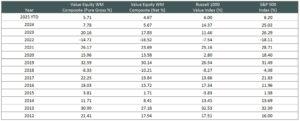
Composite returns for all periods ended September 30, 2024 are preliminary pending final account reconciliation.
Past performance is not indicative of future results. The information provided should not be considered financial advice or a recommendation to purchase or sell any particular security or product. Performance results for periods greater than one year have been annualized. The Aristotle Value Equity strategy has an inception date of November 1, 2010; however, the strategy initially began at Mr. Gleicher’s predecessor firm in October 1997. A supplemental performance track record from January 1, 2001 through October 31, 2010 is provided above. The returns are based on two separate accounts and performance results are based on custodian data. During this time, Mr. Gleicher had primary responsibility for managing the two accounts, one account starting in November 2000 and the other December 2000.
Returns are presented gross and net of investment advisory fees and include the reinvestment of all income. Gross returns will be reduced by fees and other expenses that may be incurred in the management of the account. Net returns are presented net of actual investment advisory fees and after the deduction of all trading expenses.
Index Disclosures
The Russell 1000 Value® Index measures the performance of the large cap value segment of the U.S. equity universe. It includes those Russell 1000 Index companies with lower price-to-book ratios and lower expected growth values. The S&P 500® Index is the Standard & Poor’s Composite Index of 500 stocks and is a widely recognized, unmanaged index of common stock prices. The S&P 500 Equal Weight Index is designed to be the size-neutral version of the S&P 500. It includes the same constituents as the cap-weighted S&P 500, but each company in the S&P 500 Equal Weight Index is allocated the same weight at each quarterly rebalance. The Russell 1000® Growth Index measures the performance of the large cap growth segment of the U.S. equity universe. It includes those Russell 1000 companies with higher price-to-book ratios and higher forecasted growth values. The Russell 2000® Index measures the performance of the small cap segment of the U.S. equity universe. The Russell 2000 Index is a subset of the Russell 3000® Index representing approximately 10% of the total market capitalization of that index. It includes approximately 2,000 of the smallest securities based on a combination of their market cap and current index membership. The Dow Jones Industrial Average® is a price-weighted measure of 30 U.S. blue-chip companies. The Index covers all industries except transportation and utilities. The NASDAQ Composite Index measures all NASDAQ domestic and international based common type stocks listed on The NASDAQ Stock Market. The NASDAQ Composite includes over 3,000 companies, more than most other stock market indexes. The Bloomberg U.S. Aggregate Bond Index is an unmanaged index of domestic investment grade bonds, including corporate, government and mortgage-backed securities. The WTI Crude Oil Index is a major trading classification of sweet light crude oil that serves as a major benchmark price for oil consumed in the United States. The 3-Month U.S. Treasury Bill is a short-term debt obligation backed by the U.S. Treasury Department with a maturity of three months. The Consumer Price Index is a measure of the average change over time in the prices paid by urban consumers for a market basket of consumer goods and services. The volatility (beta) of the Composite may be greater or less than its respective benchmarks. It is not possible to invest directly in these indexes.