
ARISTOTLE CAPITAL BOSTON, LLC

Markets Review

Small/mid cap equities searched for direction in the third quarter as volatility to upside and downside continued to test investors’ fortitude. What looked like a relatively rosy market backdrop through the first half of the quarter with the Russell 2500 Index up over 16%, turned sour in the middle of August, only to worsen further in September, pushing the index into negative territory by quarter-end. Equity market intra-quarter declines coincided with the Federal Reserve (Fed) reiterating that they would prioritize reining in inflation versus supporting growth. To that end, the quarter saw two more aggressive interest-rate hikes of 0.75 percentage points, one in July and then another in September, which leaves the effective federal-funds rate at 3.00%-3.25% exiting the third quarter, its highest level since 2008. Prior to raising the fed-funds rate by three-quarters of a point in June, the Fed had not raised its flagship policy rate by 0.75 percentage points in any single meeting since 1994. These actions led to a sharp rise in bond yields and a risk-off environment that extended to equity markets across the globe. Compared to their large cap counterparts, however, small/mid caps held up relatively well during the quarter with the Russell 2500 Index’s total return of -2.82%, besting the -4.61% return of the Russell 1000 Index. This snaps a five-quarter underperformance streak, its longest since the six quarters ending in the first quarter of 1999.

At the sector level, nine of the eleven economic sectors in the Russell 2500 Index posted negative returns during the quarter led by Real Estate (-10.23%), Communication Services (-9.56%) and Utilities (-8.15%). Conversely, Energy (+6.43%), Health Care (+0.49%), driven by gains in Biotechnology, and Industrials (-0.58%) were the top performing sectors during the quarter. From a fundamental characteristics standpoint, companies with higher betas, lower dividend yields and high short interest ratios outperformed. Unprofitable* companies within the Russell 2500 Index also outperformed profitable companies during the quarter by 7.60%.

Given the factor leadership outlined above, it may come as no surprise that the Russell 2500 Growth Index (-0.12%) outperformed the Russell 2500 Value Index (-4.50%) during the period. Although the quarter granted a slight reprieve from growth’s relative underperformance versus value over the past several quarters, value’s dominance over growth in recent periods continues to be reflected in their trailing twelve-month period returns, with the Russell 2500 Value Index returning -20.41% versus -29.54% for the Russell 2500 Growth Index.

*Based on earnings expectations over the next twelve months. Source: FactSet

Sources: SS&C Advent; Russell Investments

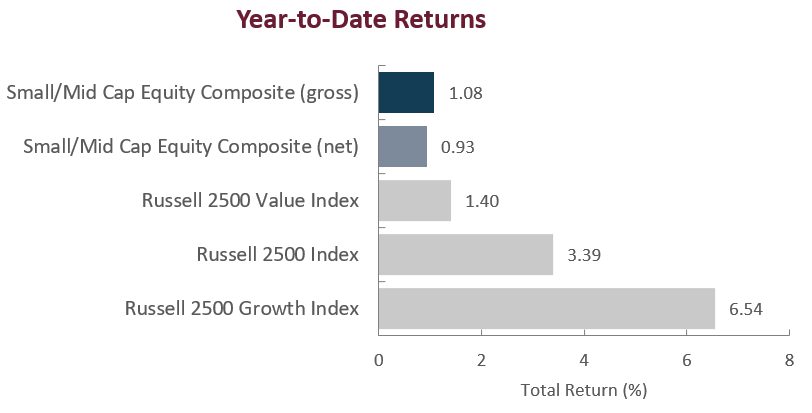
Past performance is not indicative of future results. Returns are presented gross and net of investment advisory fees and include the reinvestment of all income. Gross returns will be reduced by fees and other expenses that may be incurred in the management of the account. Net returns are presented net of actual investment advisory fees and after the deduction of all trading expenses. Aristotle Small/Mid Cap Equity Composite returns are preliminary pending final account reconciliation. Please see important disclosures at the end of this document.

Performance Review

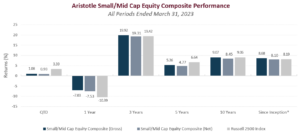
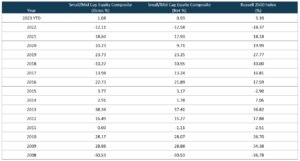
For the third quarter of 2022, the Aristotle Small/Mid Cap Equity Composite generated a total return of -4.55% gross of fees (-4.67% net of fees), trailing the -2.82% total return of the Russell 2500 Index. Overall, security selection detracted while sector allocation positively contributed. Security selection within the Health Care, Information Technology and Energy sectors were the largest detractors on a relative basis, while selection within Financials, Communication Services and Materials contributed. From an allocation perspective, the portfolio benefited from an underweight in Real Estate and an overweight in Industrials; however, this was partially offset by an underweight in Energy and an overweight in Consumer Staples.

Relative ContributorsRelative Detractors
Acadia HealthcareCatalent
Carlisle CosNCR
WillScot Mobile Mini HoldingsPetIQ
GartnerKnowles
MACOM Technology SolutionsHarsco

CONTRIBUTORS

Security selection added the most value within the Financials, Communication Services and Materials sectors. From an allocation perspective, the portfolio benefited from an underweight in Real Estate and an overweight in Industrials. At the company level, Acadia Healthcare and Carlisle Companies were two of the largest contributors during the quarter.

Acadia Healthcare (ACHC), a provider of behavioral health and addiction services to patients in a variety of inpatient and outpatient settings, benefited from continued strong growth tailwinds from increasing demand for behavioral services. We maintain a position, as we believe the company is well-positioned to capitalize on the favorable supply/demand outlook for behavioral health, positive reimbursement trends and continued execution of its growth strategy.

Carlisle Cos (CSL), a diversified industrial manufacture of nonresidential roofing materials and industrial connectivity products, benefitted from strong demand, robust backlogs and solid execution in its Construction Materials and Weatherproofing Technologies segments. We maintain a position, as we believe company-specific operating efficiency initiatives, relatively stable re-roofing demand growth and selective acquisitions will drive above average revenue and earnings growth for the business moving forward.

DETRACTORS

Security selection detracted within the Health Care, Information Technology and Energy sectors. From an allocation perspective, the portfolio’s underweight in Energy and an overweight in Consumer Staples detracted from relative performance. Additionally, the portfolio’s orientation towards what we believe to be higher quality companies and avoidance of highly valued/unprofitable businesses also detracted. At the company level, Catalent and NCR Corporation were two of the largest detractors during the quarter.

Catalent (CTLT), a pharmaceutical contract development and manufacturing organization, declined following a rate-of-change slowdown in its COVID-related revenues along with ongoing near-term cost pressures. We maintain a position, as we believe the long-term value creation opportunity for the company remains intact, driven by its competitive position in biologics, sticky customer relationships and growing demand from biopharma companies for complex dose solutions.

NCR Corporation (NCR), an enterprise technology company that provides software and hardware to the financial, retail and restaurant/hospitality industries, declined following an announcement that the company’s board had approved to separate the company into two publicly traded entities in an attempt to unlock shareholder value as opposed to an outright sale which the market preferred. We maintain a position, as we believe the two separate enterprises should drive greater focus and expertise on their respective market opportunities. Furthermore, we believe demand for point-of-service terminals, self-checkout, digital payments and automated billing and accounting services serve as tailwinds for the company moving forward.

Recent Portfolio Activity

Buys/AcquisitionsSells/Liquidations
EnhabitHuntington Bancshares

BUYS/ACQUISITIONS

Enhabit (EHAB), a provider of home health and hospice services, was added to the portfolio by virtue of its spin-off from existing holding Encompass Health. We maintain a position, as we believe the company should benefit from aging demographic trends that can increase demand for the company’s services.

SELLS/LIQUIDATIONS

Huntington Bancshares (HBAN), an Ohio-based bank holding company, was removed from the portfolio based on our belief that shares were fully valued and there were better opportunities to deploy capital elsewhere within the portfolio.

Outlook and Positioning

The risks to U.S. economic activity and thus the equity market overall, continue to be the same culprits that have been responsible for the market’s volatility over the past several quarters: the speed and pace of interest rate hikes, supply chain issues, currency and commodity price swings, and geopolitical turmoil across the globe. The subsequent impact of these factors, among others, has resulted in a 24.01% decline in the Russell 2500 Index through the first nine months of the year.

The question at this point is less about what has happened over the past twelve months but more importantly about where we are headed for the remainder of the year and into 2023. As we have indicated many times over the years, our ability to call the direction and magnitude of the market’s moves over the short term is no better (or worse) than anyone else’s. Therefore, we do not attempt to do so. Rather, we continue to monitor events as they unfold and factor those developments into our company-specific and portfolio-specific analyses. Overall, we remain encouraged by the fact that our conversations with hundreds of small-cap companies so far in 2022 point to a relatively “stable” environment for their businesses. Companies are reporting a wide array of operating conditions for their business, from reasonably robust to continued sluggishness, but the general consensus in recent meetings is that conditions have not experienced a sudden and rapid deterioration. That is not to say that such a turn of events could not happen before the end of the year; rather, it is just meant to highlight the divergence between the market’s action and what we hear from small cap companies. With quarterly earnings season set to take center stage, we will see if their collective tones have changed or if it will be more of the same.

Another positive note stems from current valuations of small/mid cap companies. Small/mid cap equities continue to remain attractive on a forward valuation basis, both on an absolute level and relative to large caps. As of quarter-end, the relative forward P/E of the Russell 2500 Index versus the Russell 1000 Index continues to trade at a discount to its long-term average and now sits at its cheapest levels since the Dot-com bubble. For long-term investors, these valuations may imply a more favorable setup for small/mid caps relative to large caps in the periods to come. The strengthening of the U.S. dollar may also have an outsized impact on third quarter earnings. In particular, large multinational companies may see a headwind as sizable chunks of their sales come from outside the U.S. That is because as the value of the dollar rises, it makes U.S.-produced goods more expensive outside the country. Continued strength in the U.S. dollar coupled with ongoing geopolitical turmoil and reshoring efforts may offer a relative boost to small and mid cap companies versus large caps moving forward.

Nevertheless, with uncertainty, volatility and investor pessimism enduring, we believe these environments reinforce the need for selectivity and further argue for a focus on companies with quality characteristics, particularly strong balance sheets and healthy profitability to offer a buffer if economic conditions continue to slow. As always, our current positioning is a function of our bottom-up security selection process and our ability to identify what we view as attractive investment candidates, regardless of economic sector definitions. Recent purchases and sales have been spread across industries and are idiosyncratic in nature, as opposed to being tied to an outlook for a particular sector. Overweights in Industrials and Information Technology are mostly a function of recent portfolio activity and the relative performance of our holdings in these sectors over the past few periods. Conversely, we continue to be underweight in Consumer Discretionary, as we have been unable to identify what we consider to be compelling long-term opportunities that fit our discipline given the rising risk profiles as a result of structural headwinds for various brick and mortar businesses. We also continue to be underweight in Real Estate as a result of valuations and structural challenges for various end markets within the sector. Given our focus on long-term business fundamentals, patient investment approach and low portfolio turnover, the strategy’s sector positioning generally does not change significantly from quarter to quarter; however, we may take advantage of periods of volatility by adding selectively to certain companies when appropriate.

Disclosures

The opinions expressed herein are those of Aristotle Capital Boston, LLC (Aristotle Boston) and are subject to change without notice.

Past performance is not indicative of future results. The information provided in this report should not be considered financial advice or a recommendation to purchase or sell any particular security. There is no assurance that any securities discussed herein will remain in an account’s portfolio at the time you receive this report or that securities sold have not been repurchased. The securities discussed may not represent an account’s entire portfolio and, in the aggregate, may represent only a small percentage of an account’s portfolio holdings. The performance attribution presented is of a representative account from Aristotle Boston’s Small/Mid Cap Equity Composite. The representative account is a discretionary client account which was chosen to most closely reflect the investment style of the strategy. The criteria used for representative account selection is based on the account’s period of time under management and its similarity of holdings in relation to the strategy. It should not be assumed that any of the securities transactions, holdings or sectors discussed were or will be profitable, or that the investment recommendations or decisions Aristotle Boston makes in the future will be profitable or equal the performance of the securities discussed herein. Aristotle Boston reserves the right to modify its current investment strategies and techniques based on changing market dynamics or client needs. Recommendations made in the last 12 months are available upon request.

Returns are presented gross and net of investment advisory fees and include the reinvestment of all income. Gross returns will be reduced by fees and other expenses that may be incurred in the management of the account. Net returns are presented net of actual investment advisory fees and after the deduction of all trading expenses.

Effective January 1, 2022, the Russell 2500 Value Index was removed as the secondary benchmark for the Aristotle Boston Small/Mid Cap Equity strategy.

Non-fee-paying accounts represented less than 5% of the SMID Cap Composite assets from December 31, 2010 to December 31, 2013. As of December 31, 2014, there were no non-fee-paying accounts in the Composite. In instances where non-fee paying accounts were included in the SMID Cap Composite, the highest model fee was applied to recalculate the net returns for composite purposes and the impact on the since inception return of the composite was deemed immaterial.

All investments carry a certain degree of risk, including the possible loss of principal. Investments are also subject to political, market, currency and regulatory risks or economic developments. International investments involve special risks that may in particular cause a loss in principal, including currency fluctuation, lower liquidity, different accounting methods and economic and political systems, and higher transaction costs.

These risks typically are greater in emerging markets. Securities of small‐ and medium‐sized companies tend to have a shorter history of operations, be more volatile and less liquid. Value stocks can perform differently from the market as a whole and other types of stocks.

The material is provided for informational and/or educational purposes only and is not intended to be and should not be construed as investment, legal or tax advice and/or a legal opinion. Investors should consult their financial and tax adviser before making investments.

The opinions referenced are as of the date of publication, may be modified due to changes in the market or economic conditions, and may not necessarily come to pass.

Aristotle Capital Boston, LLC is an independent investment adviser registered under the Investment Advisers Act of 1940, as amended. Registration does not imply a certain level of skill or training. More information about Aristotle Boston, including our investment strategies, fees and objectives, can be found in our Form ADV Part 2, which is available upon request.
Performance Disclosures

Sources: SS&C Advent, Russell Investments

Composite returns for periods ended September 30, 2022 are preliminary pending final account reconciliation.

*The Aristotle Small/Mid Cap Equity Composite has an inception date of January 1, 2008 at a predecessor firm. During this time, Jack McPherson and Dave Adams had primary responsibility for managing the strategy. Performance starting January 1, 2015 was achieved at Aristotle Boston.

Effective January 1, 2022, the Russell 2500 Value Index was removed as the secondary benchmark for the Aristotle Boston Small/Mid Cap Equity Strategy.  Non-fee-paying accounts represented less than 5% of the SMID Cap Composite assets from December 31, 2010 to December 31, 2013. As of December 31, 2014, there were no non-fee-paying accounts in the Composite. In instances where non-fee paying accounts were included in the SMID Cap Composite, the highest model fee was applied to recalculate the net returns for composite purposes and the impact on the since inception return of the composite was deemed immaterial. Past performance is not indicative of future results. Performance results for periods greater than one year have been annualized.

Returns are presented gross and net of investment advisory fees and include the reinvestment of all income. Gross returns will be reduced by fees and other expenses that may be incurred in the management of the account. Net returns are presented net of actual investment advisory fees and after the deduction of all trading expenses. 

Aristotle Capital Boston, LLC is an independent investment adviser registered under the Investment Advisers Act of 1940, as amended. Registration does not imply a certain level of skill or training. More information about Aristotle Boston, including our investment strategies, fees and objectives, can be found in our Form ADV Part 2, which is available upon request. ACB-2210-22
Index Disclosures

The Russell 2500 Index is a subset of the Russell 3000® Index representing approximately 10% of the total market capitalization of that index. It includes approximately 2000 of the smallest securities based on a combination of their market cap and current index membership. The Russell 2500 Growth® Index measures the performance of the small/mid cap companies located in the United States that also exhibit a growth probability. The Russell 2500 Value® Index measures the performance of the small/mid cap companies located in the United States that also exhibit a value probability. The Russell 1000 Index is a subset of the Russell 3000® Index, representing approximately 90% of the total market capitalization of that index. It includes approximately 1,000 of the largest securities based on a combination of their market capitalization and current index membership. The volatility (beta) of the composite may be greater or less than the benchmarks. It is not possible to invest directly in these indices.

Related Resources

For more on Small/Mid Cap Equity, access the latest resources.

Markets Review

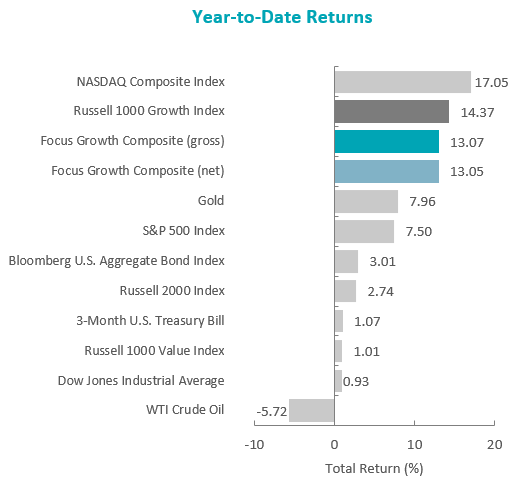
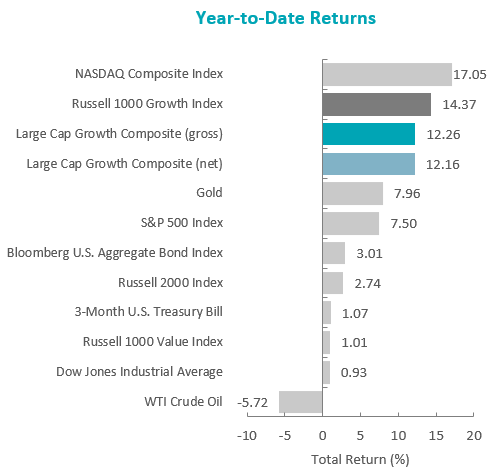
The U.S. equity market finished lower for the third consecutive quarter, as the S&P 500 Index fell 4.88% during the period, bringing its year-to-date return to -23.87%. Concurrently, the Bloomberg U.S. Aggregate Bond Index dropped 4.75% for the quarter, bringing its year-to-date return to -14.61%. In terms of style, the Russell 1000 Growth Index outperformed its value counterpart by 2.02% during the quarter. Nevertheless, for the year-to-date period, the Russell 1000 Value Index has still outperformed the Russell 1000 Growth Index by 12.91%.

Sources: SS&C Advent, Bloomberg
Past performance is not indicative of future results. Aristotle Atlantic Core Equity Composite returns are presented gross and net of investment advisory fees and include the reinvestment of all income. Gross returns will be reduced by fees and other expenses that may be incurred in the management of the account. Net returns are presented net of actual investment advisory fees and after the deduction of all trading expenses. Aristotle Atlantic Composite returns are preliminary pending final account reconciliation. Please see important disclosures at the end of this document.

On a sector basis, nine out of eleven sectors within the S&P 500 Index finished lower for the quarter, with Communication Services, Real Estate and Materials posting the largest declines. Consumer Discretionary and Energy were the only sectors to post positive returns, while Financials declined the least.

With sustained levels of heightened inflation and continued tightening by the Federal Reserve, recessionary fears persisted throughout the period, as the U.S. economy contracted in both the first and second quarters of 2022. After setting a new 40-year high in June, the CPI remained elevated, recording an 8.3% rise for the year ended in August. Higher prices have weighed on consumers, as sentiment hit multi-year lows. However, the labor market remains tight with unemployment at 3.5% in September. During the first nine months of 2022, payroll employment rose 3.7 million to a record 152.9 million. In tandem, consumer spending during the first and second quarters increased 1.8% and 1.5%, respectively, on a quarter-over-quarter basis.

In response, the Federal Reserve raised the federal funds rate 0.75% in both July and September, moving the benchmark rate to a range of 3.00% to 3.25%, all while continuing to unwind its balance sheet. Restrictive monetary policy has perhaps most visibly impacted interest-rate sensitive sectors, in particular housing, as mortgage rates breached 7%—a 20-year high—and residential investment declined 14% year-over-year in the second quarter. Additionally, the U.S. Dollar Index (DXY) reached a two-decade high, deepening concerns for the durability of U.S. export demand and causing some central banks such as the Bank of Japan to intervene and support their currency.

On the corporate earnings front, although 76% of the companies in the S&P 500 Index exceeded earnings expectations, 72 companies provided negative guidance, the most since the fourth quarter of 2019. The mixed signals highlight the continued backdrop of uncertainty heading into the last quarter of the year.

In geopolitical news, tensions between the U.S. and China flared up as Nancy Pelosi visited Taiwan despite protests from the Chinese deputy foreign minister. The worsening relations with China, combined with the ongoing war in Ukraine, continued to stoke concerns surrounding further geopolitical disruption, inflation and the outlook for global economic activity.

Performance and Attribution Summary

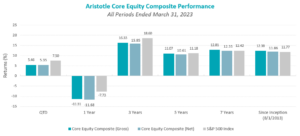
For the third quarter of 2022, Aristotle Atlantic’s Core Equity Composite posted a total return of -4.92% gross of fees (-5.02% net of fees), underperforming the S&P 500 Index, which recorded a total return of -4.88%. Since its inception on August 1, 2013, the Core Equity Composite has posted an annualized return of 11.61% gross of fees (11.09% net of fees), while the S&P 500 Index has reported a total return of 10.69%.

3Q22 YTD1 Year3 Years5 YearsSince Inception*
Core Equity Composite (gross)-4.92-26.76-19.328.099.7011.61
Core Equity Composite (net)-5.02-27.00-19.657.649.2511.09
S&P 500 Index-4.88-23.87-15.478.159.2310.69
*The Core Equity Composite has an inception date of August 1, 2013. Past performance is not indicative of future results. Aristotle Atlantic Core Equity Composite returns are presented gross and net of investment advisory fees and include the reinvestment of all income. Gross returns will be reduced by fees and other expenses that may be incurred in the management of the account. Net returns are presented net of actual investment advisory fees and after the deduction of all trading expenses. Aristotle Atlantic Composite returns are preliminary pending final account reconciliation. Please see important disclosures at the end of this document.

Source: FactSet
Past performance is not indicative of future results. Attribution results are based on sector returns which are gross of investment advisory fees. Attribution is based on performance that is gross of investment advisory fees and includes the reinvestment of income. Please see important disclosures at the end of this document.

During the third quarter, the portfolio’s underperformance relative to the S&P 500 Index was entirely due to security selection. Security selection in Health Care, Energy and Information Technology detracted the most from relative performance. Conversely, security selection in Consumer Staples, Industrials and Communication Services contributed the most to relative performance.  

Contributors and Detractors for 3Q 2022

Relative ContributorsRelative Detractors
 Darling IngredientsCatalent
CignaServiceNow
 Ameriprise Financial Bio-Techne
 O’Reilly AutomotiveBall
 Trane TechnologiesSpirit AeroSystems Holdings

Contributors

Darling Ingredients

Darling Ingredients was a relative contributor, bouncing back from weakness at the end of the prior quarter. The company reported, what we view, as solid second quarter earnings and gave positive guidance on future renewal diesel trends. The Energy sector was up in the third quarter, which also provided a tailwind to Darling’s energy operations. 

Cigna

Cigna outperformed the S&P 500 Index in the third quarter, as the company reported what we view as solid second quarter results driven by a better-than-expected medical loss ratio. The company continues to be aggressive with share repurchases and we believe the defensive nature of Cigna’s business continues to be attractive during the ongoing macroeconomic uncertainty. 

Detractors

Catalent

Catalent shares were weak in the third quarter. The company reported results in line with consensus for the second quarter, but provided initial fiscal 2023 guidance calling for 8% organic constant currency revenue growth which fell slightly below estimates. Catalent is seeing a sharp decline in COVID-19 vaccine production as the pandemic wanes. However, they are confident in their ability to repurpose those manufacturing assets to address market demand outside of COVID-19 vaccines. The stock ended the third quarter trading at what we think is an attractive valuation of 18.1x next twelve-month earnings estimates versus the 5-year average multiple of 27.7x. 

ServiceNow

Underperformance in the third quarter can be attributed to ServiceNow’s slight miss on the second quarter earnings and guidance that was lower than expected for its third quarter outlook. The company is facing headwinds from the weaker macroeconomic conditions and a tempered outlook resulting from elongated sales cycles and an overall slowing software spending environment. These worsening conditions were highlighted by many software companies during the second quarter earnings season. We expect this to be temporary for ServiceNow where the long-term thesis of the company’s platform strategy and relevance to digital transformation strategies remains intact. The stock was also likely impacted by the rapid increase in interest rates during the third quarter and the resulting contraction of multiples on high-growth software stocks.  

Recent Portfolio Activity

The table below shows all buys and sells completed during the quarter, followed by a brief rationale.

BuysSells
HalliburtonBall
Comcast

Buys

Halliburton

Halliburton provides energy, engineering and construction services and is a manufacturer of products for the energy industry. The company offers services and products and integrated solutions to customers in the exploration, development, and production of oil and natural gas. Halliburton operates two business segments: Completion & Production and Drilling & Evaluation.

Our conviction in longer-term operating leverage is supported by the focus on improving cost structures. Upstream oil and gas spending over the longer term can benefit Exploration & Production (E&P) firms from sustained high oil and gas prices and a renewed urgency in global energy security. We believe the rightsizing of the company’s cost structure and forward focus on margins at the same time as E&Ps respond to new investment signals will drive both topline and bottom-line growth.

Sells

Ball

We sold Ball following a very disappointing second quarter earnings and outlook that has caused us to reevaluate the long-term growth potential of the North American beverage can market. The competitive environment appears to have increased more quickly than management has anticipated. We believe it is prudent to sell the entire position, as Ball is forced to reevaluate its growth strategy and shift its capital deployments. Market conditions in North America could spread to other global markets over the next couple of years. 

Comcast

We sold our position in Comcast over concerns that the post-COVID slowdown in the company’s broadband net adds experienced in recent quarters will persist for the foreseeable future. The company faces increased competition in broadband from fiber and fixed-5G offerings that can deliver comparable or better service at lower prices. We believe that Comcast could respond to this competitive threat by cutting prices of its broadband and wireless bundle plans, which would pressure margins and EBTIDA growth. In addition, the company likely faces increased CapEx intensity as it seeks to keep its broadband service competitive.

Outlook

With the S&P 500 Index now trading at 15x forward earnings, we believe the multiple compression is reflected in current equity market valuation levels. The market focus has now shifted to the reduction in earnings estimates to reflect the expectations of a recession. This can impact the cyclical sectors compared to the growth sectors, feeling the brunt of the multiple contraction. International markets will likely continue to struggle with the sizable rise in commodity prices along with a stronger U.S. dollar adding to their woes. If there are any credit issues, it may very well show in either emerging markets or Europe. The two most important economic indicators we will be focused on are weekly unemployment insurance claims and the monthly Consumer Price Index (CPI). The Federal Reserve will likely continue to tighten until the tight labor markets ease. We believe the equity markets should rally on any material uptick in unemployment claims or a CPI that comes in below the consensus survey. Russia’s response to Ukraine’s recent success in regaining territory could also weigh heavily on markets in the fourth quarter. Our focus will continue to be at the company level, with an emphasis on companies with secular tailwinds or strong product driven cycles.

Disclosures

The opinions expressed herein are those of Aristotle Atlantic Partners, LLC (Aristotle Atlantic) and are subject to change without notice. Past performance is not a guarantee or indicator of future results. This material is not financial advice or an offer to purchase or sell any product. You should not assume that any of the securities transactions, sectors or holdings discussed in this report were or will be profitable, or that recommendations Aristotle Atlantic makes in the future will be profitable or equal the performance of the securities listed in this report. The portfolio characteristics shown relate to the Aristotle Atlantic Core Equity strategy. Not every client’s account will have these characteristics. Aristotle Atlantic reserves the right to modify its current investment strategies and techniques based on changing market dynamics or client needs. There is no assurance that any securities discussed herein will remain in an account’s portfolio at the time you receive this report or that securities sold have not been repurchased. The securities discussed may not represent an account’s entire portfolio and, in the aggregate, may represent only a small percentage of an account’s portfolio holdings. The performance attribution presented is of a representative account from Aristotle Atlantic’s Core Equity Composite. The representative account is a discretionary client account which was chosen to most closely reflect the investment style of the strategy. The criteria used for representative account selection is based on the account’s period of time under management and its similarity of holdings in relation to the strategy. Recommendations made in the last 12 months are available upon request. Returns are presented gross and net of investment advisory fees and include the reinvestment of all income. Gross returns will be reduced by fees and other expenses that may be incurred in the management of the account. Net returns are presented net of actual investment advisory fees and after the deduction of all trading expenses.

All investments carry a certain degree of risk, including the possible loss of principal. Investments are also subject to political, market, currency and regulatory risks or economic developments. International investments involve special risks that may in particular cause a loss in principal, including currency fluctuation, lower liquidity, different accounting methods and economic and political systems, and higher transaction costs. These risks typically are greater in emerging markets. Securities of small‐ and medium‐sized companies tend to have a shorter history of operations, be more volatile and less liquid. Value stocks can perform differently from the market as a whole and other types of stocks.

The material is provided for informational and/or educational purposes only and is not intended to be and should not be construed as investment, legal or tax advice and/or a legal opinion. Investors should consult their financial and tax adviser before making investments. The opinions referenced are as of the date of publication, may be modified due to changes in the market or economic conditions, and may not necessarily come to pass. Information and data presented has been developed internally and/or obtained from sources believed to be reliable. Aristotle Atlantic does not guarantee the accuracy, adequacy or completeness of such information.

Aristotle Atlantic Partners, LLC is an independent registered investment adviser under the Advisers Act of 1940, as amended. Registration does not imply a certain level of skill or training. More information about Aristotle Atlantic, including our investment strategies, fees and objectives, can be found in our Form ADV Part 2, which is available upon request.
Performance Disclosures


Composite returns for all periods ended September 30, 2022 are preliminary pending final account reconciliation.

The Aristotle Core Equity Composite has an inception date of August 1, 2013 at a predecessor firm. During this time, Mr. Fitzpatrick had primary responsibility for managing the strategy. Performance starting November 1, 2016 was achieved at Aristotle Atlantic.

Past performance is not indicative of future results. Performance results for periods greater than one year have been annualized. Returns are presented gross and net of investment advisory fees and include the reinvestment of all income. Gross returns will be reduced by fees and other expenses that may be incurred in the management of the account. Net returns are presented net of actual investment advisory fees and after the deduction of all trading expenses.

Aristotle Atlantic Partners, LLC is an independent registered investment adviser under the Advisers Act of 1940, as amended. Registration does not imply a certain level of skill or training. More information about Aristotle Atlantic, including our investment strategies, fees and objectives, can be found in our Form ADV Part 2, which is available
Index Disclosures

The Russell 1000® Growth Index measures the performance of the large cap growth segment of the U.S. equity universe. It includes those Russell 1000 companies with higher price-to-book ratios and higher forecasted growth values. This index has been selected as the benchmark and is used for comparison purposes only. The Russell 1000® Value Index measures the performance of the large cap value segment of the U.S. equity universe. It includes those Russell 1000 companies with lower price-to-book ratios and lower expected growth values. The S&P 500® Index is the Standard & Poor’s Composite Index of 500 stocks and is a widely recognized, unmanaged index of common stock prices. The Russell 2000® Index measures the performance of the small cap segment of the U.S. equity universe. The Russell 2000 Index is a subset of the Russell 3000® Index representing approximately 10% of the total market capitalization of that index. It includes approximately 2,000 of the smallest securities based on a combination of their market cap and current index membership. The Dow Jones Industrial Average® is a price-weighted measure of 30 U.S. blue-chip companies. The Index covers all industries except transportation and utilities. The NASDAQ Composite Index measures all NASDAQ domestic and international based common type stocks listed on The NASDAQ Stock Market. The NASDAQ Composite includes over 3,000 companies, more than most other stock market indices. The Bloomberg U.S. Aggregate Bond Index is an unmanaged index of domestic investment grade bonds, including corporate, government and mortgage-backed securities. The WTI Crude Oil Index is a major trading classification of sweet light crude oil that serves as a major benchmark price for oil consumed in the United States. The 3-Month U.S. Treasury Bill is a short-term debt obligation backed by the U.S. Treasury Department with a maturity of three months. The U.S. Dollar Index (DXY) is a measure of the value of the U.S. dollar relative to the value of a basket of currencies of the majority of the United States’ most significant trading partners. Consumer Price Index is a measure of the average change over time in the prices paid by urban consumers for a market basket of consumer goods and services. While stock selection is not governed by quantitative rules, a stock typically is added only if the company has an excellent reputation, demonstrates sustained growth and is of interest to a large number of investors. The volatility (beta) of the Composite may be greater or less than its respective benchmarks. It is not possible to invest directly in these indices.

Related Resources

Markets Review

The U.S. equity market finished lower for the third consecutive quarter, as the S&P 500 Index fell 4.88% during the period, bringing its year-to-date return to -23.87%. Concurrently, the Bloomberg U.S. Aggregate Bond Index dropped 4.75% for the quarter, bringing its year-to-date return to -14.61%. In terms of style, the Russell 1000 Growth Index outperformed its value counterpart by 2.02% during the quarter. Nevertheless, for the year-to-date period, the Russell 1000 Value Index has still outperformed the Russell 1000 Growth Index by 12.91%.

Sources: SS&C Advent, Bloomberg
Past performance is not indicative of future results. Aristotle Atlantic Focus Growth Composite returns are presented gross and net of investment advisory fees and include the reinvestment of all income. Gross returns will be reduced by fees and other expenses that may be incurred in the management of the account. Net returns are presented net of actual investment advisory fees and after the deduction of all trading expenses. Aristotle Atlantic Composite returns are preliminary pending final account reconciliation. Please see important disclosures at the end of this document.

On a sector basis, nine out of eleven sectors within the Russell 1000 Growth Index finished lower for the quarter, with Real Estate, Communication Services and Consumer Staples posting the largest declines. Meanwhile, Consumer Discretionary, Energy and Financials declined the least.

With sustained levels of heightened inflation and continued tightening by the Federal Reserve, recessionary fears persisted throughout the period, as the U.S. economy contracted in both the first and second quarters of 2022. After setting a new 40-year high in June, the CPI remained elevated, recording an 8.3% rise for the year ended in August. Higher prices have weighed on consumers, as sentiment hit multi-year lows. However, the labor market remains tight with unemployment at 3.5% in September. During the first nine months of 2022, payroll employment rose 3.7 million to a record 152.9 million. In tandem, consumer spending during the first and second quarters increased 1.8% and 1.5%, respectively, on a quarter-over-quarter basis.

In response, the Federal Reserve raised the federal funds rate 0.75% in both July and September, moving the benchmark rate to a range of 3.00% to 3.25%, all while continuing to unwind its balance sheet. Restrictive monetary policy has perhaps most visibly impacted interest-rate sensitive sectors, in particular housing, as mortgage rates breached 7%—a 20-year high—and residential investment declined 14% year-over-year in the second quarter. Additionally, the U.S. Dollar Index (DXY) reached a two-decade high, deepening concerns for the durability of U.S. export demand and causing some central banks such as the Bank of Japan to intervene and support their currency.

On the corporate earnings front, although 76% of the companies in the S&P 500 Index exceeded earnings expectations, 72 companies provided negative guidance, the most since the fourth quarter of 2019. The mixed signals highlight the continued backdrop of uncertainty heading into the last quarter of the year.

In geopolitical news, tensions between the U.S. and China flared up as Nancy Pelosi visited Taiwan despite protests from the Chinese deputy foreign minister. The worsening relations with China, combined with the ongoing war in Ukraine, continued to stoke concerns surrounding further geopolitical disruption, inflation and the outlook for global economic activity.

Performance and Attribution Summary

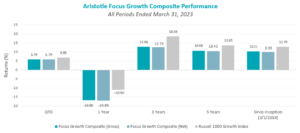
For the third quarter of 2022, Aristotle Atlantic’s Focus Growth Composite posted a total return of -5.18% gross of fees (-5.20% net of fees), underperforming the -3.60% total return of the Russell 1000 Growth Index. Since its inception on March 1, 2018, the Focus Growth Composite has posted an annualized return of 7.82% gross of fees (7.54% net of fees), while the Russell 1000 Growth Index has reported a total return of 10.46%.

3Q22YTD1 Year3 YearsSince Inception*
Focus Growth Composite (gross)-5.18-35.01-30.006.547.82
Focus Growth Composite (net)-5.20-35.07-30.086.417.54
Russell 1000 Growth Index-3.60-30.66-22.5910.6610.46
*The Focus Growth Composite has an inception date of March 1, 2018. Past performance is not indicative of future results. Aristotle Atlantic Focus Growth Composite returns are presented gross and net of investment advisory fees and include the reinvestment of all income. Gross returns will be reduced by fees and other expenses that may be incurred in the management of the account. Net returns are presented net of actual investment advisory fees and after the deduction of all trading expenses. Aristotle Atlantic Composite returns are preliminary pending final account reconciliation. Please see important disclosures at the end of this document.

Sources: FactSet
Past performance is not indicative of future results. Attribution results are based on sector returns which are gross of investment advisory fees. Attribution is based on performance that is gross of investment advisory fees and includes the reinvestment of income. Please see important disclosures at the end of this document.

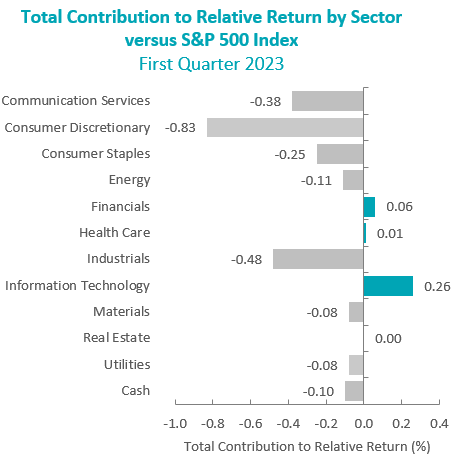
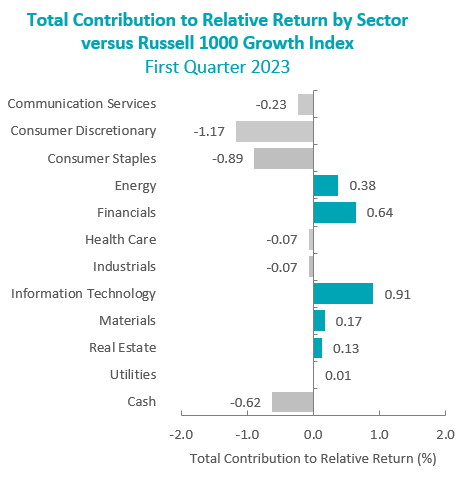
During the third quarter, the portfolio’s underperformance relative to the Russell 1000 Growth Index was due to security selection and allocation effects. Security selection in Information Technology, Health Care and Consumer Discretionary detracted the most from relative performance. Conversely, security selection in Consumer Staples and Financials, as well as an overweight in Health Care, contributed the most to relative results.

Contributors and Detractors for 3Q 2022

Relative ContributorsRelative Detractors
Darling IngredientsServiceNow
Guardant HealthBio-Techne
MSCIHorizon Therapeutics
DexComBall
SnowflakeNvidia

Contributors

Darling Ingredients

Darling Ingredients was a relative contributor in the third quarter, bouncing back from weakness at the end of the prior quarter. The company reported what we view as solid second quarter earnings and gave positive guidance on future renewal diesel trends. The Energy sector was up in the third quarter, which also provided a tailwind to Darling’s energy operations. 

Guardant Health

Guardant shares were up in the third quarter, bouncing back from weakness in the second quarter. Guardant reported solid 40% year-over-year growth in clinical test volumes and 65% growth in biopharmaceutical test volumes. Shares have been strong in anticipation of the fourth quarter read out from the ongoing Eclipse clinical trial, evaluating Guardant’s test for early detection of colorectal cancer. 

Detractors

ServiceNow

Underperformance in the third quarter can be attributed to ServiceNow’s slight miss on the second quarter earnings and guidance that was lower than expected for its third quarter outlook. The company is facing headwinds from the weaker macroeconomic conditions and a tempered outlook resulting from elongated sales cycles and an overall slowing software spending environment. These worsening conditions were highlighted by many software companies during the second quarter earnings season. We expect this to be temporary for ServiceNow where the long-term thesis of the company’s platform strategy and relevance to digital transformation strategies remain intact. The stock was also impacted by the rapid increase in interest rates during the third quarter and the resulting contraction of multiples on high-growth software stocks. 

Bio-Techne

Bio-Techne shares were weak in the third quarter. The company reported results in line with consensus with 14% organic revenue growth. We believe part of the decline is attributable to the rise in U.S. Treasury yields, which tends to have an outsized negative impact on high-valuation growth stocks. Bio-Techne continues to execute on the diverse aspects of its growth plans. We believe that Bio-Techne continues to be in an enviable position of manufacturing high performance research and diagnostic tools and supplies to the biopharmaceutical industry.

Recent Portfolio Activity

The table below shows all buys and sells completed during the quarter, followed by a brief rationale.

BuysSells
Thermo Fisher ScientificBall
UnitedHealth GroupSalesforce

Buys

Thermo Fisher Scientific

Thermo Fisher Scientific is considered one of the world’s leaders in serving science. The company makes and distributes analytical instruments, scientific equipment, consumables and other laboratory supplies. Thermo Fisher Scientific operates in four segments: Life Sciences Solutions, Analytical Instruments, Specialty Diagnostics and Laboratory Product and Biopharma Services.

We see Thermo Fisher Scientific as one of the leading management teams in our coverage both through solid execution and savvy Mergers & Acquisitions (M&A). The company is a diversified provider of research and discovery instruments, tools, consumables, and services, and offers a broad-based play on the increased Research & Development (R&D) spend from the biopharma industry. Thermo Fisher Scientific continues to see organic growth in the high single digits with acquisitions increasing their overall portfolio composition and gaining market share.

UnitedHealth Group

UnitedHealth Group is a leading U.S. health insurer offering a variety of plans and services to group and individual customers nationwide. Its health benefits segment manages health maintenance organization, preferred provider organization and point-of-service plans, as well as Medicare, Medicaid, state-funded, and supplemental vision and dental options. In addition, UnitedHealth Group’s Optum health services units—OptumHealth, OptumInsight and OptumRx—provide wellness and care management programs, financial services, information technology solutions, and pharmacy benefit management services to individuals and the health care industry.

We believe UnitedHealth Group is well-positioned as a leader in commercial and government insurance markets with a broad complimentary service offering through Optum Health. As one of the largest health care payers and providers, we believe the company has unique insights and scale to continue to evolve the health care delivery process and drive above industry profitability and growth. We believe UnitedHealth Group’s track record of financial strength and stability warrants a premium in share valuation.

Sells

Ball

We sold Ball following a very disappointing second quarter earnings and outlook that has caused us to reevaluate the long-term growth potential of the North American beverage can market. The competitive environment appears to have increased more quickly than management has anticipated. We believe it is prudent to sell the entire position as Ball is forced to reevaluate its growth strategy and shift its capital deployments. Market conditions in North America could spread to other global markets over the next couple of years. 

Salesforce

We sold Salesforce to reduce our weighting in the Information Technology sector. Salesforce held their investor day, and the company reiterated their organic Fiscal Year 2026 revenue target of $50 billion. This target remains more back-end loaded based on current slowing macroeconomic conditions and requires new annual contract growth well ahead of what the company has been averaging for the past few years. We are skeptical that the company will be able to achieve this revenue target organically and see Merger & Acquisitions (M&A) as being key to achieving the growth. While we believe Salesforce has shown good success in growing its non-CRM clouds, we do see more competitive pressures emerging for the Marketing and Customer Service Clouds, specifically on the pricing side during a global economic slowdown.

Outlook

With the S&P 500 Index now trading at 15x forward earnings, we believe the multiple compression is reflected in current equity market valuation levels. The market focus has now shifted to the reduction in earnings estimates to reflect the expectations of a recession. This can impact the cyclical sectors compared to the growth sectors, feeling the brunt of the multiple contraction. International markets will likely continue to struggle with the sizable rise in commodity prices along with a stronger U.S. dollar adding to their woes. If there are any credit issues it may very well show in either emerging markets or Europe. The two most important economic indicators we will be focused on are weekly unemployment insurance claims and the monthly Consumer Price Index (CPI). The Federal Reserve will likely continue to tighten until the tight labor markets ease. We believe the equity markets should rally on any material uptick in unemployment claims or a CPI that comes in below the consensus survey. Russia’s response to Ukraine’s recent success in regaining territory could also weigh heavily on markets in the fourth quarter. Our focus will continue to be at the company level, with an emphasis on companies with secular tailwinds or strong product driven cycles.

Disclosures

The opinions expressed herein are those of Aristotle Atlantic Partners, LLC (Aristotle Atlantic) and are subject to change without notice. Past performance is not a guarantee or indicator of future results. This material is not financial advice or an offer to purchase or sell any product. You should not assume that any of the securities transactions, sectors or holdings discussed in this report were or will be profitable, or that recommendations Aristotle Atlantic makes in the future will be profitable or equal the performance of the listed in this report. The portfolio characteristics shown relate to the Aristotle Atlantic Focus Growth strategy. Not every client’s account will have these characteristics. Aristotle Atlantic reserves the right to modify its current investment strategies and techniques based on changing market dynamics or client needs. There is no assurance that any securities discussed herein will remain in an account’s portfolio at the time you receive this report or that securities sold have not been repurchased. The securities discussed may not represent an account’s entire portfolio and, in the aggregate, may represent only a small percentage of an account’s portfolio holdings. The performance attribution presented is of a representative account from Aristotle Atlantic’s Focus Growth Composite. The representative account is a discretionary client account which was chosen to most closely reflect the investment style of the strategy. The criteria used for representative account selection is based on the account’s period of time under management and its similarity of holdings in relation to the strategy. Recommendations made in the last 12 months are available upon request. Returns are presented gross and net of investment advisory fees and include the reinvestment of all income. Gross returns will be reduced by fees and other expenses that may be incurred in the management of the account. Net returns are presented net of actual investment advisory fees and after the deduction of all trading expenses.

All investments carry a certain degree of risk, including the possible loss of principal. Investments are also subject to political, market, currency and regulatory risks or economic developments. International investments involve special risks that may in particular cause a loss in principal, including currency fluctuation, lower liquidity, different accounting methods and economic and political systems, and higher transaction costs. These risks typically are greater in emerging markets. Securities of small‐ and medium‐sized companies tend to have a shorter history of operations, be more volatile and less liquid. Value stocks can perform differently from the market as a whole and other types of stocks.

The material is provided for informational and/or educational purposes only and is not intended to be and should not be construed as investment, legal or tax advice and/or a legal opinion. Investors should consult their financial and tax adviser before making investments. The opinions referenced are as of the date of publication, may be modified due to changes in the market or economic conditions, and may not necessarily come to pass. Information and data presented has been developed internally and/or obtained from sources believed to be reliable. Aristotle Atlantic does not guarantee the accuracy, adequacy or completeness of such information.

Aristotle Atlantic Partners, LLC is an independent registered investment adviser under the Advisers Act of 1940, as amended. Registration does not imply a certain level of skill or training. More information about Aristotle Atlantic, including our investment strategies, fees and objectives, can be found in our Form ADV Part 2, which is available upon request.  
Performance Disclosures

Composite returns for all periods ended September 30, 2022 are preliminary pending final account reconciliation.

Past performance is not indicative of future results. Performance results for periods greater than one year have been annualized. Returns are presented gross and net of investment advisory fees and include the reinvestment of all income. Gross returns will be reduced by fees and other expenses that may be incurred in the management of the account. Net returns are presented net of actual investment advisory fees and after the deduction of all trading expenses.

Aristotle Atlantic Partners, LLC is an independent registered investment adviser under the Advisers Act of 1940, as amended. Registration does not imply a certain level of skill or training. More information about Aristotle Atlantic, including our investment strategies, fees and objectives, can be found in our Form ADV Part 2, which is available upon request.  AAP-2210-12
Index Disclosures

The Russell 1000® Growth Index measures the performance of the large cap growth segment of the U.S. equity universe. It includes those Russell 1000 companies with higher price-to-book ratios and higher forecasted growth values. This index has been selected as the benchmark and is used for comparison purposes only. The Russell 1000® Value Index measures the performance of the large cap value segment of the U.S. equity universe. It includes those Russell 1000 companies with lower price-to-book ratios and lower expected growth values. The S&P 500® Index is the Standard & Poor’s Composite Index of 500 stocks and is a widely recognized, unmanaged index of common stock prices. The Russell 2000® Index measures the performance of the small cap segment of the U.S. equity universe. The Russell 2000 Index is a subset of the Russell 3000® Index representing approximately 10% of the total market capitalization of that index. It includes approximately 2,000 of the smallest securities based on a combination of their market cap and current index membership. The Dow Jones Industrial Average® is a price-weighted measure of 30 U.S. blue-chip companies. The Index covers all industries except transportation and utilities. The NASDAQ Composite Index measures all NASDAQ domestic and international based common type stocks listed on The NASDAQ Stock Market. The NASDAQ Composite includes over 3,000 companies, more than most other stock market indices. The Bloomberg U.S. Aggregate Bond Index is an unmanaged index of domestic investment grade bonds, including corporate, government and mortgage-backed securities. The WTI Crude Oil Index is a major trading classification of sweet light crude oil that serves as a major benchmark price for oil consumed in the United States. The 3-Month U.S. Treasury Bill is a short-term debt obligation backed by the U.S. Treasury Department with a maturity of three months. The U.S. Dollar Index (DXY) is a measure of the value of the U.S. dollar relative to the value of a basket of currencies of the majority of the United States’ most significant trading partners. Consumer Price Index is a measure of the average change over time in the prices paid by urban consumers for a market basket of consumer goods and services. While stock selection is not governed by quantitative rules, a stock typically is added only if the company has an excellent reputation, demonstrates sustained growth and is of interest to a large number of investors. The volatility (beta) of the Composite may be greater or less than its respective benchmarks. It is not possible to invest directly in these indices.

Related Resources

Markets Review

The U.S. equity market finished lower for the third consecutive quarter, as the S&P 500 Index fell 4.88% during the period, bringing its year-to-date return to -23.87%. Concurrently, the Bloomberg U.S. Aggregate Bond Index dropped 4.75% for the quarter, bringing its year-to-date return to -14.61%. In terms of style, the Russell 1000 Growth Index outperformed its value counterpart by 2.02% during the quarter. Nevertheless, for the year-to-date period, the Russell 1000 Value Index has still outperformed the Russell 1000 Growth Index by 12.91%.

Sources: SS&C Advent, Bloomberg
Past performance is not indicative of future results. Aristotle Atlantic Large Cap Growth Composite returns are presented gross and net of investment advisory fees and include the reinvestment of all income. Gross returns will be reduced by fees and other expenses that may be incurred in the management of the account. Net returns are presented net of actual investment advisory fees and after the deduction of all trading expenses. Aristotle Atlantic Composite returns are preliminary pending final account reconciliation. Please see important disclosures at the end of this document.

On a sector basis, nine out of eleven sectors within the Russell 1000 Growth Index finished lower for the quarter, with Real Estate, Communication Services and Consumer Staples posting the largest declines. Meanwhile, Consumer Discretionary, Energy and Financials declined the least.

With sustained levels of heightened inflation and continued tightening by the Federal Reserve, recessionary fears persisted throughout the period, as the U.S. economy contracted in both the first and second quarters of 2022. After setting a new 40-year high in June, the CPI remained elevated, recording an 8.3% rise for the year ended in August. Higher prices have weighed on consumers, as sentiment hit multi-year lows. However, the labor market remains tight with unemployment at 3.5% in September. During the first nine months of 2022, payroll employment rose 3.7 million to a record 152.9 million. In tandem, consumer spending during the first and second quarters increased 1.8% and 1.5%, respectively, on a quarter-over-quarter basis.

In response, the Federal Reserve raised the federal funds rate 0.75% in both July and September, moving the benchmark rate to a range of 3.00% to 3.25%, all while continuing to unwind its balance sheet. Restrictive monetary policy has perhaps most visibly impacted interest-rate sensitive sectors, in particular housing, as mortgage rates breached 7%—a 20-year high—and residential investment declined 14% year-over-year in the second quarter. Additionally, the U.S. Dollar Index (DXY) reached a two-decade high, deepening concerns for the durability of U.S. export demand and causing some central banks such as the Bank of Japan to intervene and support their currency.

On the corporate earnings front, although 76% of the companies in the S&P 500 Index exceeded earnings expectations, 72 companies provided negative guidance, the most since the fourth quarter of 2019. The mixed signals highlight the continued backdrop of uncertainty heading into the last quarter of the year.

In geopolitical news, tensions between the U.S. and China flared up as Nancy Pelosi visited Taiwan despite protests from the Chinese deputy foreign minister. The worsening relations with China, combined with the ongoing war in Ukraine, continued to stoke concerns surrounding further geopolitical disruption, inflation and the outlook for global economic activity.

Performance and Attribution Summary

For the third quarter of 2022, Aristotle Atlantic’s Large Cap Growth Composite posted a total return of -4.87% gross of fees  (-4.95% net of fees), underperforming the -3.60% total return of the Russell 1000 Growth Index. Since its inception on November 1, 2016, the Large Cap Growth Composite has posted an annualized return of 13.67% gross of fees (13.23% net of fees), while the Russell 1000 Growth Index has reported a total return of 14.40%.

3Q22YTD1 Year3 Years5 YearsSince Inception*
Large Cap Growth Composite (gross)-4.87-32.95-27.388.0711.1713.67
Large Cap Growth Composite (net)-4.95-33.13-27.647.6510.7313.23
Russell 1000 Growth Index-3.60-30.66-22.5910.6612.1614.40
*The Large Cap Growth Composite has an inception date of November 1, 2016. Past performance is not indicative of future results. Returns are presented gross and net of actual investment advisory fees and after the deduction of all trading expenses and include the reinvestment of all income. Aristotle Atlantic Composite returns are preliminary pending final account reconciliation. Please see important disclosures at the end of this document.

Sources: FactSet
*The Large Cap Growth Composite has an inception date of November 1, 2016. Past performance is not indicative of future results. Aristotle Atlantic Large Cap Growth Equity Composite returns are presented gross and net of investment advisory fees and include the reinvestment of all income. Gross returns will be reduced by fees and other expenses that may be incurred in the management of the account. Net returns are presented net of actual investment advisory fees and after the deduction of all trading expenses. Aristotle Atlantic Composite returns are preliminary pending final account reconciliation. Please see important disclosures at the end of this document.

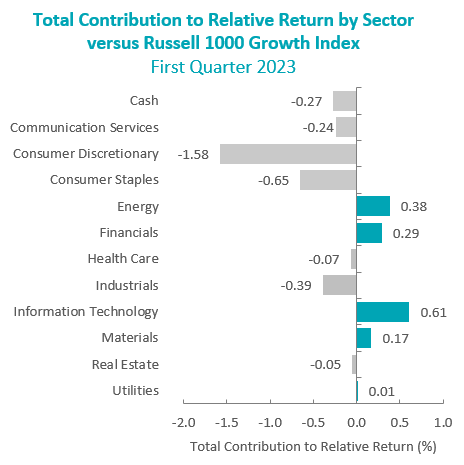
During the third quarter, the portfolio’s underperformance relative to the Russell 1000 Growth Index was due to security selection and allocation effects. Security selection in Information Technology, Consumer Discretionary and Materials detracted the most from relative performance. Conversely, security selection in Consumer Staples and Financials, as well as an overweight in Health Care, contributed the most to relative returns.

Contributors and Detractors for 3Q 2022

Relative ContributorsRelative Detractors
Darling IngredientsServiceNow
O’Reilly AutomotiveBio-Techne
Guardant HealthBall
Sage TherapeuticsTenable Holdings
DexComAdaptive Biotechnologies

Contributors

Darling Ingredients

Darling Ingredients was a relative contributor in the third quarter, bouncing back from weakness at the end of the prior quarter. The company reported, what we view as, solid second quarter earnings and gave positive guidance on future renewal diesel trends. The Energy sector was up in the third quarter, which also provided a tailwind to Darling’s energy operations. 

O’Reilly Automotive

O’Reilly Automotive outperformed the Consumer Discretionary sector because its business is expected to be more resilient in an economic downturn. The company’s second quarter earnings were slightly below consensus estimates; however, the outlook for the rest of the year showed steady growth despite difficult comparisons with the second half of 2021. O’Reilly Automotive continues to grow its store base and has recently announced an expansion into Mexico. The company operates in an industry where competition has historically remained rational through the economic cycle.  

Detractors

ServiceNow

Underperformance in the third quarter can be attributed to ServiceNow’s slight miss on the second quarter earnings and guidance that was lower than expected for its third quarter outlook. The company is facing headwinds from the weaker macroeconomic conditions and a tempered outlook resulting from elongated sales cycles and an overall slowing software spending environment. These worsening conditions were highlighted by many software companies during the second quarter earnings season. We expect this to be temporary for ServiceNow where the long-term thesis of the company’s platform strategy and relevance to digital transformation strategies remains intact. The stock was also impacted by the rapid increase in interest rates during the third quarter and the resulting contraction of multiples on high-growth software stocks. 

Bio-Techne

Bio-Techne shares were weak in the third quarter. The company reported results in line with consensus with 14% organic revenue growth. We believe part of the decline is attributable to the rise in U.S. Treasury yields, which tends to have an outsized negative impact on high-valuation growth stocks. Bio-Techne continues to execute on the diverse aspects of its growth plans. We believe that Bio-Techne continues to be in an enviable position of manufacturing high performance research and diagnostic tools and supplies to the biopharmaceutical industry.

Recent Portfolio Activity

The table below shows all buys and sells completed during the quarter, followed by a brief rationale.

BuysSells
UnitedHealth GroupBall
Salesforce
Global Payments

Buys

UnitedHealth Group

UnitedHealth Group is a leading U.S. health insurer offering a variety of plans and services to group and individual customers nationwide. Its health benefits segment manages health maintenance organization, preferred provider organization and point-of-service plans, as well as Medicare, Medicaid, state-funded, and supplemental vision and dental options. In addition, UnitedHealth Group’s Optum health services units—OptumHealth, OptumInsight and OptumRx—provide wellness and care management programs, financial services, information technology solutions, and pharmacy benefit management services to individuals and the health care industry.

We believe UnitedHealth Group is well-positioned as a leader in commercial and government insurance markets with a broad complimentary service offering through Optum Health. As one of the largest health care payers and providers, we believe the company has unique insights and scale to continue to evolve the health care delivery process and drive above industry profitability and growth. We believe UnitedHealth Group’s track record of financial strength and stability warrants a premium in share valuation. 

Sells

Ball

We sold Ball following a very disappointing second quarter earnings and outlook that has caused us to reevaluate the long-term growth potential of the North American beverage can market. The competitive environment appears to have increased more quickly than management has anticipated. We believe it is prudent to sell the entire position as Ball is forced to reevaluate its growth strategy and shift its capital deployments. Market conditions in North America could spread to other global markets over the next couple of years. 

Salesforce

We sold Salesforce to reduce our weighting in the Information Technology sector. Salesforce held their investor day, and the company reiterated their organic Fiscal Year 2026 revenue target of $50 billion. This target remains more back-end loaded based on current slowing macroeconomic conditions and requires new annual contract growth well ahead of what the company has been averaging for the past few years. We are skeptical that the company will be able to achieve this revenue target organically and see Merger & Acquisitions (M&A) being key to achieving the growth. While we believe Salesforce has shown good success in growing its non-CRM clouds, we do see more competitive pressures emerging for the Marketing and Customer Service Clouds, specifically on the pricing side during a global economic slowdown.

Global Payments

We sold Global Payments to reduce our weighting in the Information Technology sector. The company has benefited from the post-COVID-19 recovery in consumer spending, but we see the emerging macroeconomic headwinds in the U.S. and Europe as a risk to the company’s topline growth outlook. Almost 70% of the business is related to consumer spending and the number of payment transactions. The company has approximately 15% revenue exposure to Europe and recently announced an acquisition of EVO Payments which has ~40% European exposure. We view the outlook for the European consumer and Small- and Medium-Sized Business (SMB) environment as having turned more negative and as Global Payments continues to face a strong competitive environment from new fintech payment companies. We believe it was prudent to reduce our exposure to payment processors.

Outlook

With the S&P 500 Index now trading at 15x forward earnings we believe the multiple compression is reflected in current equity market valuation levels. The market focus has now shifted to the reduction in earnings estimates to reflect the expectations of a recession. This can impact the cyclical sectors compared to the growth sectors, feeling the brunt of the multiple contraction. International markets will likely continue to struggle with the sizable rise in commodity prices along with a stronger U.S. dollar adding to their woes. If there are any credit issues it may very well show in either emerging markets or Europe. The two most important economic indicators we will be focused on are weekly unemployment insurance claims and the monthly Consumer Price Index (CPI). The Federal Reserve will likely continue to tighten until the tight labor markets ease. We believe the equity markets should rally on any material uptick in unemployment claims or a CPI that comes in below the consensus survey. Russia’s response to Ukraine’s recent success in regaining territory could also weigh heavily on markets in the fourth quarter. Our focus will continue to be at the company level, with an emphasis on companies with secular tailwinds or strong product driven cycles.

Disclosures

The opinions expressed herein are those of Aristotle Atlantic Partners, LLC (Aristotle Atlantic) and are subject to change without notice. Past performance is not a guarantee or indicator of future results. This material is not financial advice or an offer to purchase or sell any product. You should not assume that any of the securities transactions, sectors or holdings discussed in this report were or will be profitable, or that recommendations Aristotle Atlantic makes in the future will be profitable or equal the performance of the securities listed in this report. The portfolio characteristics shown relate to the Aristotle Atlantic Large Cap Growth strategy. Not every client’s account will have these characteristics. Aristotle Atlantic reserves the right to modify its current investment strategies and techniques based on changing market dynamics or client needs. There is no assurance that any securities discussed herein will remain in an account’s portfolio at the time you receive this report or that securities sold have not been repurchased. The securities discussed may not represent an account’s entire portfolio and, in the aggregate, may represent only a small percentage of an account’s portfolio holdings. The performance attribution presented is of a representative account from Aristotle Atlantic’s Large Cap Growth Composite. The representative account is a discretionary client account which was chosen to most closely reflect the investment style of the strategy. The criteria used for representative account selection is based on the account’s period of time under management and its similarity of holdings in relation to the strategy. Recommendations made in the last 12 months are available upon request. Returns are presented gross and net of investment advisory fees and include the reinvestment of all income. Gross returns will be reduced by fees and other expenses that may be incurred in the management of the account. Net returns are presented net of actual investment advisory fees and after the deduction of all trading expenses.

All investments carry a certain degree of risk, including the possible loss of principal. Investments are also subject to political, market, currency and regulatory risks or economic developments. International investments involve special risks that may in particular cause a loss in principal, including currency fluctuation, lower liquidity, different accounting methods and economic and political systems, and higher transaction costs. These risks typically are greater in emerging markets. Securities of small‐ and medium‐sized companies tend to have a shorter history of operations, be more volatile and less liquid. Value stocks can perform differently from the market as a whole and other types of stocks.

The material is provided for informational and/or educational purposes only and is not intended to be and should not be construed as investment, legal or tax advice and/or a legal opinion. Investors should consult their financial and tax adviser before making investments. The opinions referenced are as of the date of publication, may be modified due to changes in the market or economic conditions, and may not necessarily come to pass. Information and data presented has been developed internally and/or obtained from sources believed to be reliable. Aristotle Atlantic does not guarantee the accuracy, adequacy or completeness of such information.

Aristotle Atlantic Partners, LLC is an independent registered investment adviser under the Advisers Act of 1940, as amended. Registration does not imply a certain level of skill or training. More information about Aristotle Atlantic, including our investment strategies, fees and objectives, can be found in our Form ADV Part 2, which is available upon request.

Performance Disclosures


Composite returns for all periods ended September 30, 2022 are preliminary pending final account reconciliation.

Past performance is not indicative of future results. Performance results for periods greater than one year have been annualized. Returns are presented gross and net of investment advisory fees and include the reinvestment of all income. Gross returns will be reduced by fees and other expenses that may be incurred in the management of the account. Net returns are presented net of actual investment advisory fees and after the deduction of all trading expenses.

Aristotle Atlantic Partners, LLC is an independent registered investment adviser under the Advisers Act of 1940, as amended. Registration does not imply a certain level of skill or training. More information about Aristotle Atlantic, including our investment strategies, fees and objectives, can be found in our Form ADV Part 2, which is available upon request. AAP-2210-11
Index Disclosures

The Russell 1000® Growth Index measures the performance of the large cap growth segment of the U.S. equity universe. It includes those Russell 1000 companies with higher price-to-book ratios and higher forecasted growth values. This index has been selected as the benchmark and is used for comparison purposes only. The Russell 1000® Value Index measures the performance of the large cap value segment of the U.S. equity universe. It includes those Russell 1000 companies with lower price-to-book ratios and lower expected growth values. The S&P 500® Index is the Standard & Poor’s Composite Index of 500 stocks and is a widely recognized, unmanaged index of common stock prices. The Russell 2000® Index measures the performance of the small cap segment of the U.S. equity universe. The Russell 2000 Index is a subset of the Russell 3000® Index representing approximately 10% of the total market capitalization of that index. It includes approximately 2,000 of the smallest securities based on a combination of their market cap and current index membership. The Dow Jones Industrial Average® is a price-weighted measure of 30 U.S. blue-chip companies. The Index covers all industries except transportation and utilities. The NASDAQ Composite Index measures all NASDAQ domestic and international based common type stocks listed on The NASDAQ Stock Market. The NASDAQ Composite includes over 3,000 companies, more than most other stock market indices. The Bloomberg U.S. Aggregate Bond Index is an unmanaged index of domestic investment grade bonds, including corporate, government and mortgage-backed securities. The WTI Crude Oil Index is a major trading classification of sweet light crude oil that serves as a major benchmark price for oil consumed in the United States. The 3-Month U.S. Treasury Bill is a short-term debt obligation backed by the U.S. Treasury Department with a maturity of three months. The U.S. Dollar Index (DXY) is a measure of the value of the U.S. dollar relative to the value of a basket of currencies of the majority of the United States’ most significant trading partners. Consumer Price Index is a measure of the average change over time in the prices paid by urban consumers for a market basket of consumer goods and services. While stock selection is not governed by quantitative rules, a stock typically is added only if the company has an excellent reputation, demonstrates sustained growth and is of interest to a large number of investors. The volatility (beta) of the Composite may be greater or less than its respective benchmarks. It is not possible to invest directly in these indices.

Related Resources