

ARISTOTLE CAPITAL BOSTON, LLC
Markets Review
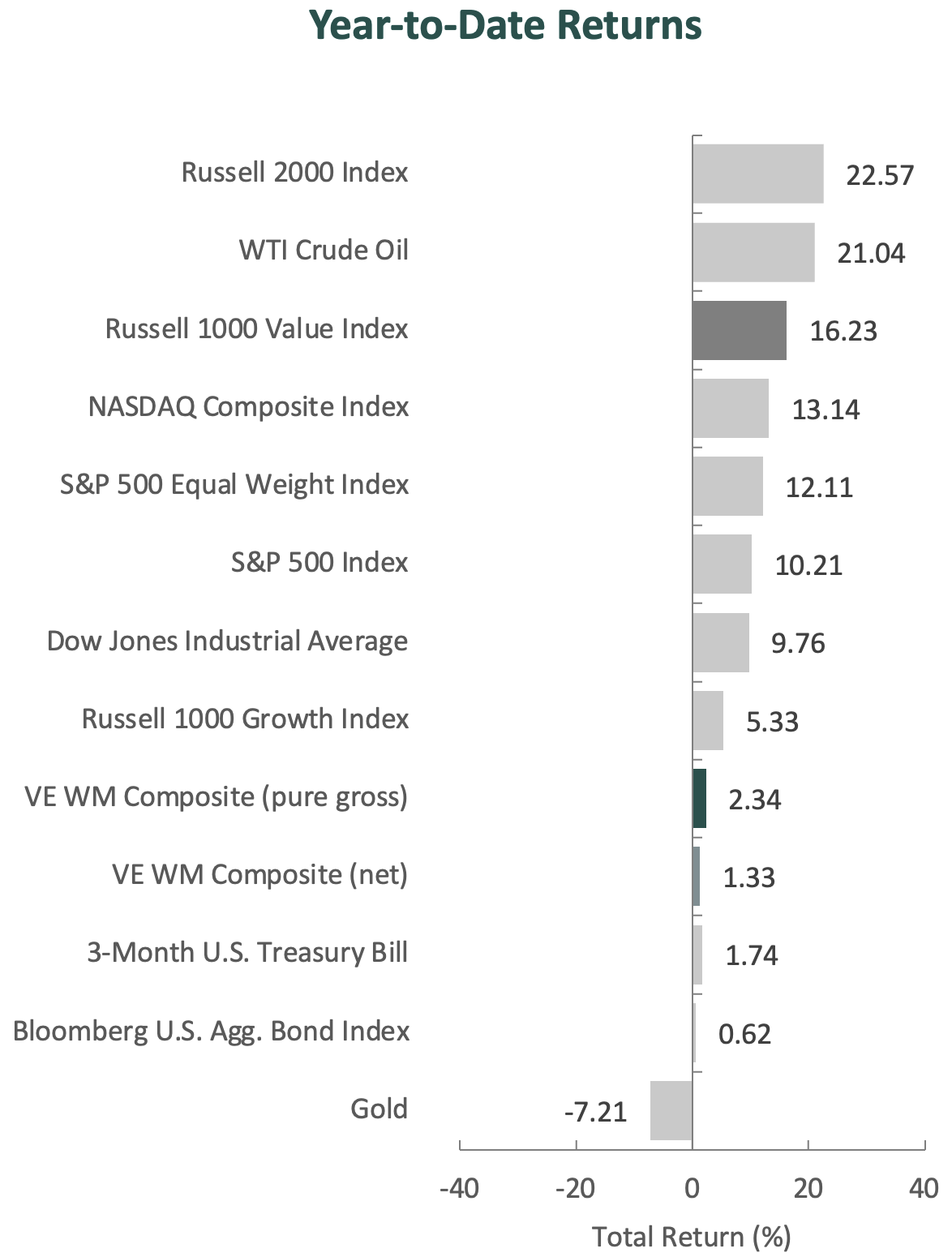
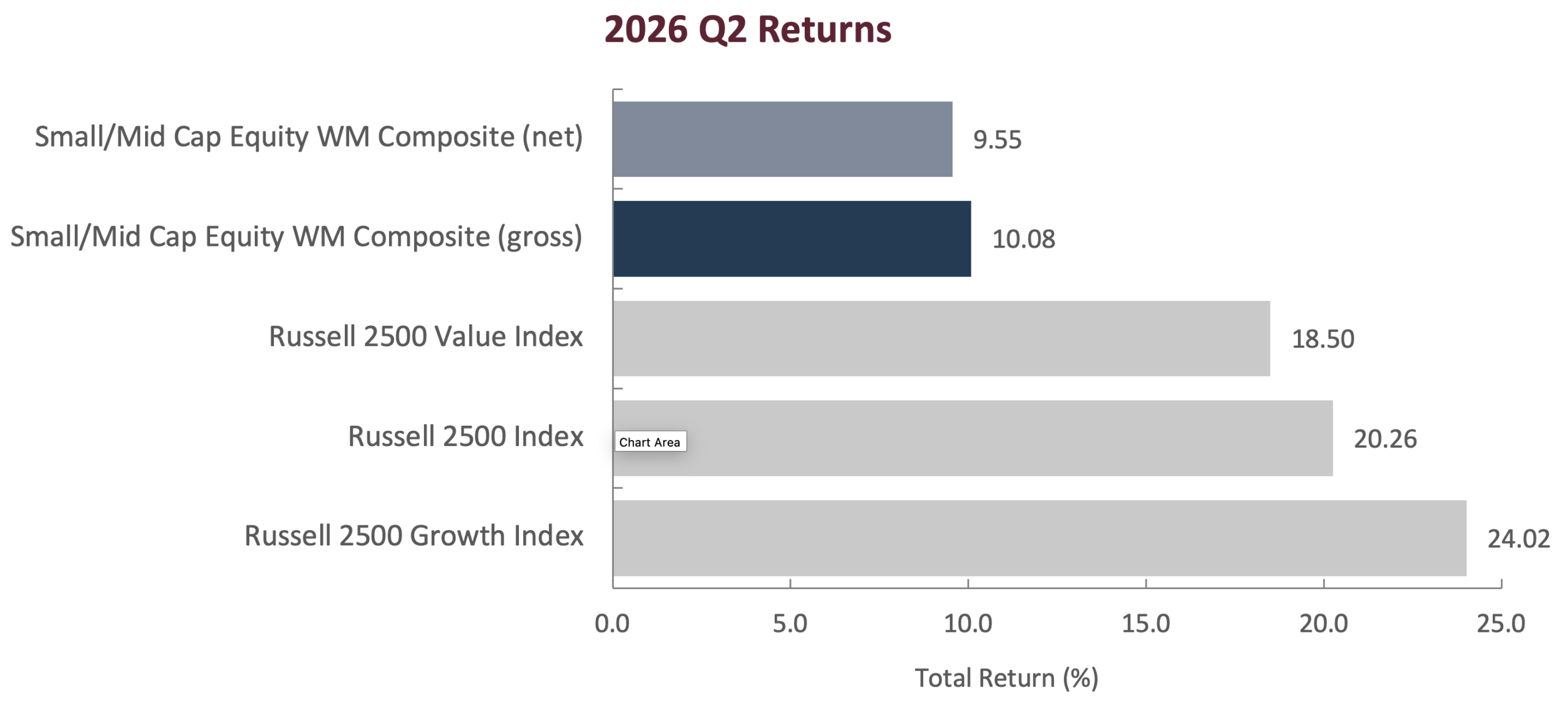
U.S. small/mid cap equities delivered a strong rebound during the second quarter of 2026, outperforming large cap stocks as investor sentiment improved amid resilient economic growth, easing geopolitical tensions, and broadening market participation. The Russell 2500 Index gained 20.26% during the quarter, marking its strongest quarterly return since 2020 and one of the best quarterly performances in its history. Healthy consumer spending, a stable labor market, and generally better than expected corporate earnings reinforced confidence in the economic outlook, while lower energy prices and reduced concerns surrounding Middle East tensions further supported expectations for moderating inflation and continued expansion. As optimism broadened beyond the largest technology companies, investors increasingly rotated into smaller companies poised to benefit from improving economic conditions, accelerating capital investment, and renewed capital markets activity.
Stylistically, growth stocks outperformed their value counterparts during the quarter, with the Russell 2500 Growth Index returning 24.02% compared to the 18.50% return of the Russell 2500 Value index. Performance was driven by AI-related beneficiaries, higher beta companies, and businesses with accelerating revenue growth. Technology was the standout sector, led by significant gains in semiconductors, semiconductor equipment, networking infrastructure, and other AI-enabling hardware, while Industrials benefited from strength in power infrastructure, electrical equipment, engineering, and manufacturing related businesses. Health Care also rebounded, led by biotechnology and life sciences. In contrast, Energy gave back a portion of its first quarter gains as oil prices declined, while traditionally defensive sectors, including Utilities, Consumer Staples, and Materials, lagged. More broadly, investors favored higher growth and economically sensitive companies over higher quality, dividend paying, and more defensive businesses, leaving slower growth retailers, banks, commercial services, and consumer staples among the quarter’s relative laggards. Factors that had the strongest payoffs were sentiment and efficiency, while factors such as low volatility, low variability, low leverage, and quality paid off negatively.
At the sector level, almost all sectors paid off positively. The best performing sectors were Information Technology (+65.79%), Health Care (+19.32%), and Industrials (+19.09%) while the worst performing sectors were Energy (-9.72%), Materials (+1.01%), and Utilities (+1.54%).
Sources: CAPS Composite Hub, Russell Investments
Past performance is not indicative of future results. Composite returns are presented gross and net of the maximum wrap fee and include the reinvestment of all income. Net returns are calculated by subtracting the highest applicable wrap/SMA fee, which includes trading costs and custodial fees, from the gross monthly composite return (2.00% on an annual basis, or 0.167% monthly). Composite. Please see important disclosures at the end of this document.
Performance Review
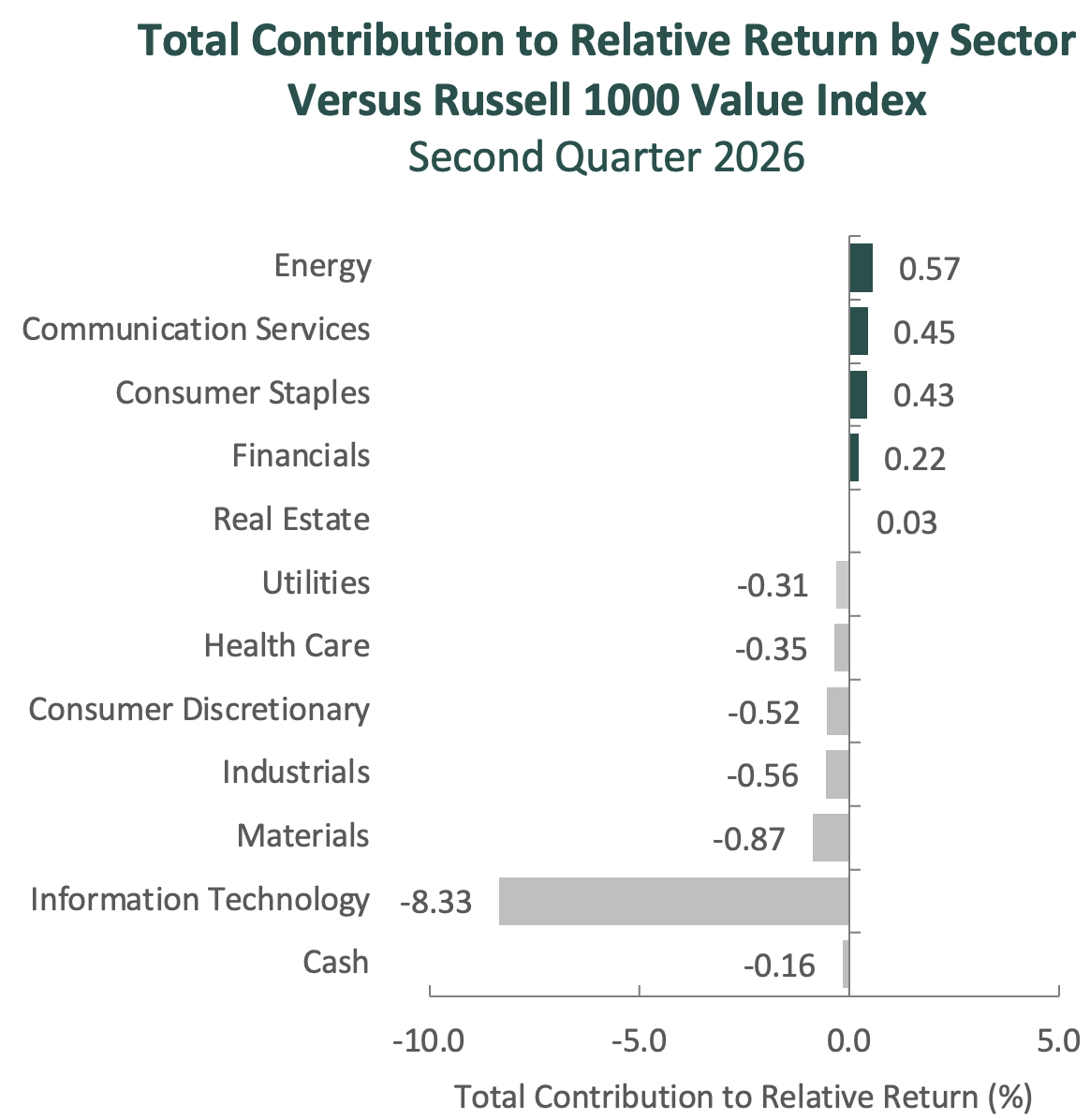
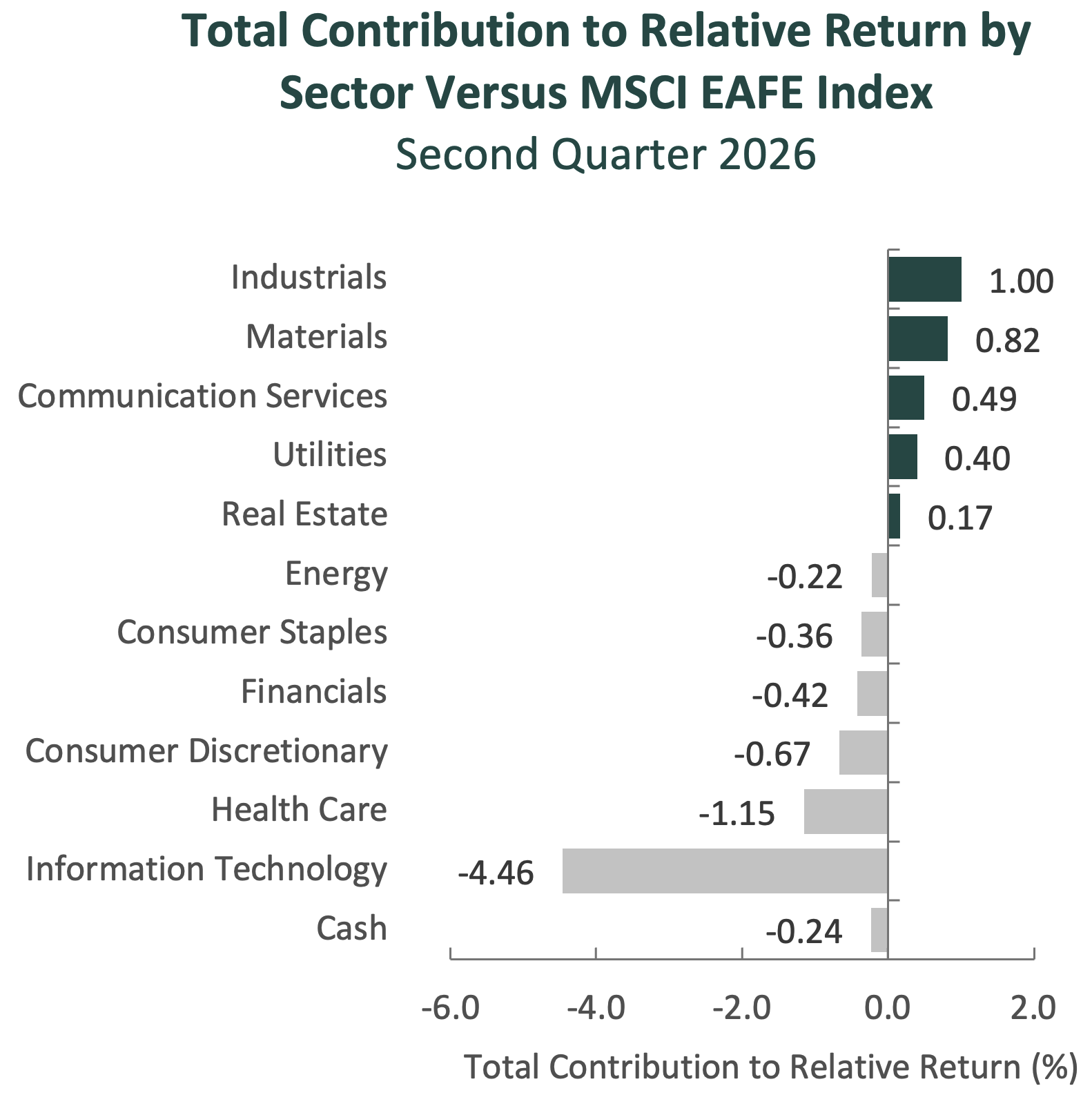
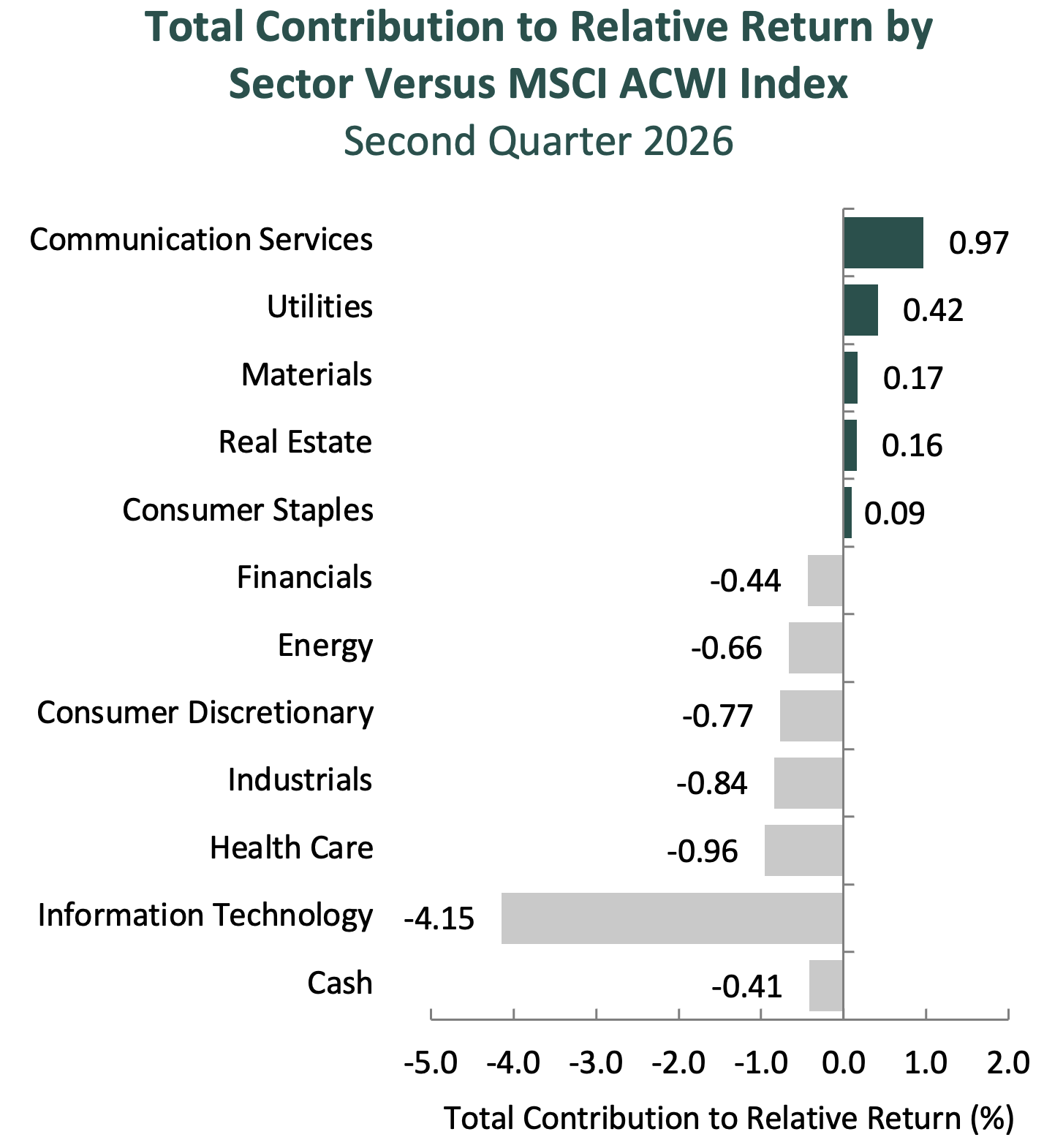
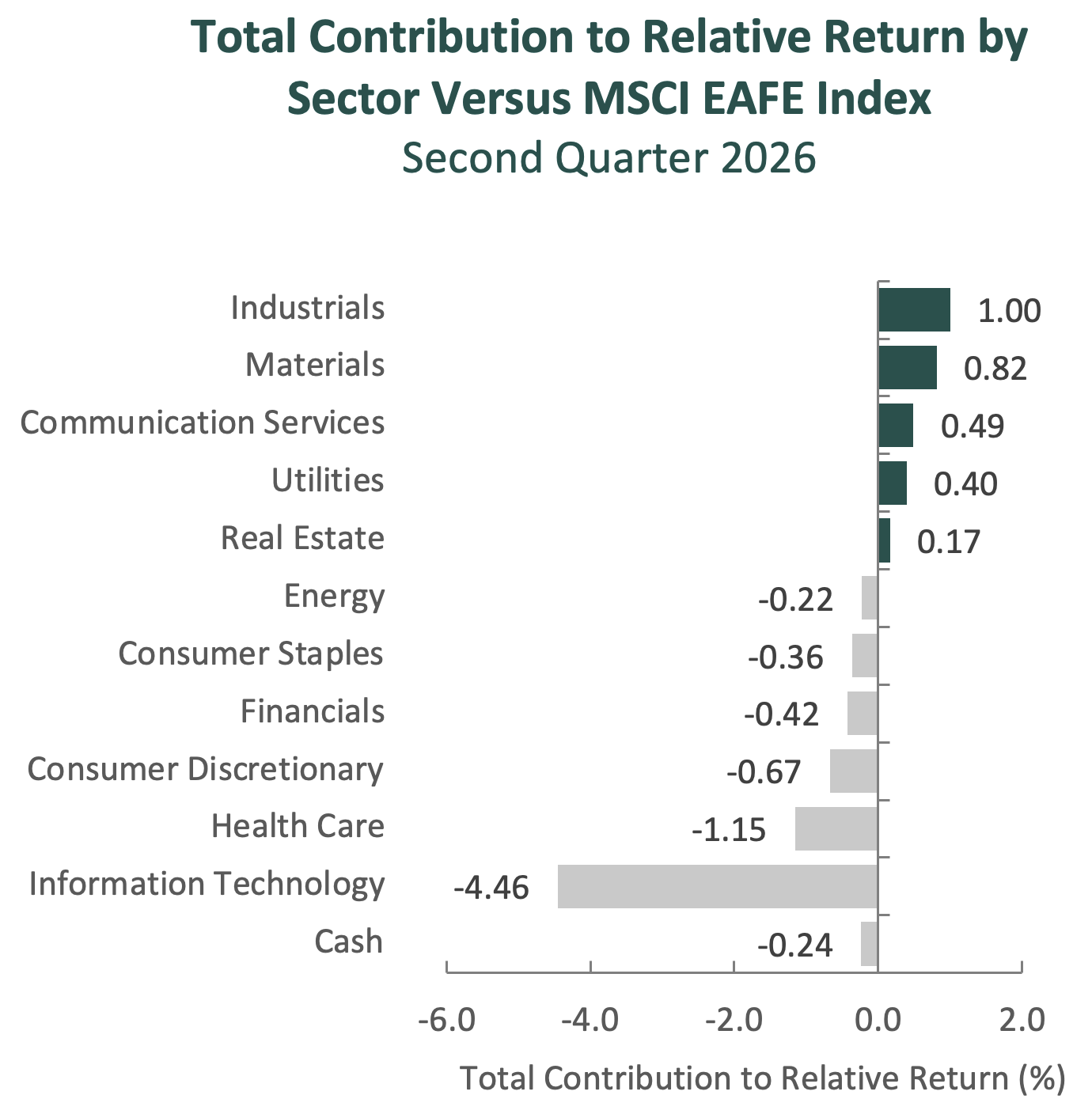
For the second quarter of 2026, the Aristotle Small/Mid Cap Equity WM Composite generated a total return of 9.55% net of fees (10.08% gross of fees), underperforming the 20.26% total return of the Russell 2500 Index. Security selection detracted from performance, while allocation effect aided results. The largest detractors to relative performance were security selection in Information Technology (owning Everforth coupled with not owning SanDisk or quantum computing stocks and non-earning SaaS companies) and Industrials coupled with overweight allocations to Materials and Energy. This was partially offset by security selection in the Utilities and Consumer Staples sectors coupled with underweight allocations to Information Technology and Consumer Discretionary.
| Relative Contributors | Relative Detractors |
|---|---|
| MACOM Technology Solutions | SanDisk (not owned in the portfolio) |
| Mercury Systems | Alamos Gold |
| Insmed (not owned in the portfolio) | Huron Consulting Group |
| Knowles | Range Resources |
| WillScot Holdings | Permian Resources |
CONTRIBUTORS
MACOM Technology Solutions (MTSI), is a designer and manufacturer of high performance semiconductor products. The stock benefitted from strong earnings results and forward guidance featuring continued strong revenue and profitability, driven by accelerating demand across data‑center, industrial/defense, and telecom end markets. We maintain our position, as we believe the company’s meaningful exposure to growing demand from Data Center and 5G end market applications along with the integration of recent acquisitions and domestic manufacturing footprint should continue to drive shareholder value.
Mercury Systems (MRCY), is a developer of mission critical computing, signal processing, software, and secure electronics technologies used in aerospace and defense applications. The stock was rewarded for the company’s successful acceleration of deliveries on several high priority defense programs, alongside continued progress on its restructuring initiatives and cost reduction efforts. We maintain our position as we believe Mercury Systems is emerging from a multi-year operational reset, with improving execution, expanding margins, and lower leverage. In addition, we believe the stock is trading at attractive valuations relative to its normalized earnings power given the strong underlying demand across its aerospace and defense end markets, which should continue to create shareholder value over time.
DETRACTORS
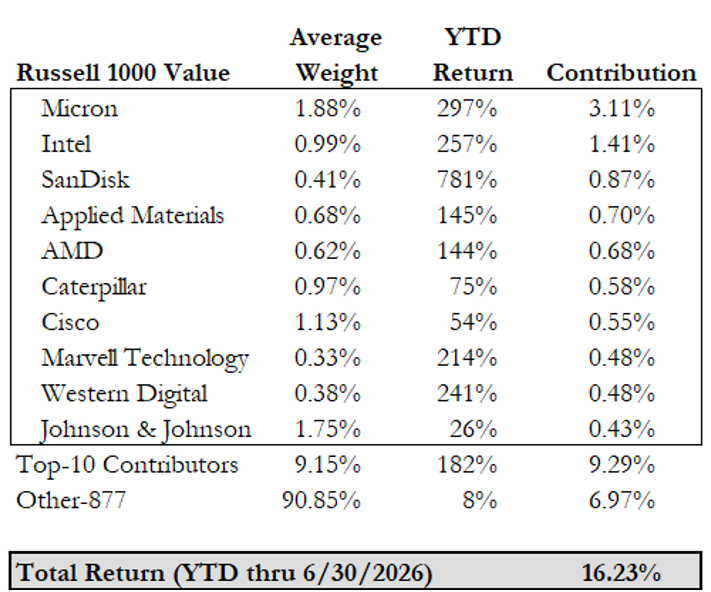
SanDisk (SNDK), engages in the development, manufacture, and provision of storage devices and solutions based on NAND flash technology. Its products include solid state drives, memory cards, and USB flash drives. The stock rallied during the quarter on improving memory cycle sentiment and AI‑driven storage demand. The portfolio did not own the position which resulted in a drag on relative performance versus the benchmark.
Alamos Gold (AGI), a Canadian gold producer focused on developing and operating high quality mines in North America, detracted from performance following a reduction in 2026 production guidance driven by operational challenges at its Young-Davidson mine, including seismic activity, lower mining rates, and higher costs. Weaker gold prices during the quarter also weighed on the shares. We believe these headwinds are temporary and continue to view the company favorably given the successful ramp up of the Island Gold District, a robust project pipeline, and attractive long term production growth.
Recent Portfolio Activity
| Buys/Acquisitions | Sells/Liquidations |
|---|---|
| Jones Lang LaSalle | Americold Realty Trust |
| UMB Financial | Verra Mobility |
| WesBanco |
BUYS/ACQUISITIONS
Jones Lang LaSalle (JLL), is a leading global commercial real estate services firm positioned to benefit from a recovery in leasing, capital markets, and investment activity as commercial real estate fundamentals improve. Its diversified business mix, growing recurring revenue streams, and global scale can provide resilient earnings and durable competitive advantages. We believe improving transaction volumes and continued growth in higher value advisory and outsourcing services will support long-term earnings growth and shareholder value.
UMB Financial (UMBF), is a regional bank with a diversified business model spanning commercial banking, institutional asset servicing, private wealth management, healthcare payments, and specialty financial services. Unlike many regional banks, UMB generates a meaningful portion of its revenue from fee based businesses, providing a more stable earnings profile and reducing reliance on net interest income. The company has consistently demonstrated disciplined underwriting, strong credit quality, and a conservative balance sheet, positioning it to perform across economic cycles. We believe UMB is well positioned to benefit from improving loan growth, expanding fee income, and continued market share gains, while its strong capital position and attractive returns on equity support long term earnings growth and shareholder value.
WesBanco (WSBC), is a regional bank with a diversified franchise spanning commercial banking, consumer banking, wealth management, and trust services. We believe the stock is trading at an attractive valuation as the market underappreciates the earnings potential created by the successful integration of Premier Financial, improving operating efficiency, expanding margins, strong capital levels, and robust loan growth.
SELLS/LIQUIDATIONS
Americold Realty Trust (COLD), is a real estate investment trust focused on the ownership, operation, development, and acquisition of temperature controlled warehouses. The position was liquidated due to deteriorating fundamentals.
Verra Mobility (VRRM), is a provider of automated enforcement, tolling, and parking technologies and solutions. We exited the position after the loss of a significant customer contract materially changed our investment thesis, reducing confidence in the company’s long term earnings and growth outlook. The proceeds were redeployed into higher conviction opportunities.
Outlook
We remain constructive on the long-term outlook for the small/mid-cap segment of the U.S. market. Valuations continue to appear attractive, with the Russell 2500 Index trading near multi-decade lows relative to large caps, while earnings have begun to reaccelerate. Consensus estimates point to small cap earnings growth surpassing large cap growth by late 2026/early 2027. Incremental increase in M&A activity, improving domestic manufacturing trends supported by reshoring and infrastructure investment, and a more favorable regulatory and tariff backdrop should provide longer term tailwinds for the asset class. Near term, we remain cautious as geopolitical risks, including the Iran conflict and related inflationary spillovers, may contribute to elevated volatility. Separately, mid-term election uncertainty has historically been associated with increased market volatility but has often given way to more durable small cap recoveries following the election cycle.
Positioning
Our current positioning is a function of our bottom-up security selection process and our ability to identify what we view as attractive investment candidates, regardless of economic sector definitions. Overweights in Financials and Materials are mostly a function of our underlying company specific views rather than any top-down predictions for each sector. Conversely, we continue to be underweight in Consumer Discretionary, as we have been unable to identify what we consider to be compelling long-term opportunities that fit our discipline given the rising risk profiles of many retail businesses and a potential deceleration in goods spending following a period of strength. We are also underweight in Industrials as we have been unable to identify what we consider to be more compelling long-term opportunities that fit our discipline versus companies belonging to other sectors. Given our focus on long-term business fundamentals, our patient investment approach and low portfolio turnover, the strategy’s sector positioning generally does not change significantly from quarter to quarter. However, we may take advantage of periods of volatility by adding selectively to certain companies when appropriate.
The opinions expressed herein are those of Aristotle Capital Boston, LLC (Aristotle Boston) and are subject to change without notice.
Past performance is not indicative of future results. The information provided in this report should not be considered financial advice or a recommendation to purchase or sell any particular security. There is no assurance that any securities discussed herein will remain in an account’s portfolio at the time you receive this report or that securities sold have not been repurchased. The securities discussed may not represent an account’s entire portfolio and, in the aggregate, may represent only a small percentage of an account’s portfolio holdings. The performance attribution presented is of a representative account from Aristotle Boston’s Small/Mid Cap Equity WM Composite. The representative account is a discretionary client account which was chosen to most closely reflect the investment style of the strategy. The criteria used for representative account selection is based on the account’s period of time under management and its similarity of holdings in relation to the strategy. It should not be assumed that any of the securities transactions, holdings or sectors discussed were or will be profitable, or that the investment recommendations or decisions Aristotle Boston makes in the future will be profitable or equal the performance of the securities discussed herein. Aristotle Boston reserves the right to modify its current investment strategies and techniques based on changing market dynamics or client needs. Recommendations made in the last 12 months are available upon request.
Composite returns are presented gross and net of the maximum wrap fee and include the reinvestment of all income. Net returns are calculated by subtracting the highest applicable wrap/SMA fee, which includes trading costs and custodial fees, from the gross monthly composite return (2.00% on an annual basis, or 0.167% monthly)All investments carry a certain degree of risk, including the possible loss of principal. Investments are also subject to political, market, currency and regulatory risks or economic developments. International investments involve special risks that may in particular cause a loss in principal, including currency fluctuation, lower liquidity, different accounting methods and economic and political systems, and higher transaction costs. These risks typically are greater in emerging markets. While Large-capitalization companies may have more stable prices than smaller, less established companies, they are still subject to equity securities risk. In addition, large-capitalization equity security prices may not rise as much as prices of equity securities of small-capitalization companies. Securities of small- and medium-sized companies tend to have a shorter history of operations, be more volatile and less liquid. Value stocks can perform differently from the market as a whole and other types of stocks. The material is provided for informational and/or educational purposes only and is not intended to be and should not be construed as investment, legal or tax advice and/or a legal opinion. Investors should consult their financial and tax adviser before making investments. The opinions referenced are as of the date of publication, may be modified due to changes in the market or economic conditions, and may not necessarily come to pass. Information and data presented has been developed internally and/or obtained from sources believed to be reliable. Aristotle Boston does not guarantee the accuracy, adequacy or completeness of such information.
Aristotle Capital Boston, LLC is an independent investment adviser registered under the Investment Advisers Act of 1940, as amended. Registration does not imply a certain level of skill or training. More information about Aristotle Boston, including our investment strategies, fees and objectives, can be found in our Form ADV Part 2, which is available upon request. ACB-2607-16
Sources: CAPS Composite Hub, Russell Investments
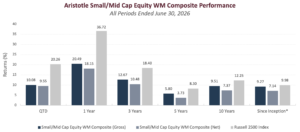
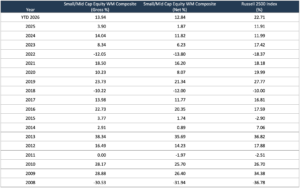
Composite returns for periods ended June 30, 2026, are final.
*The Aristotle Small/Mid Cap Equity WM Composite (“Composite”) has an inception date of January 1, 2008, at a predecessor firm. During this time, Jack McPherson and Dave Adams had primary responsibility for managing the strategy. Performance starting January 1, 2015, was achieved at Aristotle Boston.
The Composite includes all discretionary accounts managed in this strategy and is based on the institutional composite track record. The composite currently consists of only institutional accounts and does not contain any fully bundled fee wrap portfolios. Past performance is not indicative of future results. Performance results for periods greater than one year have been annualized. Composite returns are presented gross and net of the maximum wrap fee and include the reinvestment of all income. Net returns are calculated by subtracting the highest applicable wrap/SMA fee, which includes trading costs and custodial fees, from the gross monthly composite return (2.00% on an annual basis, or 0.167% monthly). Please see important disclosures enclosed within
this document.
The Russell 2500® Index measures the performance of the small to mid cap segment of the U.S. equity universe. The Russell 2500 Index is a subset of the Russell 3000® Index. It includes approximately 2500 of the smallest securities based on a combination of their market cap and current index membership. The Russell 2500 Growth® Index measures the performance of the small/mid cap companies located in the United States that also exhibit a growth probability. The Russell 2500 Value® Index measures the performance of the small/mid cap companies located in the United States that also exhibit a value probability. The volatility (beta) of the composite may be greater or less than the benchmarks. It is not possible to invest directly in these indices.